Business
“I’m Fat Let’s Party” Guy: Life as a Celebrity Meme


The internet has done a lot to disrupt culture. Once upon a time, styles, techniques, communities and information were only as transmutable as cable TV and word of mouth. When compared to the rate of change we see today, the evolution of content has moved from a slow creep to nearing light speed. Ten years ago the lifetime of any trend in humor could last months, and before that years. These days, you see a popular meme “break the internet” but one week later a new one is there to take it’s place.
Imagine if Charlie Chaplin had risen to fame in this day and age through the vehicle of The Meme. Would he still be as iconic? As immortal?
I spoke with Steven Lee… also known as “I’m Fat Let’s Party” Guy. Steven’s meme has been sported on the front page of reddit twice and has garnered over 400k in likes and shares on social media within the first hours of being posted. As it happens, Steven and I actually went to the same schools growing up. However I am jealous because I cannot say that I grew up to be a world-class meme. I got the chance to speak with him about Memeology. Here’s what he had to say:
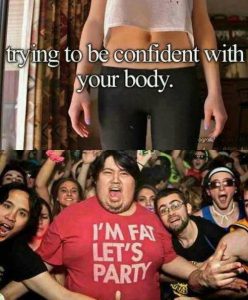
1. So let’s hear about this party…
2. Now let’s hear about this shirt…
The shirt I got back in 2010 at Comic Con NY. It was at a booth called “Seibei”. They were super nice. After I became the meme I sent them an email about it. They thanked me and I told them that I ordered another shirt from them. They said they were going to throw in some more for me. It was amazing because I ordered two shirt but when the package came they gave me three more shirts two of them were different color versions of the “I’m Fat, Let’s Party” shirt. One in black with yellow letters and one in sky blue with yellow letters too. Another note about Seibei is that when I went to Magfest 2015 I got to meet the creator of the shirt there. He was working his friend’s booth there and I haven’t officially met him before so it was great. Once he saw me he told some customer “I’m sorry but I need to hug this man really quick.” He is an amazing man, his name is David by the way. In short, I have three different colors of the shirt.
3. Who first memed this? Tell me about the moment you realized it went viral.
4. How old is this meme now? How often do you see it reappear?
It’s about 5 or 6 Years old now. It has been reappearing all the time. It’s been on the front page of reddit now about 5 times and when it gets posted the meme evolves, which is cool.

5. What has been the most surprising side effect of being a “meme guy” so far?
The most surprising part of being “that guy” is that people from all over the world knows the meme and some of them actually know who I am due to mutual friends. The funniest/weirdest time I got recognized was when I was working as a cashier for FiveBelow. These two kids age probably around 12 and 10. They made a comment while I was ringing them up. It was “oh must be a party over here”. I was confused at first but then I looked at them and I asked are you referring to the meme. Their faces lit up in excitement when I caught on. What made it weird is that their father was confused and asked what are you guys talking about. My response was that they saw a funny picture of me and he gave me the most confusing look ever. It was funny and weird lolz.
6. What are your thoughts on meme culture and memes as a vehicle for humor? What’s your favorite meme?
The meme culture is huge, when it first started it usually was the same pictures with new phrases on them. Now new memes come out every other week. The convention I went to had a huge meme culture following in it. There were people who cosplay a meme that just got popular only a week ago. It’s crazy but I also believe sometimes people make memes and take it to a new level. Now memes are videos too. They went from pictures to videos… now that’s huge step. But again some of the memes are just too much for me and are part of that I wanna say is stupid humor like doing the stupidest things on purpose.
My favorite meme of all time? Arthur Fist.

7. What do you like most about your meme? What do you like least?














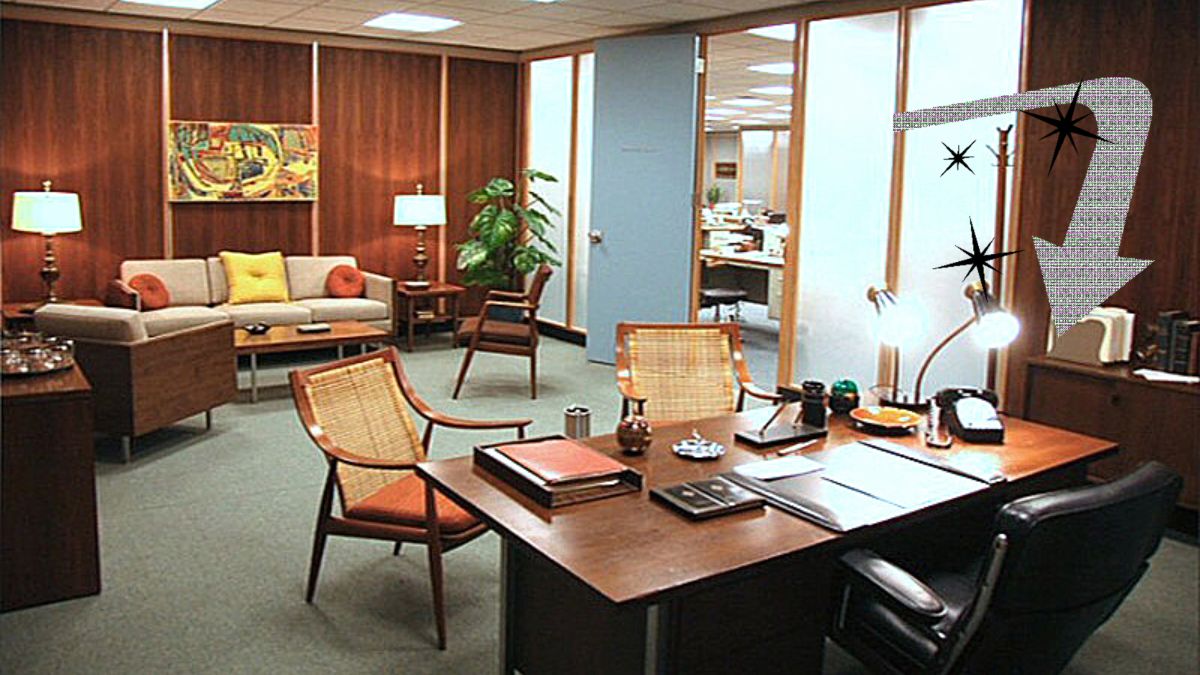
What was once old is new again: mid century modern is back in style. From architecture to furniture, the postwar look is in, and the hype extends all the way to office chairs.
Do you need a mid century modern office chair in your life? If so, there’s plenty to choose from. Your office chair should be tailored to your style, whether you like luxury, utility, or something in between.
That’s why we’ve put together our 10 favorite places to find your ideal mid century modern office chair.
What is mid century modern design?

After World War II, spirits were high in the US, and new technology was taking the country by storm. Mid century modern refers to the design concepts that came about during this time.
As opposed to the frilly, ornate designs of classical furnishings, mid century modern designs are angular, material, and functional. Wood is a common design element, especially teak. Mid century modern furniture may also have materials like glass, vinyl, and metal. Designs are simple and geometric, with bold accent colors to make them pop.
The mid century modern aesthetic never really went away, but it’s made a noted comeback in recent years. Some have chalked it up to Boomer and Gen X nostalgia, others point to mid-century-set shows like Mad Men and The Marvelous Mrs. Maisel.
Why should I buy a mid century modern office chair?

Mid century modern is the perfect fusion of style and utility. If you want to cultivate an office space that commands respect without being ostentatious, mid century modern is the style for you.
When it comes to office chairs, an MCM one is often made with sturdy wood and vinyl. They combine the ergonomics of a modern office chair with old-fashioned grace.
If you’re concerned with utility and utility only, a more bog-standard office chair may suit you. But a mid century modern office chair is great for someone who wants to wow colleagues with a mature, thoughtful business space.
Where can I get a mid century modern office chair?
1) Wayfair
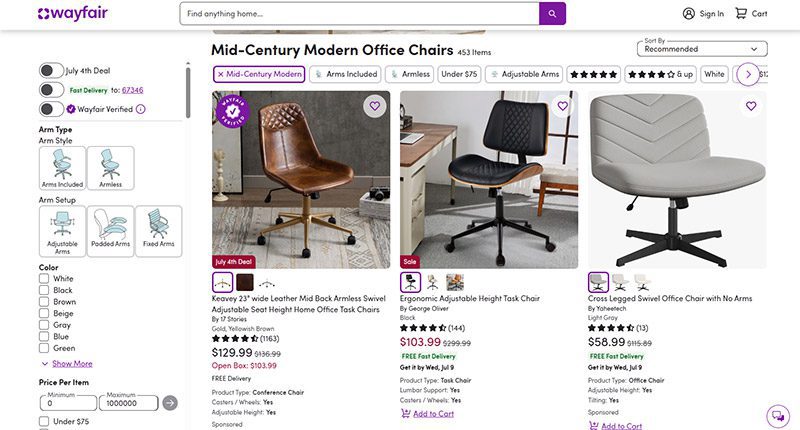
When it comes to furniture, Wayfair offers the best of both worlds. Their goods, including their mid century modern office chairs, are stylish and affordable. You can get a sturdy task chair for less than $100 or a more distinguished seat for less than $350.
MCM office chair examples: Dovray ($126), Bradford ($139), Lithonia ($133)
2) France & Son
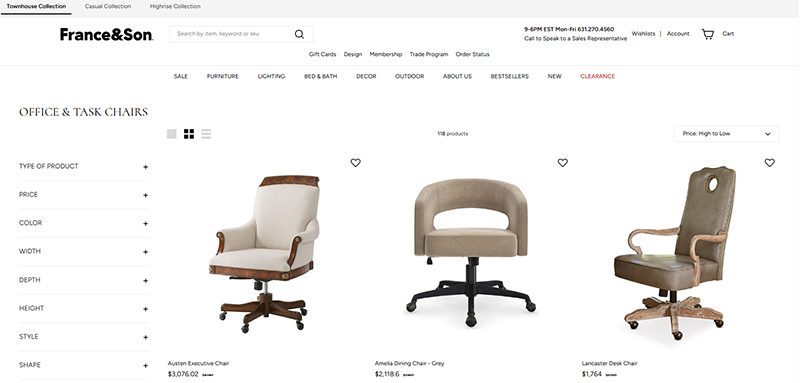
Wayfair’s chairs are affordable, but France & Son is the perfect option for luxury shoppers. Their mid century modern office chairs are robust and sleekly designed. If you dress to impress and enjoy the finer things in life, these are the chairs for you.
MCM office chair example: Brooks ($695)
3) Houzz
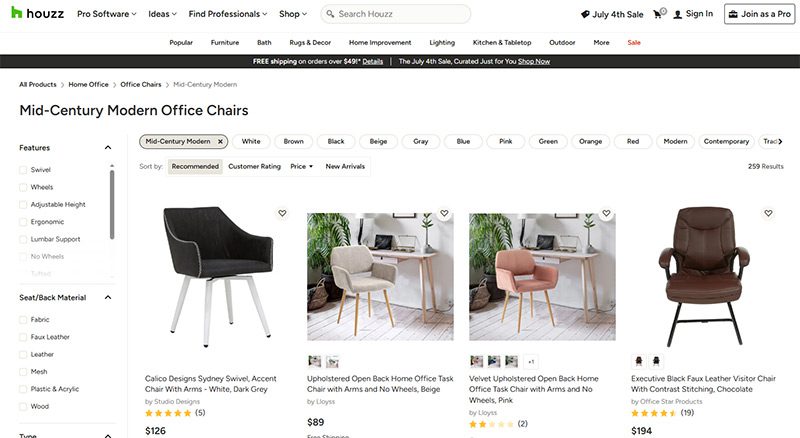
Started as a community for people to share home decor tips, Houzz has become a great ecommerce platform for finding stylish furniture. They’re more known for home decor than desk chairs, but they have plenty of great, affordable finds if you know where to look.
MCM office chair examples: Arvilla ($173), Rathburn ($259)
4) Laura Davidson
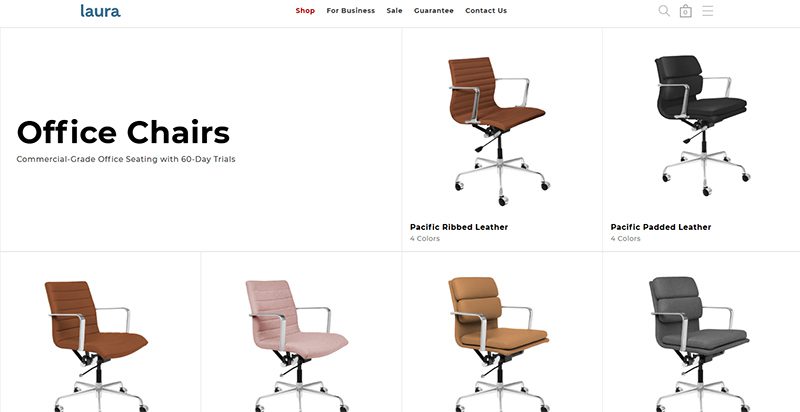
The Laura Davidson collection offers a fairly limited selection of classic office furniture. Still, there’s a reason they’re trusted by big-wigs like Apple, Disney, and Salesforce. Their chairs are sturdy and beautifully designed, reimagining classic Eames and Knoll designs.
MCM office chair examples: Rockefeller ($275), SOHO II Soft Pad ($450)
5) Icons of Manhattan
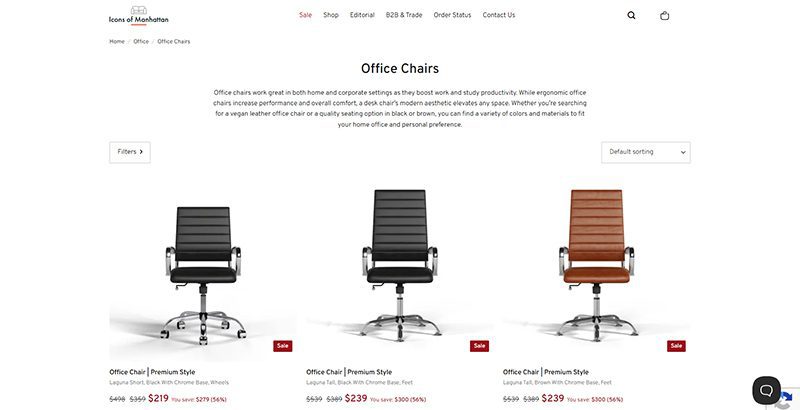
Icons of Manhattan has a simple philosophy: do one thing, and do it right. Their office chairs are handcrafted from premium materials and tailored to a mid-century modern style. If you want that Mad Men energy in your office (hopefully with a lot less angst), these are the chairs for you.
MCM office chair example: Ribbed Medium ($219)
6) Amazon
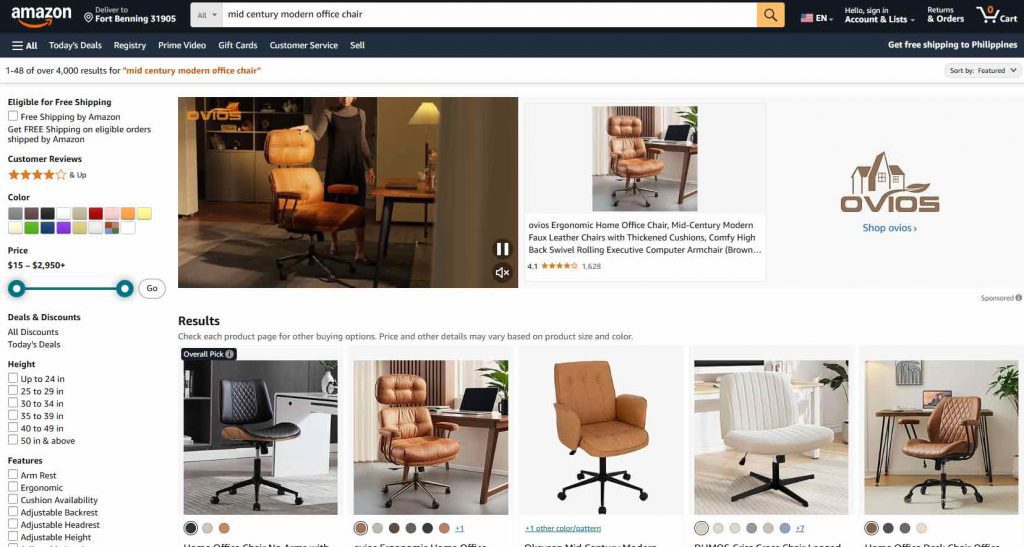
Yes, the internet’s premier shopping destination has a robust collection of mid century modern office chairs. Like with most products, their selection of seats is vast and can be hit or miss. Still, they’ve got stunning chairs available for any style, whether you care about comfort, class, or ergonomics.
MCM office chair examples: IDS Home Modern ($219), Art Leon MCM Swivel ($139)
7) AllModern
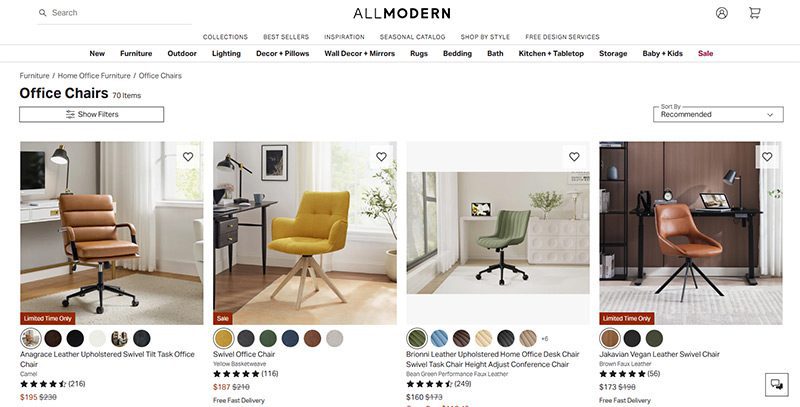
AllModern’s collection of desk chairs and other furniture truly embodies the mid century modern spirit. Their work is tight, angular, and functional above all. They’re part of the Wayfair family and they traffic in a number of modern styles, but their sleek chairs are perfect for any mid century modern space.
MCM office chair examples: Frederick ($229), Kealey ($349)
8) Overstock
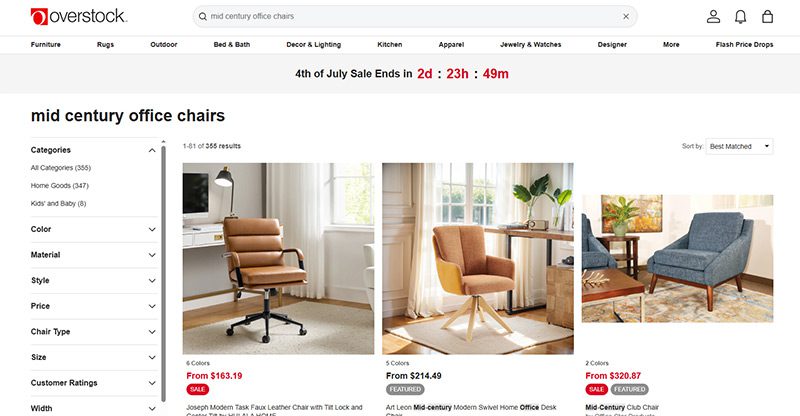
Overstock is known as a one-stop shop for quality home goods at sub-wholesale prices. If you want a spiffy mid century modern office chair that won’t break the bank, they’re the first place to look. While they’re somewhat less reliable than the more upscale platforms on this list, their selection is massive.
MCM office chair example: Joseph Modern ($163)
9) Walmart
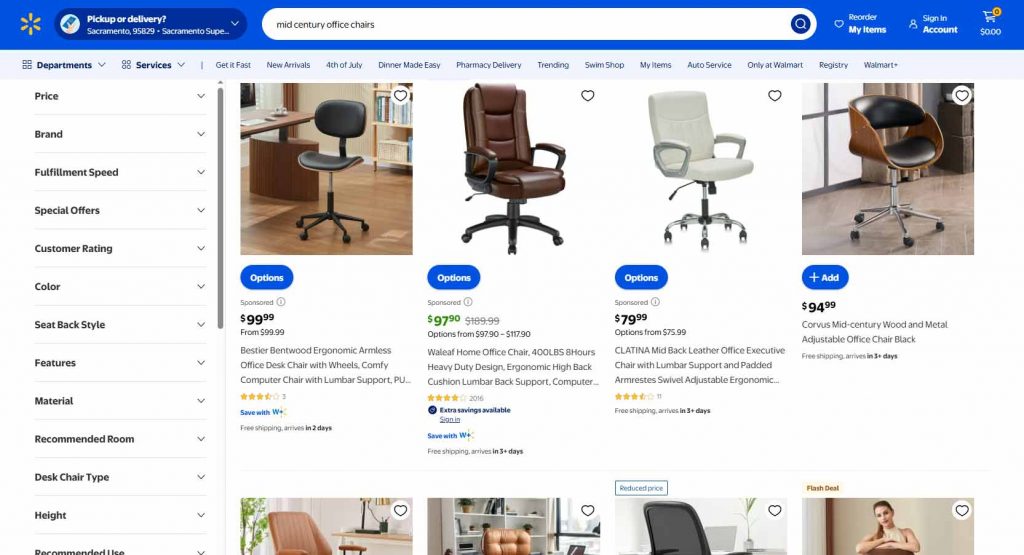
Hayneedle’s selection of mid-century modern office chairs falls somewhere between the minimal Laura Davidson and the endless Amazon catalog. Their array of mid-century designs is affordable and versatile, with chairs that match almost any style. While they may be part of the Walmart family, these chairs are anything but second-rate.
MCM office chair example: Waleaf ($97)
10) Target
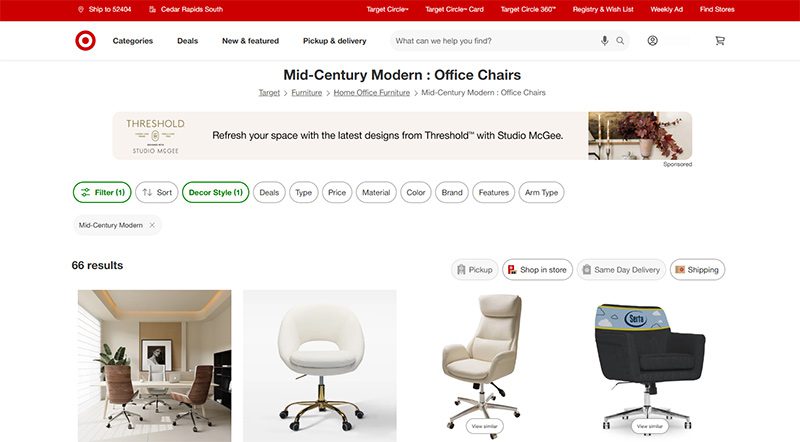
Why splurge when you can save? As usual, Target is a hidden gem, offering a sturdy selection of mid century modern office chairs for some of the cheapest prices out there. Many of the chairs they offer are from the same designers as these other stores—Christopher Knight, LumiSource, Armen Living, etc.—at reduced prices.
MCM office chair example: Lombardi ($136)


A quality payroll service is one of the most invaluable tools any entrepreneur can have. Whether you’re a small business owner or an HR manager, paying your employees on time is crucial. This makes choosing a service even more weighty, after all, it is a heavy administrative burden. The good thing is, you can outsource this duty to an online payroll processor.
According to statistics, 49% of workers begin a new job search after just two paycheck errors, and with 65% of workers living paycheck to paycheck, it’s more important than ever to ensure an efficient, effective payroll process.
These services can save you precious time and mitigate potential issues. To make it easy for you to choose, we listed the best online payroll services for 2025.
Top 5 Online Payroll Services
Gusto

Gusto is a great option for both new and experienced payroll administrators, boasting an incredibly clean user interface and a first-rate payroll setup. Gusto lets you manage your employee’s time off (vacation and sick pay), company health insurance, and worker’s comp. Gusto offers excellent mobile access, too. This allows employees to manage aspects of their Gusto profiles, view payday insights, and access Gusto Wallet financial tools.
Gusto offers four tiers of membership, the most affordable of which is the Contractor’s Only plan, which offers unlimited U.S.-based and global contractor payments, supporting more than 100 countries, plus 1099 creation and filing at a rate of $6 per person per month with no base price.
The other three are Simple, Plus, and Premium. Here’s a deeper look into each plan:
Simple
Price:
$40/mo + $6/mo per person
Plan details:
- Full-service single-state payroll including W-2s and 1099s
- Employee profiles and self-service
- Basic hiring and onboarding tools
- Gusto-brokered health insurance administration
- Employee financial benefits
- Payroll and time-off reports
- Custom admin permissions
- Integrations for accounting, time tracking, expense management, and more
Plus
Price:
$80/mo + $12/mo per person
Plan details:
(All Simple plan features +)
- Full-service multi-state payroll including W-2s and 1099s
- Next-day direct deposit
- Advanced hiring and onboarding tools
- PTO management and policies
- Time tracking and project tracking
- Workforce costing and custom reports
- Team management tools
- Full support
Premium
Price:
Bespoke pricing, reach out for a personalized quote
Plan details:
(All Plus plan features +)
- HR Resource Center
- Compliance alerts
- Access to certified HR experts
- Full-service payroll migration and account setup
- Health insurance broker integration
- R&D tax credit discount
- Waived fees and exclusive pricing
- Performance reviews
- Employee surveys and insights
- Dedicated support
QuickBooks Online Payroll
Founded in 1983, Intuit is a California-based financial software company. Since its inception, Intuit has developed into one of the best-known providers of accounting software. Their online payroll service, QuickBooks, includes the essential features you need to run payroll.
QuickBooks offers three tiers of membership. The least expensive membership covers basic accounting features, such as invoices. For more features, check out the Essentials and Plus memberships. Each plan’s features are as follows:
QuickBooks Simple Start (2025)
- Price: $38/month for 1 user
- Best for: Freelancers and small teams with basic payroll needs
Features:
- Automated bookkeeping
- 5 free ACH bank transfers/mo for bills
QuickBooks Essentials (2025)
- Price: $75/month for 3 users
- Best for: Small businesses needing deeper financial tracking
Features:
- Includes all Simple Start features, plus:
- Recurring invoices
QuickBooks Plus (2025)
- Price: $115/month for 5 users
- Best for: Growing businesses with HR and compliance needs
Features:
- Includes all Essentials features, plus:
- AI-powered profit & loss insights
- Anomaly detection and resolution
- Budgeting
QuickBooks Advanced (2025)
- Price: $275/month for 25 users
- Best for: Established businesses with HR and compliance needs
Features:
- Includes all Plus features, plus:
- Custom user management and permissions
- Custom report builder
- Data sync with Excel
- Revenue recognition
- Forecasting
OnPay
OnPay is a cloud-based full-service payroll processing system capable of running payroll according to a preset schedule, automatically disbursing wages, and calculating and withholding taxes.
OnPay can sync up with several other software your team is already using, making it easy to integrate the service into your team’s system. Another benefit of OnPays model is the simple, transparent pricing structure. No tiers; just one base rate.
Pricing:
$49/mo + $6/mo per employee
SurePayroll
SurePayroll’s award-winning service supports W-2 employees and 1099 contractors. Additionally, it handles 401(k) deductions and manages flexible spending accounts (FSA) and health savings accounts (HSA).
SurePayroll also offers a mobile app— available on both Apple and Android devices.
SurePayroll offers live support through its United States-based support team through chat, email, or phone.
Small Business Payroll
- Price: No Tax Filing: $20/month + $4 per employee, Full Service: $29/month + $7 per employee
- Best for: Small businesses and startups
Features:
- We file and deposit your federal and state taxes!
- Run payroll in 3 simple steps
- Schedule payroll to run automatically
- Unlimited payroll runs and free 2-day direct deposit
- Reports and pay stubs are available online 24/7
- Supports W-2 employees and 1099 contractors
Nanny & Household Payroll
- Price: Full-Service Household, $39/month, includes 1 employee, $10 per additional employee
Best for: Homeowners
Features:
- Signature-ready Schedule H
- We file & deposit your federal and state taxes!
- Run payroll in 3 simple steps
- Schedule payroll to run automatically
- Unlimited payroll runs and free 2-day direct deposit
- Reports & paystubs available online 24/7
- Supports W-2 employees & 1099 contractors
Be sure to choose a payroll service that works for your business, and provides you with the peace of mind that comes with a reliable bookkeeping system. Your employees will thank you.



Should I Buy an Electric Scooter? What You Can Learn

Best Workflow Mapping Tools for Smarter Business Processes

Top White Label Marketing Tools for Agencies: Our 10 Best Picks

Virtual Reality Exhibit Carne Y Arena: The Refugees’ Plight

Top 10 Podcast Editing Software Applications for Beginners

What Is Tiktok Pink Sauce? The Viral Condiment, Explained

Did You Drop Your Smartphone in The Ocean? Here’s How to Retrieve It
Top White Label Marketing Tools for Agencies: Our 10 Best Picks

History of the NBA: The Success Behind the Big League

Demio SaaS 2025 Review: Features, Pricing, Pros & Cons
Did You Drop Your Smartphone in The Ocean? Here’s How to Retrieve It
Virtual Reality Exhibit Carne Y Arena: The Refugees’ Plight
Best Workflow Mapping Tools for Smarter Business Processes

Gift Guide: 25 Best Gifts for Women for All Occasions
 Technology17 hours ago
Top White Label Marketing Tools for Agencies: Our 10 Best Picks
- Technology23 hours ago
Virtual Reality Exhibit Carne Y Arena: The Refugees’ Plight
- Technology16 hours ago
Best Workflow Mapping Tools for Smarter Business Processes
- Technology23 hours ago
Top 10 Podcast Editing Software Applications for Beginners
- Lifestyle6 hours ago
Should I Buy an Electric Scooter? What You Can Learn