
Business
LocalStove Satisfies Your Cravings For Homemade Food


Steve and Greg believe that everyone deserves homemade meals, but realize that with our busy lives, homemade meals are not always possible. As a result, they cofounded an online platform called LocalStove that connects the best home cooks in your neighborhood to you. On their website you can select which dishes you want from a variety of home cooks, and the food will be made and delivered to your event. We had the opportunity to interview them and learn more about their entrepreneurial journey and startup.
What inspired you to become entrepreneurs in the food industry?
Steven Finn: Food has been an obsession of mine for as long as I can remember. I started developing my own skirt steak marinade at age five, had a few years where my primary source of media was the food network, and have traveled as far as Australia and back in search of the best food out there. Wherever I go, I want to eat like a local. I spent several years as a software engineer for Bloomberg, and was ready to go out on my own and build something that I had a burning passion for. I decided I wanted to found a startup before we had the idea for LocalStove, and was exploring a variety of ideas. When it came down to actually doing something, working with incredibly talented local chefs who make authentic food from all over the world made so much sense!
Greg Dubin: I learned about the power of food to bring people together at a really young age. While growing up, my grandfather owned a restaurant in a small town in Wisconsin. It was the type of place where almost all the customers were regulars and everyone there knew everybody else’s name. People were drawn in by amazing comfort food (like deep fried balls of cheese as big as your fist!), but would stay for hours because they were made to feel like family. Spending a lot of time at the restaurant from as long as I can remember left a deep impression on me about the emotions that food can bring out in people and drove me to find away to impart this gift on to others, like my grandfather did. Yet, this exposure also taught me how tough owning a restaurant is. Between the brutal hours, high risk and thin margins, I realized it wasn’t the right business for me. LocalStove came about as a result of the realization that we can still create amazing culinary experiences, without a brick and mortar establishment. So, I sought to abstract away the worst parts of the restaurant business and harness tech to enable talented, passionate cooks to share their creations with the world.
What was your biggest challenge when founding LocalStove?
Steven Finn: Our biggest challenge was in deciding to take the plunge to pivot our business model. Our original model was to have our chefs offer individual meals through our website with us providing marketing, payment processing, and delivery logistics, and more. While this business was growing, it was difficult to spread the word. Then, we fell into office catering, mostly by accident. We originally viewed it as a marketing activity to sell individual meals, but corporate clients kept calling us back. We discovered that there was a real gap in the market serving small to mid size offices, where groups of around 10-75 people are too large to order effectively from restaurants and too small to get good menus for good prices from traditional caterers. These groups were regularly ending up with pizza and sub platters. This is the perfect size group for one experienced cook with no help and low overhead to cook for, and it allows us to sell much better food to offices for prices comparable to (or better than) existing options. On top of that, our cooks are making a lot more money per hour of labor than they would on virtually any other “gig economy” platform. As catering became a larger and larger portion of our revenue, we noticed that the catering model actually solved a lot of the problems we were having in individual meals. Having office catering become our primary business model was a tough call to make, but one that has worked out and allowed us to build the beginnings of a sustainable and scalable business.
Greg Dubin: The biggest challenge was probably emotional or mental in nature. Mainly, just taking the plunge into pursuing our endeavor full-time. Doing so at the end of business school was particularly challenging. Right when the majority of our friends were accepting high-paying jobs in lucrative industries, we were committing to having no income for the foreseeable future with absolutely no guarantee of success. The fact that all of us were married and either had kids or kids on the way certainly made the consequences of failure feel more daunting.
How was your experience like having 2 other cofounders?
Steven Finn: Having cofounders is great. I’ve worked on a startup alone before, and it’s hard to keep moving! Having cofounders gets everything done faster, provides a source of instant feedback on your work, and allows for rapid iteration. We are lucky to have complimentary skill sets. At this point, we know almost without talking about it who should take responsibility for something that needs to get done because we each know our cofounder’s strengths and weaknesses as well as we know our own.
Greg Dubin: I believe there is a study that correlated three cofounders with the highest chances of success for a startup. I completely understand why. First, launching a startup requires so
much work every day, across literally dozens of areas of expertise. I truly cannot
comprehend how sole founders can do it alone. Second, I cannot overstate the
importance of having a diversity of opinions and perspectives when formulating strategies and finding solutions to problems. Moreover, having three cofounders instead of two helps break through impasses where only two equal founders may be at a stalemate.
(Side note: Our third cofounder Henrique left the company a few months after launching to take a full time job. He left on good terms and retained a tiny bit of equity, but isn’t involve in any day-to- day operations of the business)
Why did you focus your business around home cooked meals?
Steven Finn: We believe that the best food in the world is locked behind the front doors of our neighbors. It doesn’t necessarily take years of culinary training to make food that resonates deeply with people. To us, home style cooking is Grandma’s recipes. It’s something you’ve made 1,000 times, but you still love to make it. It’s cooked with feeling, passion, and editorial control. We find that we’re more likely to get this type of food from a local, independent cook who works for his or herself than we are from a professionally trained line cook who spends their days pumping out somebody else’s recipes in a restaurant setting. We don’t tell our cooks what to make or what to charge. They give us menus of what they’re best at, they set their prices, and we match them with offices whose budget and dietary preferences are a good fit. On a personal note, some of our food is some of the best food I’ve ever had, and I’d eat at Per Se for my wedding anniversary or drive to South Dakota for a rack of ribs (Bob’s Broasted Ribs in Sioux Falls!).
Greg Dubin: I’ve always loved to travel and quickly came to appreciate what an immense impact food has on culture. When visiting other countries, I truly believe there is no better way learn and understand about another culture than through its cuisine. A single dish can represent the mosaic of hundreds of years of history; a cross-section of the country’s plants, animals and ecology; and the long-held, rich traditions of the people. However, you don’t have to get on a plane to have these experiences. Philadelphia represents a rich tapestry of cultures, be them ethnic, religious, or simply socially-based. All these cultures have unique, exciting and authentic foods, which until now had been locked inside people’s own kitchens. The best cooks aren’t the ones on line pumping whatever they are told to cook for minimum wage. They are the ones who truly live and breathe their cuisine, because it is a part of who they are. LocalStove’s mission is about unlocking the kitchen door and enabling these amazing cooks to share not only their food with the world, but their passion, history and story as well.

How do you choose and evaluate new cooks?
Steven Finn: Most of our best cooks have come to us. The value proposition of LocalStove for them is very strong. We bring them new customers who otherwise would never have found them, we handle payments, we provide them with a web presence, we deal with delivery logistics. We like to say that our cooks only have to worry about the cooking, and that they should let us worry about the details of running a food business. Evaluating cooks for LocalStove is the best part of our job. We meet with the cooks, learn their stories, and eat their food. Our cooks are great people to work with, but it’s their food blows me away almost every time.
Greg Dubin: Finding new cooks is actually one of the easiest parts of LocalStove. We developed a comprehensive marketing plan to attract new cooks, but haven’t had the need to implement it yet. Whenever we explain to anyone what LocalStove is about, the most common response we get is, “I know the perfect cook for you.” Pretty much everybody knows the “best cook in the world,” who makes incredible food but has no desire to actually open their own restaurant. As far as evaluation, the cooks have to go through our screening process before being allowed to post food on the platform. Part of this involves us trying the food first, which is definitely one of the best perks of the job. We also usually to have friends and loyal customers sample the food as well and give us their honest opinions. Ultimately though, it is really the user ratings that will determine how successful a cook will be on LocalStove. The best cooks rise to the top pretty quickly and can command higher prices for their meals. Cooks who aren’t incredible fall to the bottom pretty quickly and don’t get orders. Furthermore, if their rating falls below a certain threshold we remove them from the platform.

What are some memorable company milestones, and what developments do you project for this year?
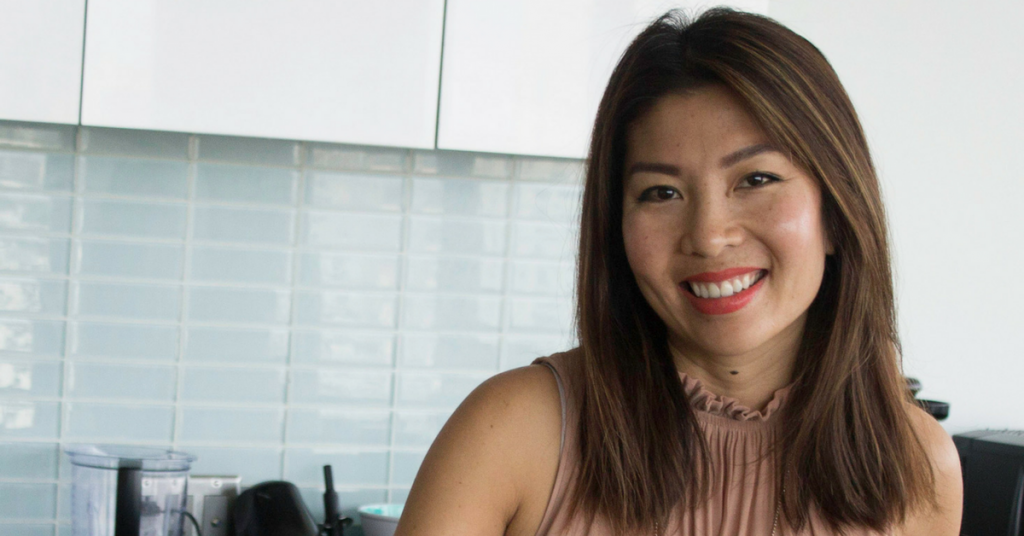
Steven Finn: Getting our first “subscription” customer for LocalStove was amazing. Having somebody tell us that they loved our food so much that they wanted to have it again every week was something I’ll never forget. Passing $100,000 in sales was great as well, and we can’t wait to add a digit and get to $1,000,000 and beyond!
Greg Dubin: One of our cooks is a culinary student who was also working a part time job to help put herself through school. She recently told us that she was able to quit this job that she hated, because LocalStove was giving her enough income to support herself. This was a powerful reminder of why we do what we do.
What is one character trait that defines you and why?
Steven Finn: I love to learn new things, and I always have. I like to understand how things work. I have three Penn degrees in totally different subjects (Operations, Entrepreneurship, and Computer Science), and am always reading about something new. Entrepreneurship is the best way to learn rapidly that I’ve found yet.
Greg Dubin: Believing that there is always a solution to any problem. This means never admitting “it’s impossible” when faced with a challenge. Instead of asking “can we,” I only ask, “how can we?”
What are your tips for aspiring entrepreneurs?
Steven Finn: Don’t pursue a great idea that you aren’t passionate about. If you wouldn’t be a user of your product, it doesn’t matter how great the idea or opportunity is, you are not the person to execute on it. Make sure if you get into something that it’s a field that you’re willing to spend the next 5+ years in and be eager to learn everything about it. Also, I can’t stress the idea of putting something out into the world quickly enough. We started selling food less than three weeks after we initially had the idea for LocalStove, and we’ve learned so much because of the pace. I’ve worked at a startup where we spent way too long in a room, figuring out every little detail of our product to make it perfect before launching, and we failed before we’d even finished the product. Startup guru Steve Blank says that “No business plan survives first contact with customers.” He’s right. The only way to move quickly enough toward real product market fit in an industry like ours is to put something out in the world, double down on what works, and quickly abandon what doesn’t.
Greg Dubin: Focus all your energy on finding product-market fit and don’t be afraid to pivot. Don’t spending all your time and resources developing what you think is a perfect product before you know if enough people are actually going to buy it. Instead, get your MVP out there as quickly as possible and see how it resonates with various audiences. If the product-market fit is right, they will accept an imperfect product because they innately see the value of what you are trying to do. Once you’ve identified the right customer base, engage and listen to them. They will be your most valuable resources for perfecting your product and driving your company’s direction.









TLDR; If you need a logo design agency in New York, check out Penji, MBLM, Rootless Agency and Catchword for excellent branding, graphic design, and logo design for your aviation company to stand apart.
Did you know that 60% of consumers are more likely to purchase from a brand they recognize, and 50% say they’re more likely to use a company with a logo they know? Your logo is the face of your business—it’s your first impression, lasting memory, and a powerful symbol of everything you stand for. Get it wrong, and your brand could struggle to make an impact. Get it right, and you create instant recognition and trust.
If you’re searching for the best logo design agency in New York, you’re in the right place. Below, we’ve highlighted four standout agencies known for exceptional branding, each with unique strengths, pricing, and creative approaches.
1. Penji
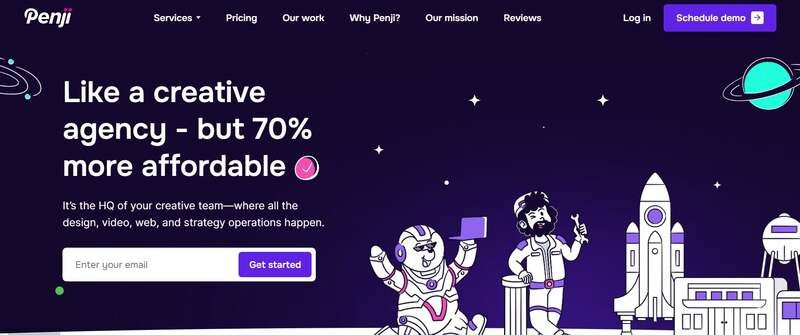
Penji is a design-as-a-service agency which offers unlimited graphic design through a subscription basis. They don’t just create logos for their clients, but they are a full-service agency as they also offer branding, web design and more.
Pros:
- Penji offers unlimited design requests with quick turnaround times
- Penji also offers a dedicated design team just for you
- The designs you receive are cost-friendly
- Penji emphasizes brand identity
Cons:
- Turnaround times may vary based upon complexity of work
- They are not as personalized in approach as agencies that are boutique
- They focus on companies which require routine graphic design work
If you want to work with a logo design agency in New York that is budget-friendly but flexible, Penji is the agency to go with.
2. MBLM
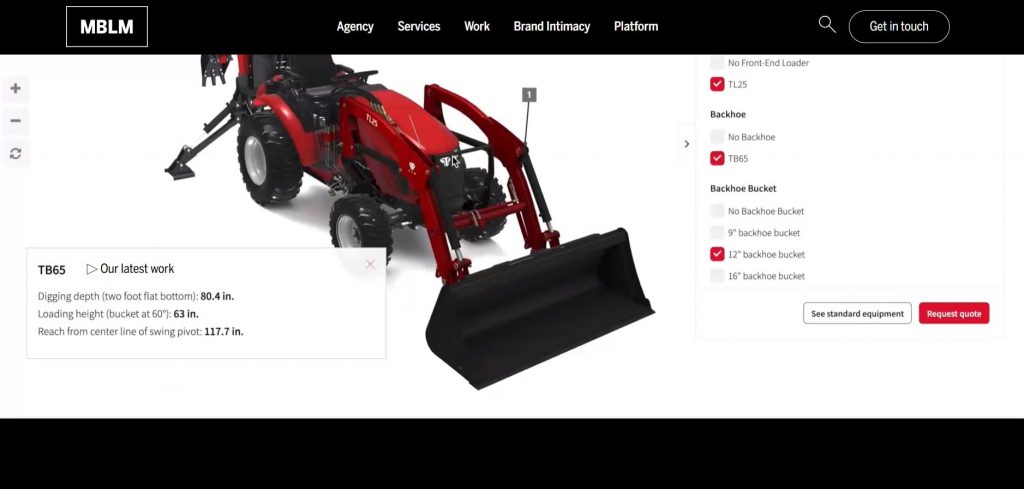
MBLM is a branding agency that is full-service and works beyond logos alone. They focus on strategy and creativity and establishing an emotional connection between brand and consumer.
Pros:
- MBLM is knowledgeable about branding and strategy
- The agency has experience with enterprise-level clients
- They take a holistic approach to logos and branding
- They utilize deep research for their designs
Cons:
- They may not be friendly to small businesses regarding costs
- Their timelines may be long as they use complex research methods
- Their approach to branding is unique and thorough
If you want holistic branding along with a logo design agency in New York, MBLM will provide complex, in-depth strategies so you can invest deeply into your brand.
3. Rootless Agency
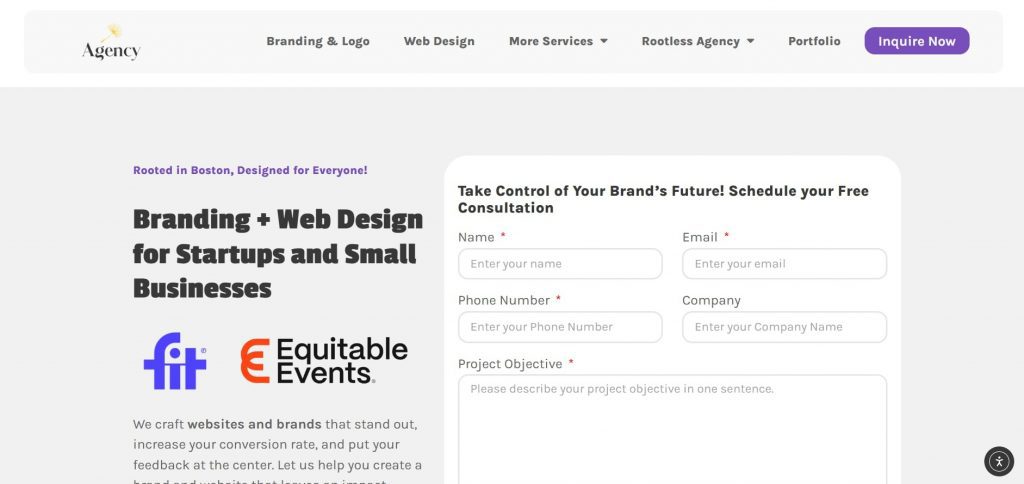
Rootless Agency operates within New York even though they are based in Massachusetts. They focus on creating a logo, WordPress web design and strong branding with effective cohesion.
Pros:
- The agency is highly personalized in their service
- They collaborate well with their clients
- They are communicative and responsive
- Their management skills and turnaround times are exceptional
Cons:
- The small size of the agency could hinder the ability of the agency to work with large projects
- You will need to have virtual meetings since they are not located in New York
- They may not have the recognition of other agencies
If you want a logo design agency in New York that takes an iterative process to ensure all your needs are met, Rootless Agency is your best bet.
4. Catchword
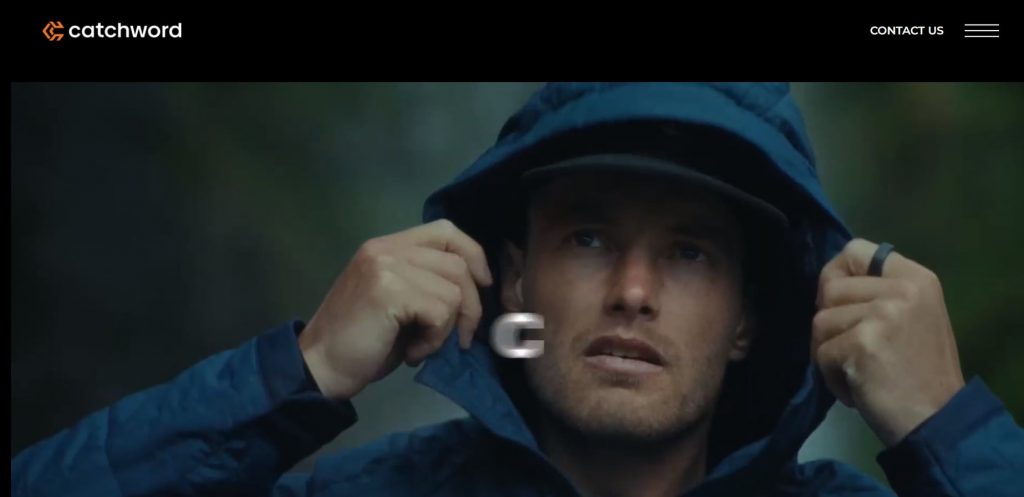
Catchword is a top-rated and award-winning agency with nine years of recognition as the top naming agency. They design more than just a logo as they also work on naming and provide excellent insight. They offer strategic expertise and knowledge on trademarking logos which will benefit your company.
Pros:
- They have strong standings when it comes to naming and branding
- They consider the cultural and linguistic relevance of names
- They offer insights on trademarking before the logo rollout
- They have valuable resources on validation by Fortune 500 companies
Cons:
- They are high-end with pricing so may not benefit start-ups
- They are focused more on naming than logos so they may not fully suit your needs
- Their thorough process will take time so you can get quality results
If you want a quality logo and a name from the best logo design agency in New York that receives trademark protection, Catchword is the agency to choose.
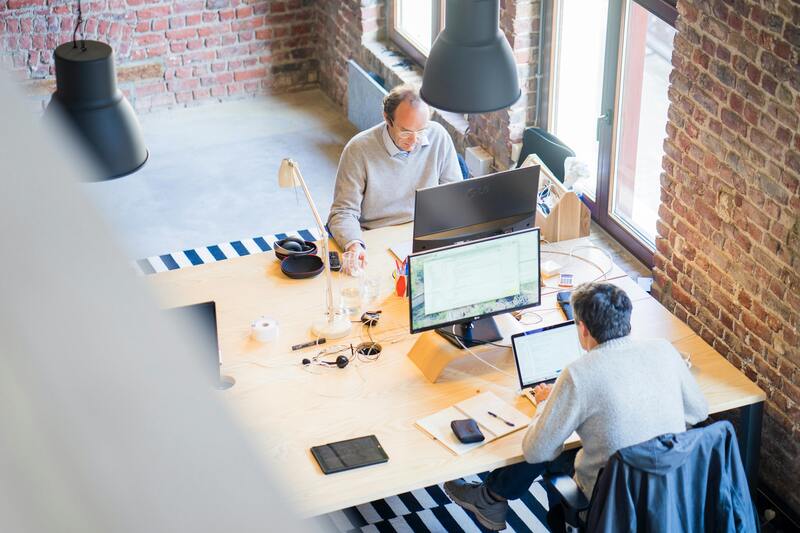
Cover Image Credit: Photo by Proxyclick Visitor Management System from Pexels

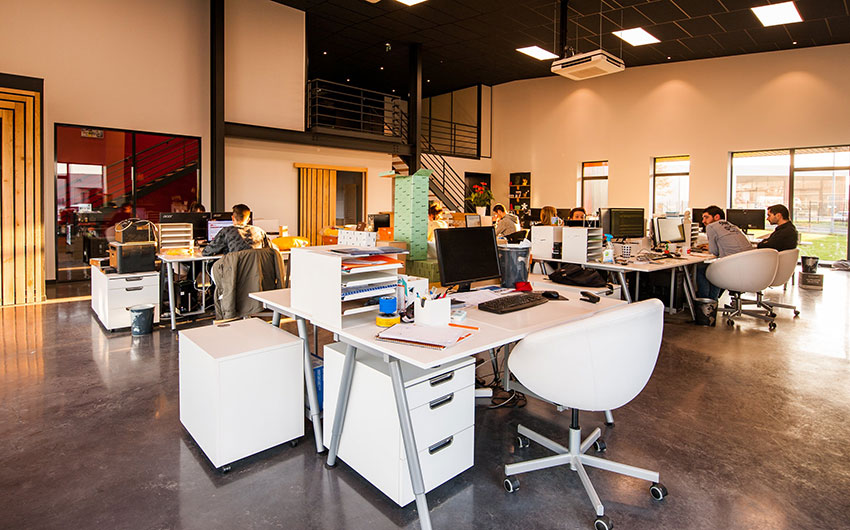
Did you know that your workplace design can impact the productivity of your employees? Aside from this, office design also affects employee safety and health. A study by international architectural firm Gensler in the US states revealed that only 38% of employees strongly agree that their workplace currently provides a great experience, highlighting a major gap between what offices offer today and what employees actually need to perform at their best.
So how does the environment impact the health, safety, and productivity of employees?
Design To Encourage Movements
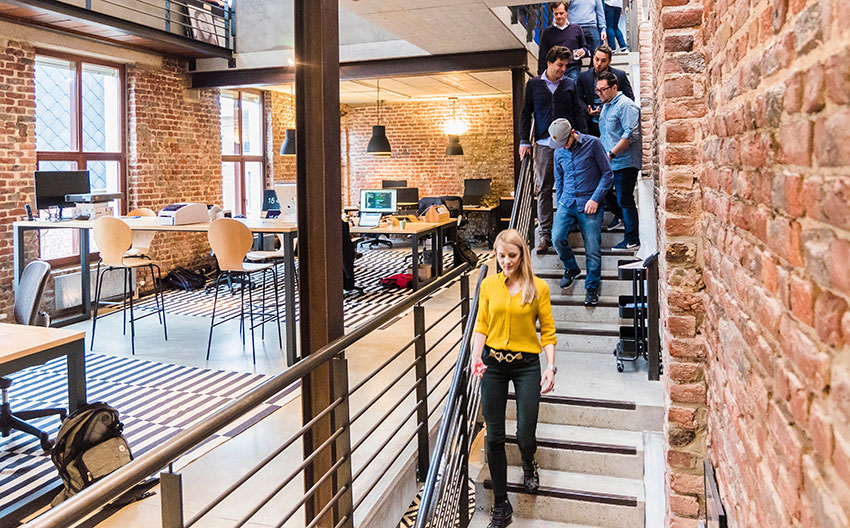
Our work has a big impact on your health. Most of the time employees spend a lot of time on their desks, so they are becoming sedentary. As we all know, sitting down for long periods of time has adverse effects on our health. In addition, movement offers instant benefits, including cognitive performance boost.
Designing office spaces that encourage movement or walking can help curb these problems for employees and employers alike. There are workstations that are designed to be used in either sitting or standing positions. An open space design also encourages employees to walk from one section of the office to another. Sometimes something as basic as an ergonomically correct chair can help prevent ailments like backaches.
Natural Lighting > Fluorescent
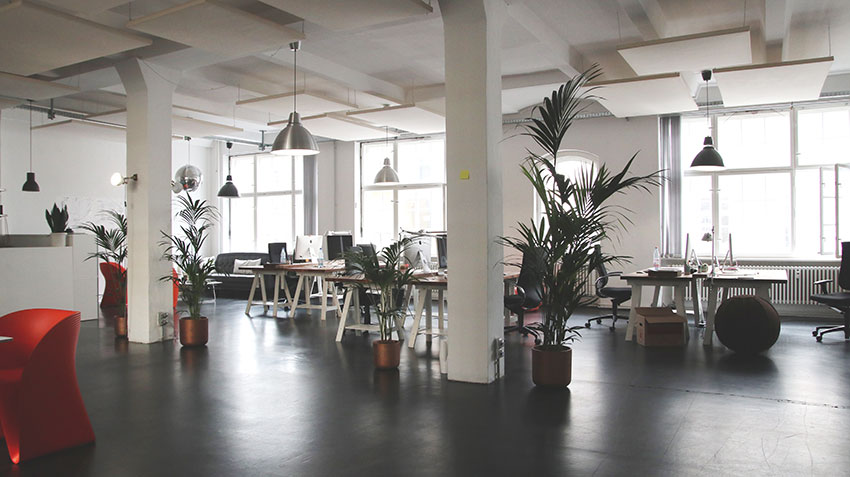
Good lighting can help people see details clearly and increased visibility can help increase productivity. But, this does not mean to say that you can skimp on lighting in the office because a study from Cornell University shows that poor lighting is connected to low production levels and social satisfaction among employees. Many offices are composed of cubicles to give employees privacy to do their work. However, the cubicle arrangement also blocks natural light, which means that some employees are not exposed to natural lighting during an entire work cycle.
Humans are wired to seek natural lighting. In fact, many buildings in Europe encourage exposure to natural light. Employees who had the best views were the most productive and were most likely to describe themselves as healthy.
Dedicated Noise-Isolation Areas
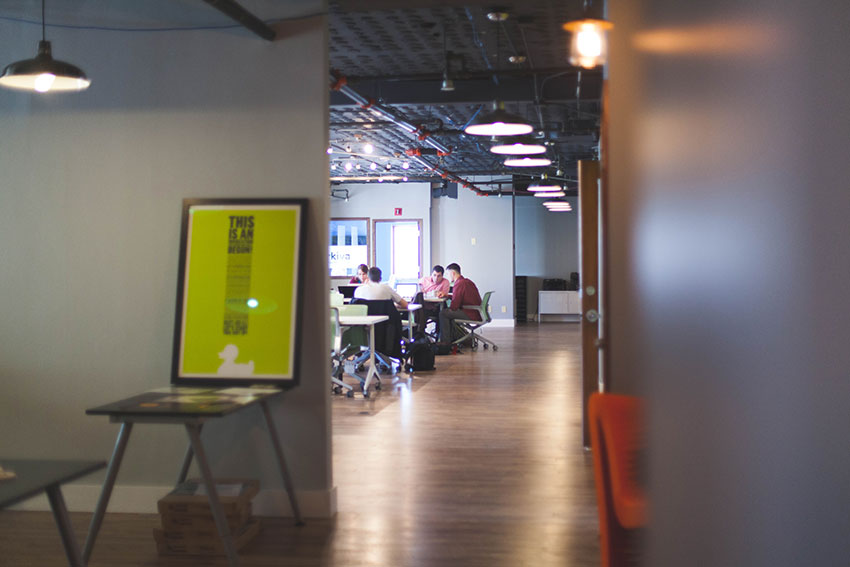
Acoustics is another key contributing factor to productivity. To achieve acoustic comfort, the office must have appropriate acoustic support that is conducive to interaction, confidentiality, and concentrative work. If it is too noisy, workers will not be able to communicate with each other let alone concentrate.
Design your office to have multiple quiet areas where employees can migrate to in order to make calls, have private meetings, or to focus on their work.
Designed With Health In Mind
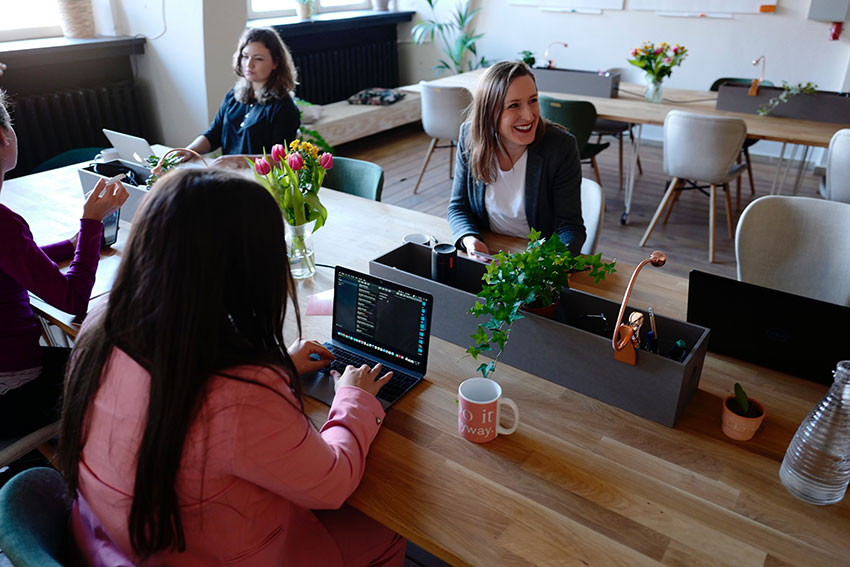
Aside from these factors, employers should also provide workers with suitable ventilation, access to greenery and the gym to help encourage a healthy lifestyle. Even something as basic as giving them access to increase or reduce the temperature in the office can impact their productivity. Employers should also encourage employees to personalize their workstations so that employees are happier. Workspace design should allow employees to socialize with each other easily while at the same time giving them access to views and privacy so that they can work properly and productively.
Good lighting, comfortable furniture, pleasant color schemes, and access to views or natural lighting can help generate positive energy in the office and employee mood. In fact, 8 out of 10 employees said their working environment affects their mental health.
Featured Image Credit: Photo by CadoMaestro from Pexels

Top 10 Remote Working Tools for Productivity and Collaboration

What’s the Best Logo Design Agency in New York?

What’s the Best Logo Design Agency in Ohio for Your Business?

Design Hack Your Office For Maximum Productivity

Tips For Starting A Profitable Business

Top 8 Small Business Inventory Management Software for Growth

What’s the Best Logo Design Agency in San Francisco?
Design Hack Your Office For Maximum Productivity
Tips For Starting A Profitable Business
Top 8 Small Business Inventory Management Software for Growth
Top 10 Remote Working Tools for Productivity and Collaboration

The Biggest Hidden Cost in Agencies Isn’t Talent — It’s Throughput

Here are the Best Design Agencies in New Jersey in 2026


