
Technology
Top 10 Wireless Earbuds Worth Your Money


Many smartphones have adapted the no-audio jack design, making users opt for a wireless earbud option to listen to music or go on calls all day. However, the earbud market has hundreds of options, from budget to expensive flagship selections. Which ones are the best wireless earbuds worth your investment? Check out our top picks below.
1. Beats Studio Buds+
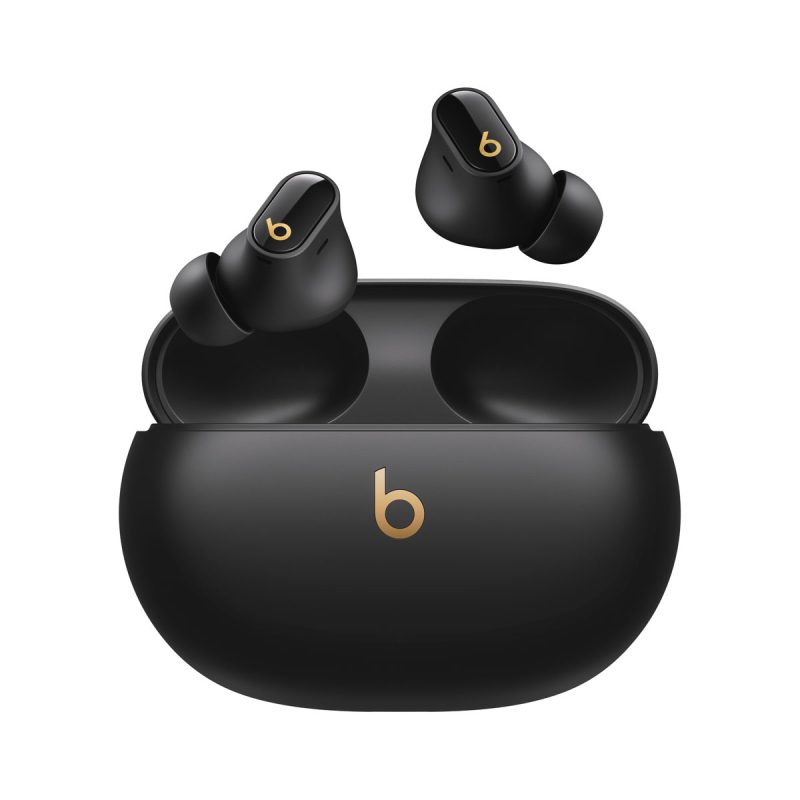
The Beats Studio Buds+ is one of the highly-rated wireless earbuds by many audiophiles. Plus, they boast great quality for less than $200. But what makes it a worthwhile earbud investment?
First, it has active noise-canceling capabilities of up to 1.6x. This means you can focus on listening to your music all day.
Another notable feature of the Beats Studio Buds+ is the 36-hour usage with a case! It’s also equipped with mics when talking to your friends or co-workers. Additionally, it comes with various earbud sizes, providing comfort to your ears when you listen for long hours. Plus, it comes with on-ear controls, letting you pause, play, or take calls without using your phone.
Pricing: $169.99
2. Jabra Elite 10

Another wireless earbuds device to consider is the Jabra Elite 10. Jabra is a darling by many audiophiles because of its clear sound and active noise-canceling features. But what else makes the Jabra Elite 10 one of the best wireless earbuds in the market?
The Jabra Elite 10 is the company’s advanced earbuds for personal or work use. Their semi-open design provides comfort to many users, especially those who are using it for long. To ensure comfort, they scanned over 62,000 ears to create an optimized design. It’s equipped with the Dolby Atmos system. Plus, they boast a 6-mic call technology for clearer sound and pick up your speaking voice. Finally, you can use the Jabra Elite 10 for 27 to 36 hours!
Pricing: $249.99
3. Bose QuietComfort Ultra
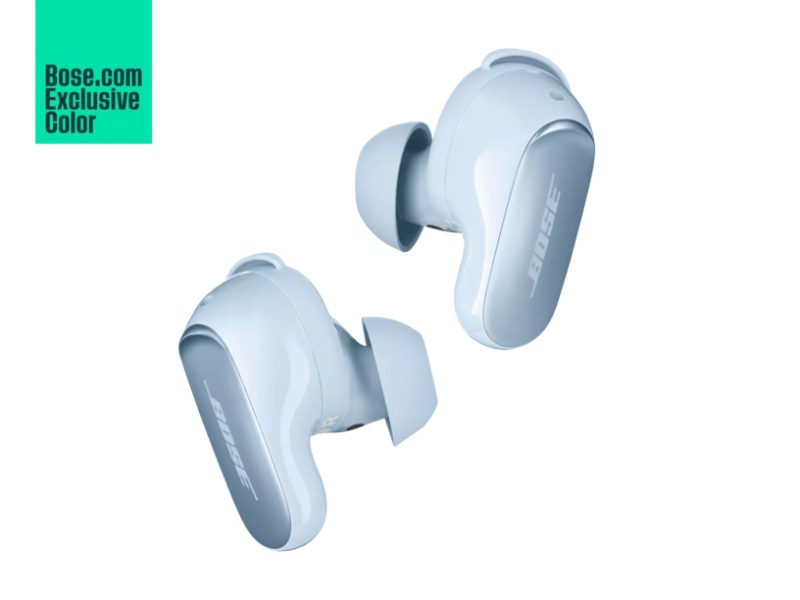
Bose is one of the bosses in the audio and music industry, making it a go-to brand for many customers worldwide. It’s known for its QuietComfort model, but the QuietComfort Ultra is a definite upgrade from its predecessors.
The QuietComfort Ultra has a noise-canceling feature that adjusts. Like other earbuds on this list, it has quick control settings to help you answer calls, pause and play music, or control music volume. You don’t have to worry about using this on a run since it’s sweat and splash-resistant! Plus, you can customize settings anytime when you download the Bose Music app.
Pricing: $299.00
4. Sennheiser Momentum True Wireless 3
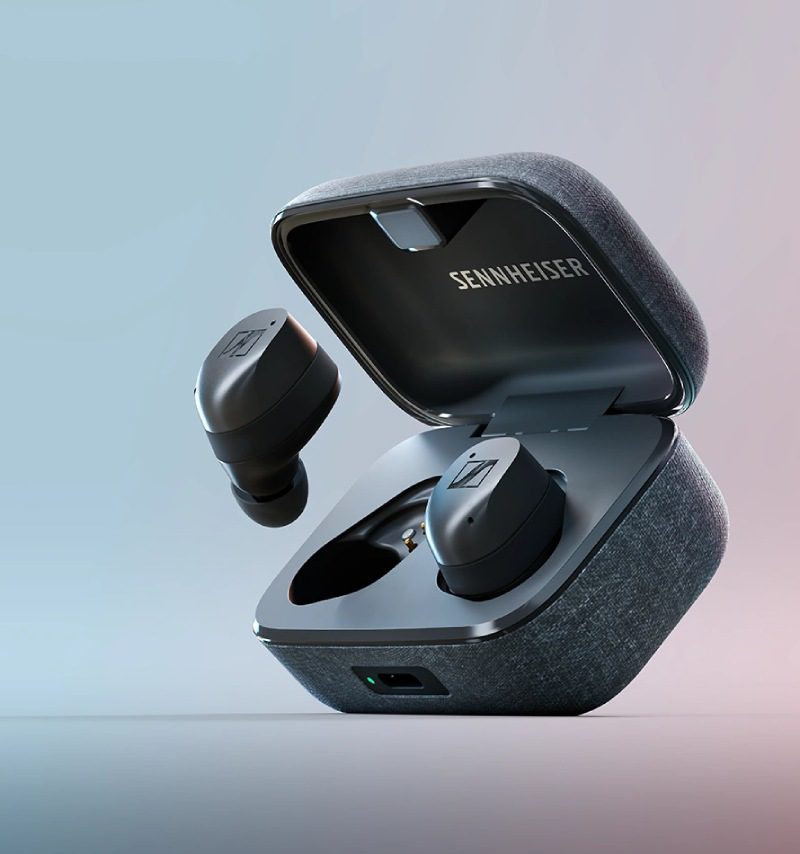
Sennheiser is one of the leaders in audio and music. And their Momentum True Wireless 3 keeps their reputation as one of the best in the industry.
Like the QuietComfort, Momentum True Wireless 3 has an adjustable noise-canceling feature. This means noise-canceling adapts to your environment. This is also a great wireless earbud, especially when you’re always calling someone on the phone. Finally, it’s also splash-resistant, so you can use it anytime when walking or running in the rain.
Pricing: $279.95
5. Nothing Ear 2
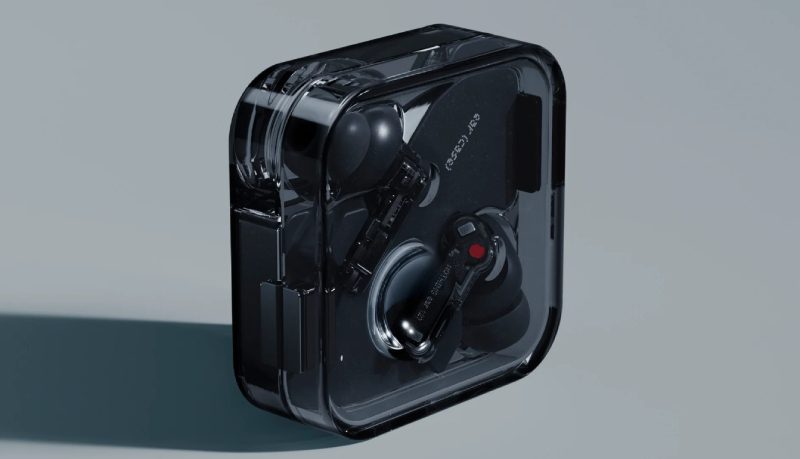
Nothing is a relatively new player in the smartphone scene, but their Nothing wireless earbuds are gaining buzz for their sound and design.
Balance is at the core of their audio technology. That makes the Nothing Ear 2 the go-to brand for many wireless earbuds users. Like others on this list, it has clear mics to help you talk to your loved ones or co-workers clearly. It has a 7-hour listening time and a 12-hour talk time! Plus, you can customize treble, bass, and noise on the Nothing app.
Pricing: $149
6. OnePlus Buds Pro 2
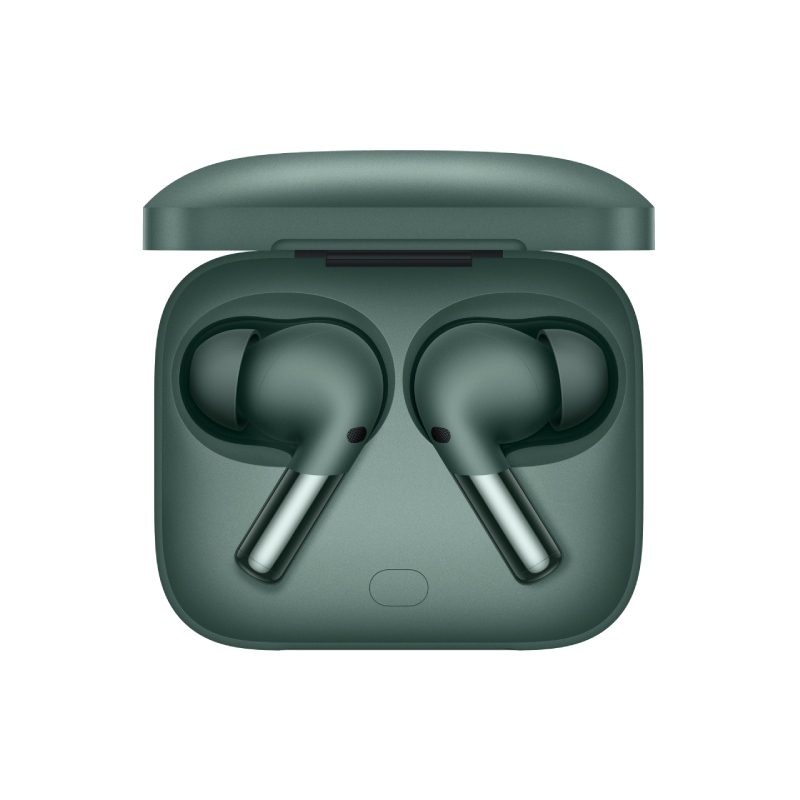
OnePlus is another well-known smartphone manufacturer, but their wireless earbuds are worth your money. They create a marriage of melody and bass to bring an exciting audio experience for earbud users. Like other earbuds systems, you can customize your audio experience by downloading an app. Unlike other earbuds, they have three noise-canceling modes, depending on your environment. Finally, you can use the OnePlus Buds Pro 2 for 39 hours!
Pricing: $179.99
7. Jaybirds Vista 2

If you’re an athlete, the Jaybirds Vista 2 is your ideal wireless earbuds! It has a 24-hour battery life, and it’s waterproof and sweatproof! You can also download the Jaybird app to personalize your music settings! It’s also compatible with Android and iOS systems so that calls can be answered without delay! But what makes Jaybirds stand out is its “earthproof durability.” You don’t have to worry about breaking or being nonoperational after a few falls, shocks, or crashes.
Pricing: $149.99
8. JLab Go Air Pop
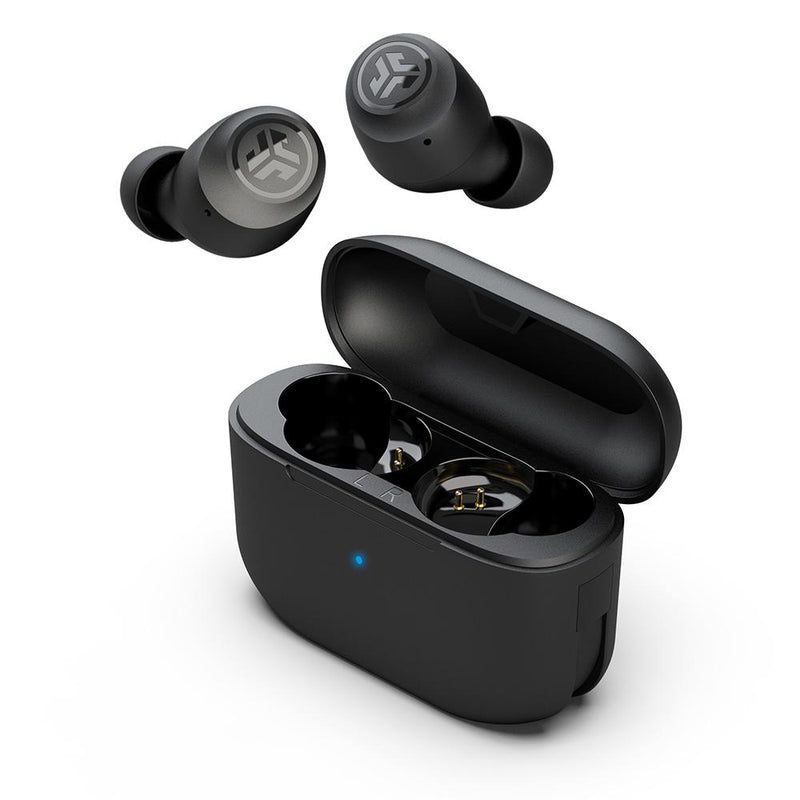
JLab is another audio company ideal for athletes to buy earbuds from. They have many selections for athletes for their run or training sessions. But one of its popular and highly-rated earphones is the JLab Go Air Pop. It has a 32-hour playtime. Plus, it’s so small it can fit in your pocket or other small compartments during your run or exercise session. Without downloading an app, you can personalize your noise preference with a few clicks!
Pricing: €29.99
9. Shure SE215

Shure is an underdog in the audio and music industry. And their Shure SE215 is a must-have for any audiophile. Their audio has a clear and deep bass sound technology, enhancing any listener’s experience. They have a trademark Sound Isolated tech to block and eliminate distractions. Plus, its ergonomic earbud design is meant for extended listening and calling hours! Additionally, the SE215 has an integrated mic and remote feature for accessible controls and better calls. Finally, it has a 32-hour total battery life!
Pricing: $229
10. Sony WF-1000XM5
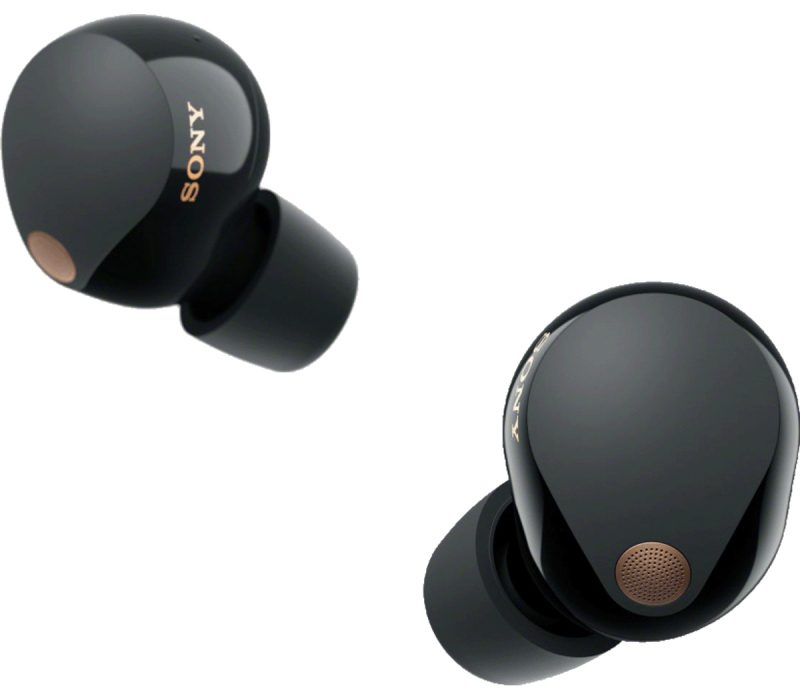
Our last pick for the best wireless earbuds worth your money is the Sony WF-1000XM5. The wireless earbuds have earned high praise for clear sound and design. But what makes the 1000XM5 the best model among the others in the Sony catalog?
Unlike other competitor earbuds, Sony uses AI to adjust noise reduction and adaptive sound control! It has high-resolution audio, letting you enjoy your favorite music or podcast how it was meant to be listened to! You don’t have to worry about splashes and sweat since it’s equipped with a water-resistant tech. Finally, it has an 8-hour play time (24 hours with the case) and a 3-minute quick charge for an hour’s worth of listening.
Pricing: $249.99



Software-as -a-Service (SaaS) is no longer just a convenient way to access software through the cloud. In 2026, the software-as-a-service business model is now the very backbone of how modern businesses operate and scale. In fact, data tells us that SaaS and enterprise software companies have raised about $4.7 billion in investments in 2024.
In this guide, let’s break down how the SaaS business model works, why it continues to dominate the software industry, and what has changed leading into 2026.
What Is SaaS?

SaaS is a delivery model of centrally hosted software that is licensed to customers via a subscription plan. If a company leases its software through a central, cloud-based system is technically a SaaS company.
These companies maintain responsibility and oversight of servers, databases, and any relevant software that allows people to access and use their products.
Some of the most popular SaaS giants in 2026 include:
- Adobe
- Google Workspace
- Salesforce
- Microsoft 365
- Notion
- Canva
- OpenAI
- Grammarly
In 2026, SaaS applications are often enhanced by built-in AI capabilities, such as in the cases of OpenAI, Grammarly, and many others.
The way that SaaS companies lease their product is through subscription plans. These plans can vary greatly from company to company. SaaS business models offer different services and different applications within their systems. Different subscription plans give different access to different services. Many offer a regular plan with one or two other plans that offer more access and increased services.
What Is The Software As A Service Business Model?

The software as a service business model includes a number of factors that are unique to it. There are three in particular that are important to take note of.
Recurring Payments
In SaaS, clients do not buy hardware. The software as a service business model involves providing a subscription service for software. Recurring payments typically take the form of Monthly Recurring Revenue (MRR), though many SaaS companies now track additional metrics like Annual Recurring Revenue (ARR), Net Revenue Retention (NRR), and expansion revenue.
When your customer signs up and subscribes, you will get some money upfront. It is imperative that this initial cash not be counted as revenue until it’s been properly earned. It is a liability until the terms of service have been completed. A customer can ask for that money back at any point if the service isn’t delivered.
Revenue recognition is one of the most fundamental aspects of running a successful SaaS company. Alongside subscriptions, SaaS companies also monetize through usage-based pricing, AI consumption pricing, or hybrid billing models that combine multiple approaches.
Heightened Customer Retention

All businesses care about customer retention. In SaaS business models, however, it is ten times more important. Customer retention is what keeps SaaS companies afloat. Because you cannot lay claim to all of your customers’ subscription money until the term of service has been completed.
If you sign a customer for one year or twelve months and they leave after two, then you’re without ten months of recurring revenue. As a result, it is critical to put a significant value on cultivating customer relationships and upselling.
An existing SaaS customer spends more money on average than a new one. It is in a SaaS company’s best interest to upkeep and maintain higher-quality customer service. If you don’t, or if the quality of customer service is poor, your customer is very likely to jump to a competitor.
No matter how great the product, poor customer service can break a company.
Consistent Updates

SaaS companies must continuously release updates, security patches, AI model improvements, and new automation capabilities to stay competitive and retain customers. Plenty of companies provide “next-gen” product versions, but SaaS has to continuously update and patch to stay above water.
This is now standard across modern cloud software, where continuous deployment and rapid feature iteration are expected by customers. Software vulnerabilities can put customer information at risk from hackers. Nobody wants that. That’s why continuously assessing and updating security fixes is a top priority in the software as a service business model.
Since SaaS companies host their own products, they can push updates as needed. They can release new features or enhance prior versions whenever they want. Between consistent updates and quality customer service, SaaS companies have the potential to be highly responsive to customer base feedback.
This is a real-time luxury that most other industries do not have.
How Are SaaS Companies Built?

Generally speaking, there are three critical stages as to how to build and develop a SaaS company: Setup, Growth, Stabilization.
Setup
This is the early stage where the company establishes its foundation. These are fairly typical processes. Founders discover the need for the products they intend to develop, identify their target market, and create the product.
This is also the opportunity to create an effective marketing campaign and sales strategy, consider various customer support plans, and organize finances.
Growth
Once the product has hit the market, it’s time to expand. This is arguably the fun part. Because there is seemingly no limit to how far a SaaS company can expand in its market, it’s possible for a SaaS company to expect new customers. This creates a sudden demand for marketing, sales, and customer service teams.
This is when a company has to act quickly in order to capitalize and secure a loyal customer base. Ideally, this growth will be accompanied by additional revenue. Companies then reinvest the capital back into their products and services. That way, they have the resources necessary to meet their customers’ needs.
Stabilization
Now that the business is beginning to acclimate with a steady incoming stream of customers, that means the company does not have to invest in more overhead. If the SaaS company has wisely invested in customer service software, marketing automation, and consistent product updates, it is on the right track to stabilization.
Why This Business Model Works

The SaaS business model is now a mature and dominant software delivery standard across nearly every industry. You can find the evidence of this in the vast investments in SaaS. How many office spaces use Slack to communicate? How many designers use Adobe? As our technology advances, so does the SaaS industry.
While the SaaS market remains full of opportunity, success in 2026 requires strong differentiation, AI integration, and clear customer value.
Featured Image Credit: Photo by Markus Winkler from Pexels


Nowadays, many of our tasks at work can be completed with a single click. However, there are still software solutions that offer more: they can automate everything and provide crucial data to help your business grow. Here are the ten best artificial intelligence solutions you should be exploring now.
1. IBM Watson Studio
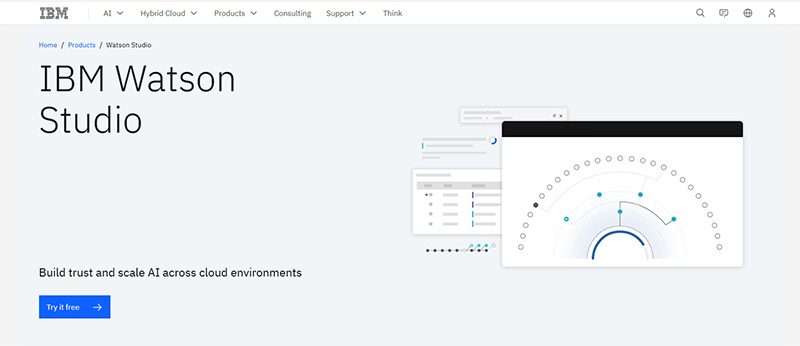
IBM Watson has been a trusted name in technology. It even garnered attention when it guest-starred on Jeopardy! But IBM Watson is now within reach for businesses with the IBM Watson Studio. This is one of the most utilized artificial intelligence solutions that financial and medical institutions could use.
Features:
- Build model pipelines
- Refine data with a graphical flow editor
- Visual tooling
- Open source framework
- Model embedding, monitoring, and management
- Data access through the cloud
- AI model drag-and-drop
- Transaction details
- Lifecycle automation
2. Salesforce Einstein
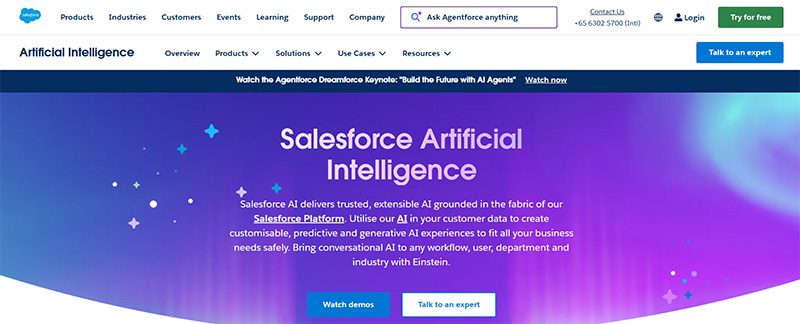
If you need to optimize your CRM tasks, using Salesforce Einstein is your best bet. If you want to get more leads and nurture them, Salesforce Einstein helps you understand them better through deep insights. Plus, you don’t have to do the guesswork anymore. Einstein will help you understand the next steps when nurturing leads and converting them into customers. Not to mention, Einstein can also help you with customer service.
3. Edgeverve ExtractEdge
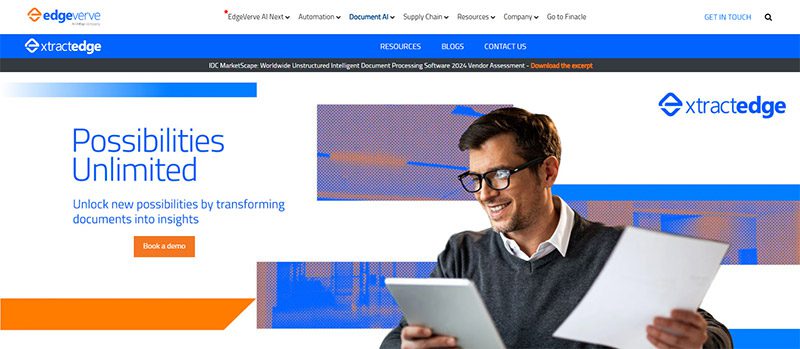
Optimize your business process with Edgeverve ExtractEdge. Previously known as Infosys Nia, your business will have a much more efficient way in processing documents. One of its benefits is getting intelligence from documents. From there, they process the data and help enterprises and businesses with their productivity and decision-making processes. Two industries that can greatly benefit from this artificial intelligence solution are banking and insurance.
4. Azure Machine Learning
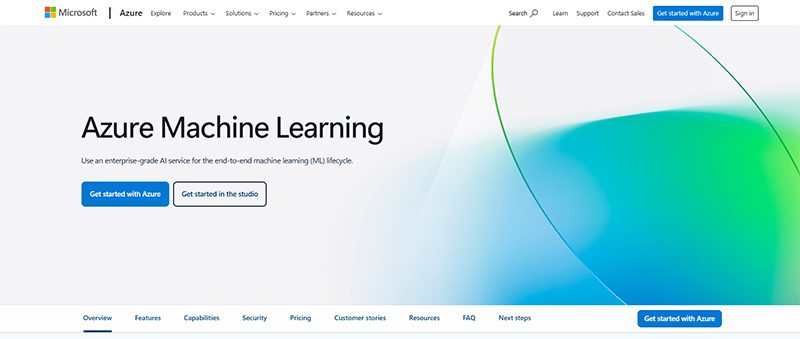
Get things done faster with your own frameworks and models through Azure Machine Learning. This artificial intelligence solution is ideal for data scientists and software engineers to automate and streamline several business processes using Machine Learning. Here are some of their notable features:
- Data labeling
- Collaborative notebooks
- Drag-and-drop machine learning
- Responsible machine learning
- Model registry and audit trail
- Managed endpoints
- Interoperability with other Azure services
- Data preparation
- Automated machine learning
- Reinforcement learning
5. H2O AI
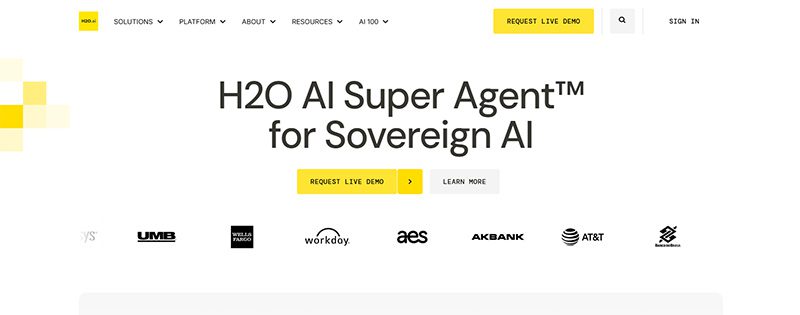
H2O AI is one of the most utilized artificial intelligence solutions because it is jam-packed with features. Not only that, H2O AI can be used by industries or institutions like financial services, governments, health, insurance, manufacturing, marketing, retail, and telecommunications.
With H2O AI, you can ensure that you can build accurate models quickly. Plus, they’re also transparent! You can also analyze business performance and know how to adapt to changes. Plus, you can become an innovator in your field!
Under their Make, Operate, and Innovate approaches, here are their platform’s capabilities:
- Feature Transformation
- Machine Learning
- Explainable AI
- Low Code App Development
- Machine Learning Operations
- AI AppStore
6. Coro
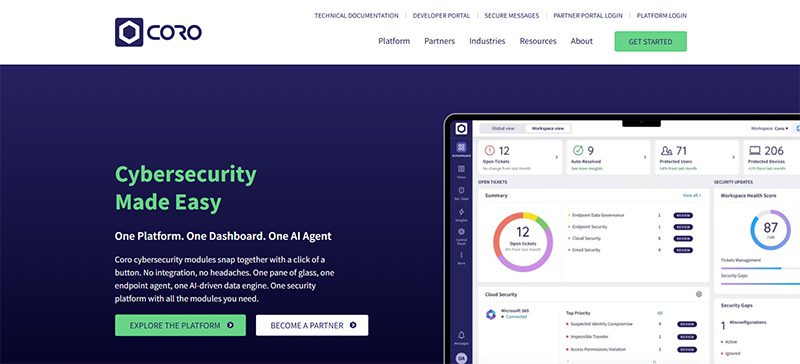
If your business is prone to cyberattacks or cannot afford to have a cyberattack, artificial intelligence solutions can protect you from that. One of them is Coro. Coro ensures that your company is protected from any hacking or malware infecting your emails, devices, and cloud apps! Aside from protecting you, Coro will alert you on your next steps to ensure you’re safe.
7. Vertex AI
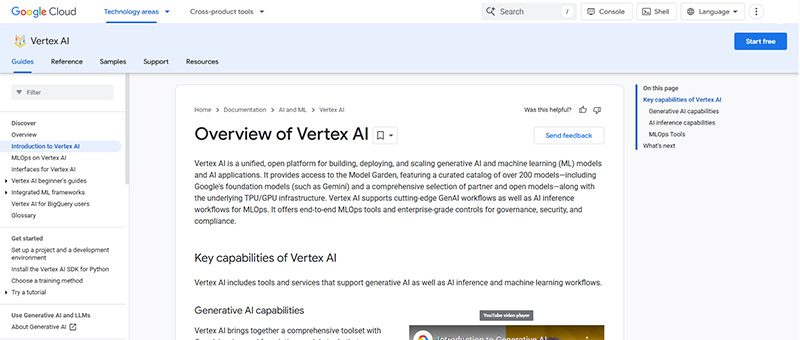
Vertex AI is Google’s own machine learning and AI platform. You can train and deploy your AI or machine learning models. Plus, you can also do the following:
- Data Labeling
- Feature Store
- Workbench
You can launch your models through the Google Cloud, and you can access or view data anytime through Cloud Logging and Monitoring.
8. Rendered.ai
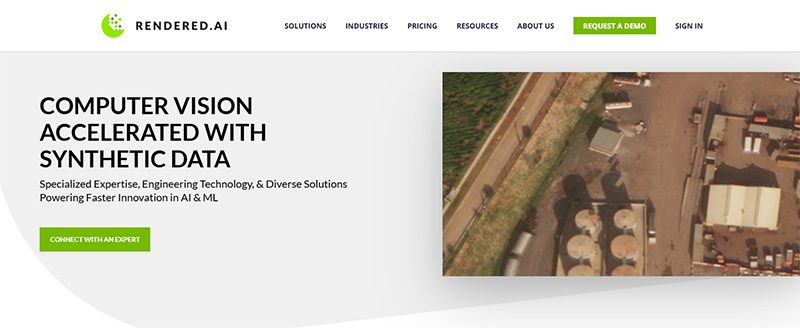
For your autonomous systems, defense applications, or advanced computer vision needs, there’s Rendered.ai. It specializes in generating physics-based synthetic datasets that make it easy for you to train AI models when real-world data is scarce, unavailable, or impractical.
- Autonomous Vehicles and Robotics – Simulate rare driving situations that are too costly or dangerous to see in real life.
- Defense and Aerospace – Can generate synthetic radar, infrared, and multispectral data for training AI models for mission-critical environments.
- Healthcare Imaging – Can create synthetic X-rays to improve diagnostic AI systems
9. Tealium
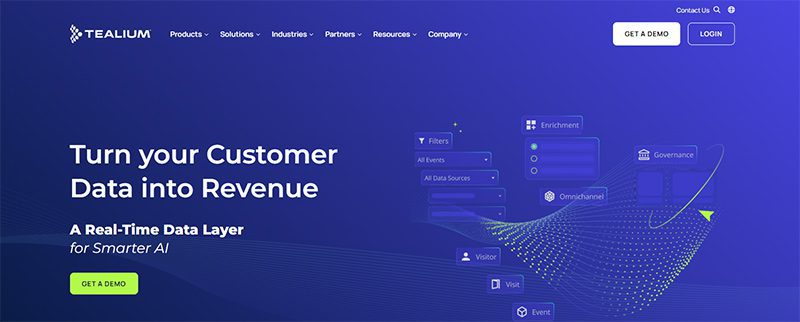
Marketers rejoice, Tealium is an artificial intelligence solution to optimize your marketing campaigns. Tealium ensures that you can grow and acquire your audience! They do it through segmentation and audience insights. But it doesn’t stop there. The AI solution also helps you with loyalty, retention, customer experience, and personalization. Other solutions are:
- Predictive insights and customer analytics
- Data collection and privacy
- Single view of the customer
- Operationalizing mobile data
The industries that can greatly benefit from Tealium are:
- Finance
- Healthcare
- Pharma
- Retail
- Sports & Entertainment
- Travel & Hospitality
10. Sisense
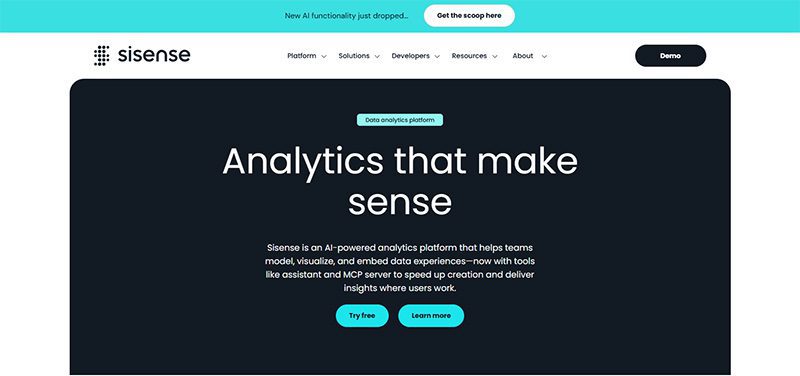
Here’s another business processing AI solution to help your business operate smoothly. Sisense will help you learn more about your company from every department. If you’re running marketing campaigns, Sisense can analyze them and improve your ROI. You can also get data to improve performance. Plus, you can mitigate risk through analytics.
Final Thoughts
Artificial intelligence solutions can streamline business processes, create models for data scientists and software engineers, and analyze data. With AI’s help, you can increase productivity and get more value for your business.

Here are the Best Design Agencies in New Jersey in 2026

The Biggest Hidden Cost in Agencies Isn’t Talent — It’s Throughput

The ‘Boring’ Internal Upgrade Behind Many $100M-Scale Companies

What’s the Best Logo Design Agency in Chicago?

The Software As A Service Business Model Explained

Best Design Agency in Washington – 2026 Top Picks

Top 10 Email Marketing Software Modern Businesses Need Today

OpenStudio – Business Management All-In-One
Top 10 Email Marketing Software Modern Businesses Need Today
The Software As A Service Business Model Explained

Top 10 Artificial Intelligence Solutions Your Business SHOULD Use

The Biggest Hidden Cost in Healthcare Isn’t Staff Time. It’s Operational Friction.

What’s the Best Design Agency in Arizona for Small Businesses?

5 Quiet Operational Leaks Costing Fortune 500s Millions
 Uncategorized5 days ago
What’s the Best Logo Design Agency in Chicago?
- Uncategorized2 days ago
The Biggest Hidden Cost in Agencies Isn’t Talent — It’s Throughput
- Uncategorized2 days ago
Here are the Best Design Agencies in New Jersey in 2026
- Uncategorized2 days ago
The ‘Boring’ Internal Upgrade Behind Many $100M-Scale Companies


