Uncategorized
The Biggest Hidden Cost in Agencies Isn’t Talent — It’s Throughput
Published
3 minutes agoon

TLDR: The real challenge for agencies isn’t managing talent costs but ensuring efficient throughput. Success in design services depends on streamlined processes, quick turnarounds, and managing multiple projects at once.
In the agency world, the conversation surrounding profitability almost always circles back to one metric: talent. Founders and operators meticulously calculate billable hours, analyze utilization rates, and fret over salary bands. The logic seems sound—if people are your product, then the cost of those people must be your biggest expense. However, this traditional view overlooks a more insidious cost that bleeds revenue silently: throughput. This is the real hidden cost of agencies.
Throughput is defined as the rate at which an agency completes and delivers projects over a specific period. It is distinct from activity. A designer can be “busy” for 40 hours (high utilization) yet deliver zero finalized assets due to internal friction (low throughput). When agencies focus solely on hiring the best talent without optimizing the flow of work, they create expensive bottlenecks. The talent is present, but the value is trapped.
The real constraint on growth is rarely the inability to hire; it is the inability to ship. When the flow of work stagnates, margins erode not because salaries are too high, but because the revenue realization cycle is too slow.
The Agency Bottleneck Breakdown
To understand why throughput is a costlier problem than talent, one must look at where work actually stops. In many agencies, the “production” phase is relatively fast. A talented writer can draft a blog post in three hours. A senior designer can mock up a landing page in an afternoon. The delays—and the associated costs—accumulate in the spaces between the work.
The Approval Trap
The most common throughput killer is the approval cycle. Work sits in a queue waiting for a creative director or a client to review it. During this time, the asset is “work in process” (WIP). In manufacturing, WIP is considered a liability because it ties up cash without generating revenue. In agencies, WIP ties up mental bandwidth.
When a creative team member has to switch contexts because their primary project is stuck in approval, they lose efficiency. Every time a project stalls, the agency pays a “context switching tax” to get that talent refocusing on something else.
The Rework Loop
Rework is often treated as a quality control necessity, but operationally, it is a failure of throughput. Every hour spent revising a project that was briefed poorly or executed without clear guidelines is an hour that cannot be billed to a new initiative.
If an agency’s rework rate is 30%, it effectively means that for every ten hours of talent purchased, only seven are productive. Hiring more expensive talent rarely solves this; better systems do.
Creative Inconsistency
When processes are not standardized, every project becomes a reinvention of the wheel. If one art director organizes files differently than another, or if brief structures vary from account to account, the friction reduces the velocity of the entire team. Inconsistency makes it impossible to predict timelines accurately, which in turn makes resource planning a guessing game.
The Evidence: Why Flow Matters More Than Headcount
Operational studies in service industries consistently point to “flow” as the primary determinant of profitability. When flow is obstructed, adding resources (hiring more people) often exacerbates the problem rather than solving it. This is known as Brooks’ Law in software development: “Adding manpower to a late software project makes it later.” The same applies to creative agencies.
Agency leaders often report that their teams feel overworked despite financial reports showing they should have capacity. This disconnect occurs because the team is burdened by the friction of the process, not the volume of the creative output. They are spending energy pushing work through a clogged pipe rather than creating.
From an operational perspective, a system that allows a junior designer to ship five assets a day is often more valuable than a system where a senior designer ships two assets a week due to administrative drag. The cost of the senior talent is higher, but the throughput is lower, resulting in a significantly higher cost per unit of output.
Systems That Improve Throughput
Improving throughput requires a shift from managing people to managing work. It demands structured, predictable processes that reduce ambiguity and keep projects moving.
Standardizing Inputs
Throughput problems often begin at the input stage. If briefs are vague, the output will inevitably miss the mark, leading to rework. Agencies that implement rigid briefing standards—where work cannot begin until specific criteria are met—often see a dramatic increase in delivery speed. It seems counterintuitive to add a barrier to starting, but clean inputs lead to clean outputs.
Decoupling Creative from Administration
High-throughput agencies separate the act of creating from the act of managing. When creatives are forced to manage their own client communications, file uploads, and scheduling, their creative throughput plummets. Specialized roles or automated tools that handle the “operations” of the project allow talent to stay in a flow state.
Utilizing On-Demand Resources for Overflow
One operational strategy agencies use to maintain throughput is the integration of flexible resource layers. When internal teams are at capacity, the flow of work typically stops, creating a backlog. To prevent this, operationally mature agencies often utilize on-demand services to handle routine execution or overflow.
This is where platforms like Penji fit into the ecosystem. Rather than pausing new client work while waiting to hire a full-time employee—a process that can take months—agencies use on-demand subscriptions to immediately offload production tasks. By routing overflow work to an external resource, the internal team maintains its focus on high-level strategy, and the agency maintains its delivery cadence. It is a decision based on preserving flow rather than just filling a seat.
Rethinking the Operating Model
The shift from talent-centric to throughput-centric thinking changes how an agency invests. Instead of solely increasing the payroll budget, leadership begins to invest in asset management systems, automated project management workflows, and clearer operational hierarchies.
The goal is to create a machine where the talent is the engine, but the chassis—the operations—is built for speed. When throughput is optimized, talent burnout decreases because the frustration of “stalled work” evaporates. Clients are happier because delivery is predictable. And most importantly, the agency becomes more profitable without necessarily having to charge more, simply because it wastes less.
Throughput is the hidden lever of agency growth. It is unglamorous and operational, but it is the difference between an agency that struggles to scale and one that grows effortlessly.
Frequently Asked Questions
Q1: What exactly is throughput in an agency?
Throughput is the rate at which an agency completes and delivers projects. Unlike “busyness,” which measures activity, throughput measures finished output over a specific period.
Q2: Why is throughput more costly than talent?
Talent costs are visible fixed costs that are budgeted for. Throughput inefficiencies are invisible variable costs that drain revenue through delays, non-billable rework hours, and lost opportunity costs.
Q3: How do agencies measure throughput?
Agencies measure throughput by tracking project completion rates, turnaround times per asset, billable utilization versus actual delivery, and adherence to client delivery timelines.
Q4: What are the biggest causes of low throughput?
The primary causes are inefficient workflows, lengthy approval cycles, unclear project briefs, poor communication, and a lack of standardized processes (over-customization).
Q5: How can agencies improve throughput without cutting talent?
Agencies can improve throughput by investing in automation, streamlining approval processes, balancing workloads with on-demand resources, and building a culture that values operational discipline as much as creative excellence.
You may like
Uncategorized
The ‘Boring’ Internal Upgrade Behind Many $100M-Scale Companies
Published
55 minutes agoon
February 8, 2026
TL;DR: Big companies often slow down not because of poor strategy, it’s hidden friction. What fixes this isn’t flashy campaigns, but the “boring” upgrades.
Many business owners use various marketing channels, launch new products, or change pricing in their pursuit of growth. With this, they feel the excitement; however,the real struggle lies in execution. A flashy campaign can create a spike, but when a system is weak, it breaks under pressure. At scale, predictable performance systems drive revenue more than gimmicks. Here is the “boring” internal change that many successful companies have employed, you might want to explore.
The Problem Before the Change
Business owners and founders often find that execution is slowed down by internal friction. This results in delayed campaigns, revision loops, and unclear task ownership. Not to mention urgent requests that derail workflows. And when teams push harder to make up for it, their effort alone does not scale. While it is not a total failure, the unpredictability can be felt by mid-stage and large companies.
The Hidden Costs of Inconsistencies in Execution

Here’s a fact many business owners underestimate: operational drag erodes growth. Delays not only affect your project’s progress, but they also slow down the number of learning cycles a business can operate. When a launch gets stalled, you have little chance to test, adapt, and improve.
Another added cost is inconsistent outputs that weaken perception of your brand and the impact of your marketing. Customers do notice when your campaigns look uneven or when their delivery looks unreliable. In time, customer trust is affected, and your marketing spend becomes less effective.
The “Boring” Internal Upgrade
When a company’s growth gets stunted, the instinct of many business owners is to add more team members or create a new flashy gimmick. What they do not see is that the real unlock comes from something less glamorous: standardizing the workflow.
The upgrade looks good in writing:
- Standardized intake processes for requests, allowing your team to know precisely how work goes in the pipeline.
- Clear prioritization and turnaround rules prevent urgent tasks from stopping planned workflows.
- Defined ownership for approval means reducing bottlenecks and endless sign-offs
- Limiting revisions with documented feedback that lets projects go into endless loops.
This operational discipline may not feel progressive at first. It is predictable, structured, and systemized: not as exciting as when you hear “new campaign.” However, the outcome is real. When you standardize your workflows, the execution becomes faster. more consistent and scalable.
Thus, what may seem “boring” is an upgrade that delivers more impact on your revenue than the flashy moves you replace it with. Think of it as a quiet foundation that makes your initiatives more effective.
How Cause and Effect Drive Growth
To make your operations cleaner, you need to structure your workflows. But it does more than that, it creates a chain reaction that directly impacts your revenue. Standardized workflow reduces confusion while setting expectations. This leads to less context switching, which allows your team to keep its focus and not bounce between tasks.
And with fewer distractions, the rework cycles decrease, cutting down your wasted efforts. Also, the work moves faster, and campaign deliveries are quicker. This translates into more experiments that generate better performance insights that help with smarter decision-making.
When the insights feed back into execution, your revenue growth becomes repeatable and not random. When you hit the $50 to $100 million scale, predictability will matter. Again, when your workflow is structured, your organization will move in sync, which makes growth sustainable.
A Contextual Example

Fixing execution inconsistencies often gives business owners two options. Some build their own internal creative team while others rely on freelancers. The former can be resource-heavy while the latter can be unreliable.
Many businesses have found a third option: structured external partnerships. Graphic design services like Penji are an excellent example of this. Its model’s key features include unlimited design requests and revisions, fast turnaround times, and affordable pricing plans all rolled in one. You don’t have to go outside for all your creative work, it’s built into the system.
The point is not on the vendor itself, but on the discipline. When you plug into a systemized workflow, you’ll gain creative execution. A predictability that makes your campaigning easier, more consistent, and more cost-effective. When the operational problem becomes clear, the example demonstrates that value lies in execution discipline and workflow consistency. It isn’t about looking for the next flashy gimmick. This is the “boring” upgrade at work: structured, repeatable, and scalable.
What Should You Audit?
Your business’s operational drag can be difficult to pinpoint. To know what it is, you need to ask yourself the following:
- How much time does it take from request to delivery?
- How many revisions does each project go through?
- Who does the approvals, and how clear is that ownership?
- How often do you experience campaign delays, and what causes them?
When you gained enough information, you can now track simple operational metrics that can seem invisible at first:
- The age of the backlog: how long the requests wait for them to be worked on.
- Turnaround time: the average speed from start to completion.
- Frequency of revision: the number of cycles each project needs.
- Approval duration: how long the work waits for sign-off.
In short, throughput reveals weaknesses in the system. You need to measure it to know how you can improve. Auditing these shows you where execution is slowing down, quantifies the hidden costs, and builds the discipline that makes growth repeatable.
Strategic Takeaway
We may not be aware of it, but growth at scale isn’t hindered by poor strategy but is constrained by bottlenecks we miss spotting. Don’t be fooled by flashy campaigns or bold product moves, as these aren’t the valuable upgrades you need. They are the “boring” operational improvements that get rid of friction and make performance predictable.
When you’re at the $100M mark, the real growth lever is consistency. Structured workflows, clear approvals, and disciplined processes let your revenue compound in a repeatable manner. Remember, heroics and one-off stunts aren’t sustainable; only systematized execution does.
Uncategorized
What’s the Best Logo Design Agency in Chicago?
Published
3 days agoon
February 6, 2026By
Kelli Hugh
TLDR; If you want a logo that looks sharp, feels professional, and helps your business stand out, Penji is one of the easiest ways to get it. You get fast work, simple pricing, and a team that knows how to design for real businesses.
Finding the best logo design agency in Chicago sounds simple until you start looking. You see long portfolios, fancy websites, and big promises. But most business owners do not want a long search. They want a logo that works. They want something clean, strong, and ready to use everywhere.
Penji gives you a straightforward way to get that. Instead of hiring one designer or paying high agency fees, you get a full design team for one flat monthly price. You can request as many designs as you want, and the team keeps improving the work until you are happy.
Why Penji Works So Well for Business Owners
Simple pricing that makes sense
Most agencies charge by the hour. That means you never really know what the final cost will be. Penji gives you one monthly rate. It is clear, predictable, and easy to plan for. This is helpful for small businesses and growing teams that need steady design support.
Unlimited revisions
A strong logo takes time. You might want to try a new color, a new shape, or a new layout. Penji lets you request as many changes as you need. You can keep refining the logo until it feels right for your brand.
Fast turnaround
Speed matters when you are building a business. You cannot wait weeks for a logo. Penji usually delivers your first draft in one to two days. This helps you move faster, make decisions sooner, and keep your projects on track.
A full team of designers
Hiring one freelancer gives you one style. Penji gives you access to a full team. If you want something bold, simple, modern, or playful, there is always someone who can match the style you want. This gives you more creative options without extra cost.
More than just logos
Once your logo is done, you can request other designs too. Penji can help with social media graphics, ads, packaging, website graphics, and more with our unlimited graphic design services. You can build your entire brand in one place without searching for new designers.
Why This is Important for Chicago Businesses
Chicago is a busy and competitive city. Every industry has strong players. Restaurants, tech companies, local shops, and service businesses all need branding that stands out. A good logo helps people remember you. It also makes your business look trustworthy and ready for growth.
Choosing the best logo design agency in Chicago is not just about getting a nice picture. It is about finding a partner who understands what your business needs. Penji gives you speed, quality, and consistency. That combination helps brands grow faster and look more professional.
Features That Make Penji a Smart Choice
• Easy platform for sending design requests
• Designers who learn your brand over time
• Organized brand folders for your assets
• Quick communication inside the dashboard
• Clear pricing with no surprises
• Full ownership of every design you receive
These features make Penji a strong option for business owners who want high quality without the usual agency problems.
Final Thoughts
If you are searching for the best logo design agency in Chicago, Penji is a practical and reliable choice. It is fast, simple, and built for business owners who want great design without wasting time or money.
Frequently Asked Questions
How long does a logo take with Penji
Most first drafts arrive in one to two days.
Do I own the logo after it is finished
Yes. You get full ownership of every design.
Can I request other designs besides logos
Yes. Penji can create social media graphics, ads, packaging, and more.
Is Penji good for small businesses
Yes. The flat monthly rate makes it easy to budget, and you get a full design team without hiring in-house.
Uncategorized
Best Design Agency in Washington – 2026 Top Picks
Published
3 days agoon
February 5, 2026By
Carmen Day
Are you looking for the best design agency in Washington? You’re definitely not alone!
With hundreds of thousands of businesses operating in the Evergreen State, every brand message you send out there matters – from social media posts and email newsletters to ad creatives and your web and mobile UI/UX.
In this guide, let’s take a look at the best options you have if you want to make a lasting impression and turn your business into a brand customers talk about long after you leave the room.
1. Penji

Best for: Businesses of all sizes that need high-volume graphic design at a predictable monthjly rate
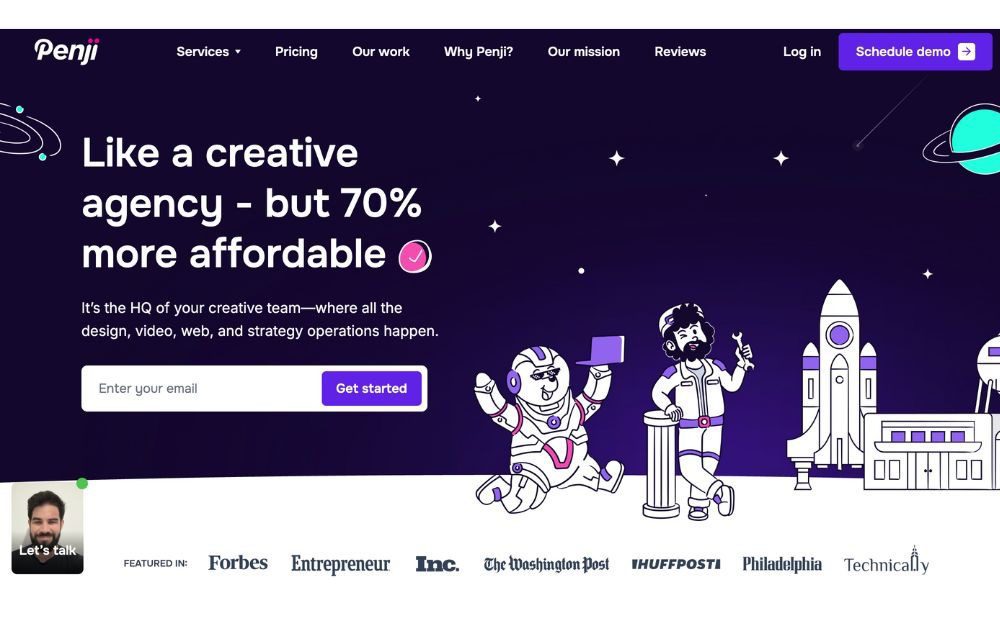
First on our list is Penji, which offers on-demand graphic design at a flat monthly rate. Because it operates remotely, it’s not only the best design agency in Washington but also the top platform that can service clients wherever they are in the world.
Penji only hires the world’s top 2% of designers. That means a subscription will give you access to the top designers who are well-versed in logo statistics, the latest design trends, visual communication psychology, and more.
2. People People

Best for: Lifestyle brands or non-profits that want boutique-style agency services
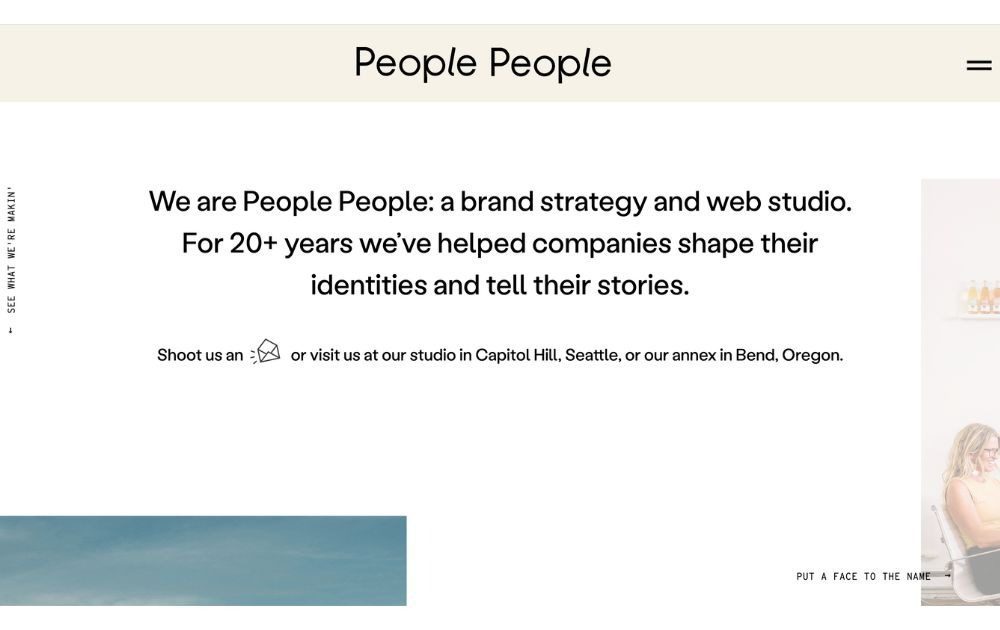
With a studio in Seattle and an annex in Bend, Oregon, People People is a favorite among lifestyle brands and non-profits. Despite operating a small studio, this agency is run by senior-level creatives. That said, it’s a good option for brands that want to make an impact.
3. Taillight

Best for: Large brands scaling up or companies undergoing major rebrands
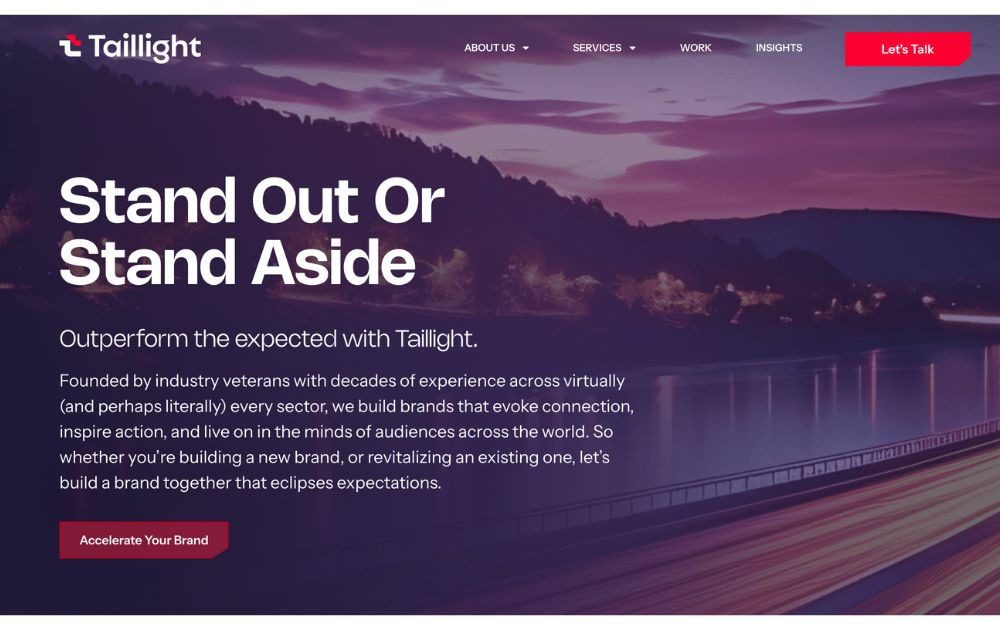
Taillight takes pride in working with a wide range of brands. Their clients range from Fortune 500 companies to startups and businesses scaling up. They focus on strategy-first branding approach and not too much on day-to-day visual communication tasks. That said, their top-tier services are available at custom enterprise-level pricing.
4. Hero Creative

Best for: Large companies willing to pay premium rates for high-end brand storytelling
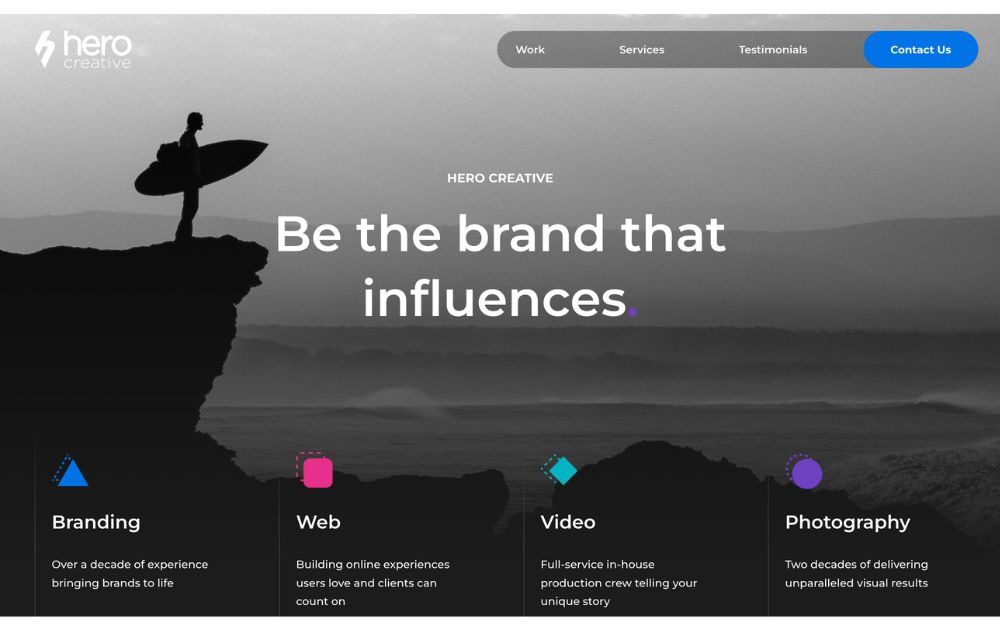
Many enterprises consider Hero Creative to be the best design agency in Washington. Offering premium agency services, from graphic design and photography to videography, Hero Creative is a one-stop shop for show-stopping brand narratives that come with a high-end price tag.
Featured Image Credit: Photo by Antoni Shkraba Studio from Pexels

The Biggest Hidden Cost in Agencies Isn’t Talent — It’s Throughput

The ‘Boring’ Internal Upgrade Behind Many $100M-Scale Companies

What’s the Best Logo Design Agency in Chicago?

The Software As A Service Business Model Explained

Best Design Agency in Washington – 2026 Top Picks

Top 10 Email Marketing Software Modern Businesses Need Today

What’s the Best Design Agency in San Francisco?

How To Do Business Marketing For Free

OpenStudio – Business Management All-In-One

Top 10 Email Marketing Software Modern Businesses Need Today

The Software As A Service Business Model Explained

Top 10 Artificial Intelligence Solutions Your Business SHOULD Use

The Biggest Hidden Cost in Healthcare Isn’t Staff Time. It’s Operational Friction.

What’s the Best Design Agency in California? Our 4 Top Picks
Trending
- Business3 days ago
Top 10 Email Marketing Software Modern Businesses Need Today
- Business3 days ago
The Software As A Service Business Model Explained
- Uncategorized5 days ago
What’s the Best Design Agency in San Francisco?
- Uncategorized3 days ago
Best Design Agency in Washington – 2026 Top Picks
- Uncategorized3 days ago
What’s the Best Logo Design Agency in Chicago?
- Uncategorized55 minutes ago
The ‘Boring’ Internal Upgrade Behind Many $100M-Scale Companies