Technology
Top 10 Quality Wireless Lavaliers Under $300

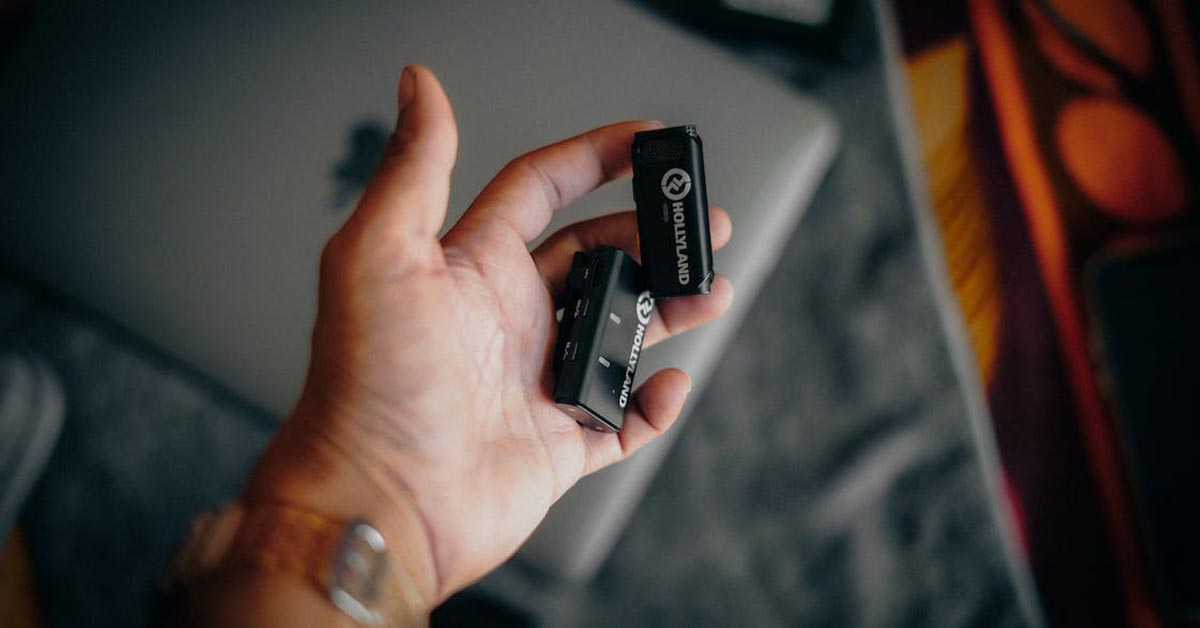
Wireless microphones are offered at different price points. But the question remains: do they live up to expectations? Whether you’re a content creator or a presenter, there are affordable options that can deliver crystal-clear audio without breaking the bank. Whatever your reason for buying, we’ve narrowed your options for the top 10 quality wireless lavaliers under $300.
1. Rode Wireless Go II
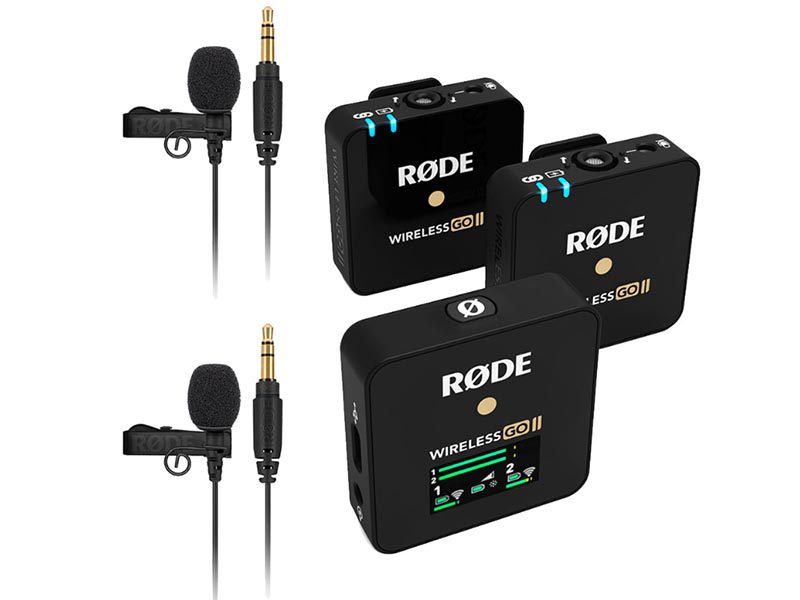
The Rode Wireless GO II is a fantastic choice for great audio for independent filmmakers, vloggers, streamers, and other content creators. The Rode Wireless GO II’s innovative transmitters feature built-in omnidirectional microphones. You can use them as clip-on lav mics and as standard wireless transmitters with 1/8-inch mic inputs for your lavalier microphones.
Since the receiver is ultra-compact, it easily clips to your camera strap or even your clothing. In other words, the Rode Wireless GO is the ideal single-channel wireless microphone system for on-the-go content creators.
Pricing: $199.00
2. Shure PGXD14/85-X8
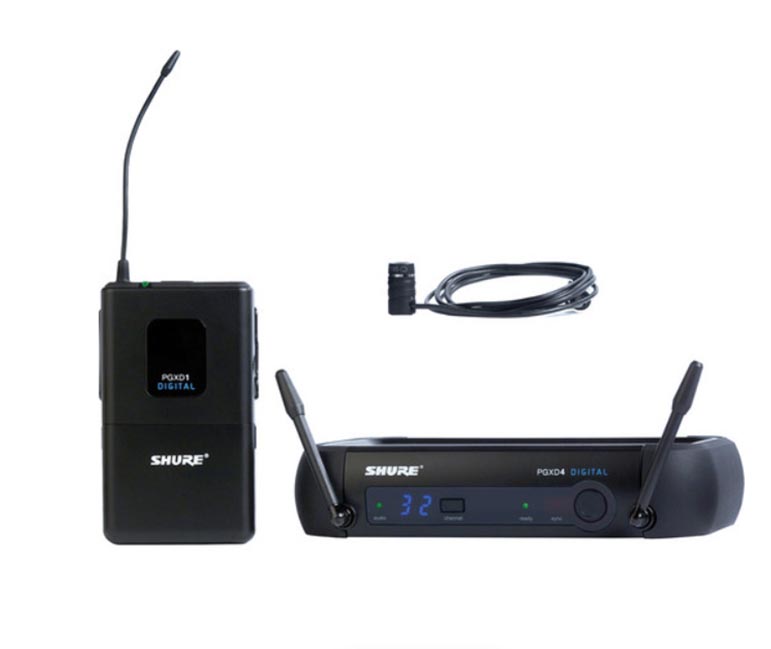
The Shure PGXD14/85 wireless lavalier offers high-quality digital audio in a cost-effective and easy-to-use kit. Its portable tabletop receiver makes it excellently suitable for presenters, lecturers, fitness instructors, performers, and DJs working in small venues.
The rugged bodypack transmitter easily clips onto a belt or guitar strap, providing a quality frequency range and up to 10 hours of continuous use.
Pricing: $208.01
3. Hollyland Lark Max
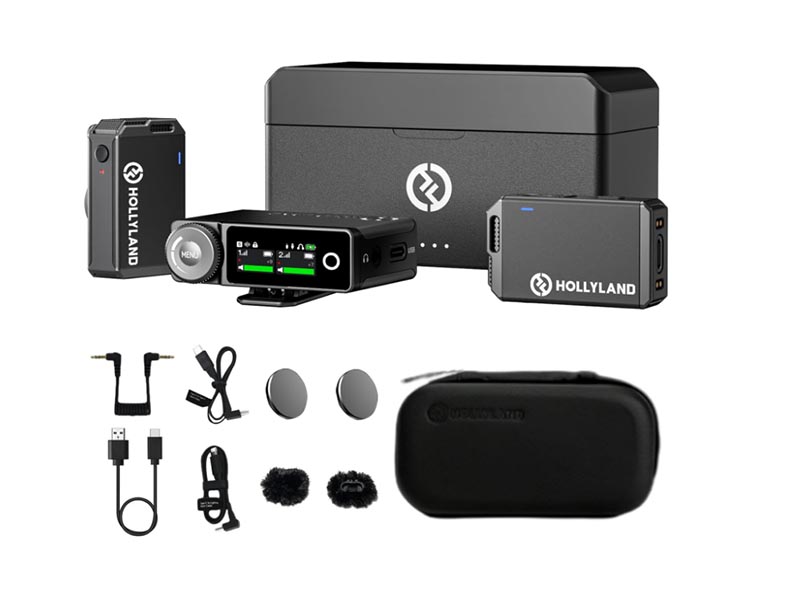
Hollyland Lark Max enables high-quality recording even in a loud environment. It has an Environmental Noise Canceling (ENC) system that effectively recognizes and reduces environmental noise while capturing low-frequency audio details.
Lark Max is perfect for outdoor interviews and vlogging. No additional app is needed for this device, thanks to one-click recording. Each transmitter has an 8GB,14 hours duration internal audio recording, recording epic sound quality in uncompressed WAV files.
Lark Max comes with all the accessories you need to connect with the camera, iPhone, Android, or PC, all in one and ready to go.
Pricing: $166.22
4. DJI Mic
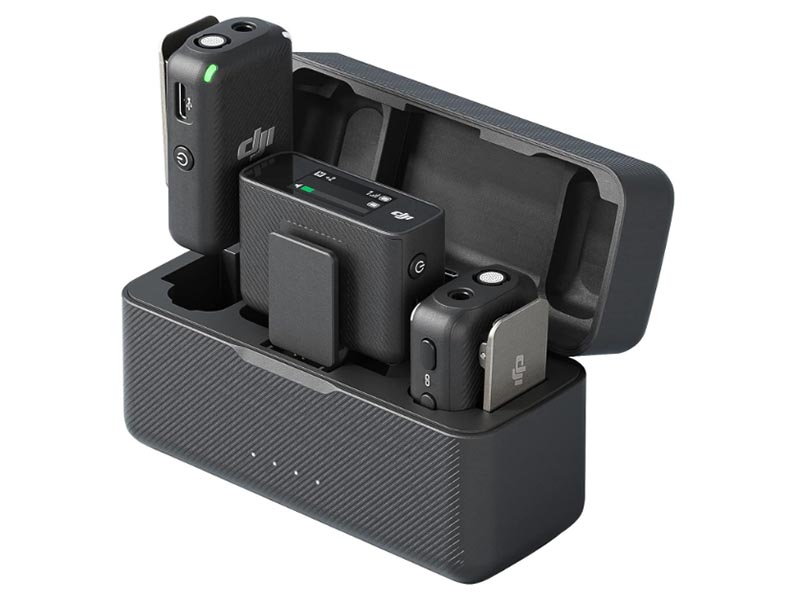
The DJI Mic is one of our best wireless mic systems on our list. It produces excellent recordings. Thanks to the charging case, its battery life is outstanding and worth the $48 price difference versus the Rode. DJI Mic is best for live streaming, vlogging, and outdoor recording scenarios, with a maximum transmission range of 250 meters in open spaces.
You can enjoy 5.5 hours of battery life from the transmitters, 5 hours from the receiver, and a maximum of 15 hours with the charging case. With these awesome features, you’ll spend less time worrying about battery levels.
Pricing: $246.51
5. Pixel Voical Lark X
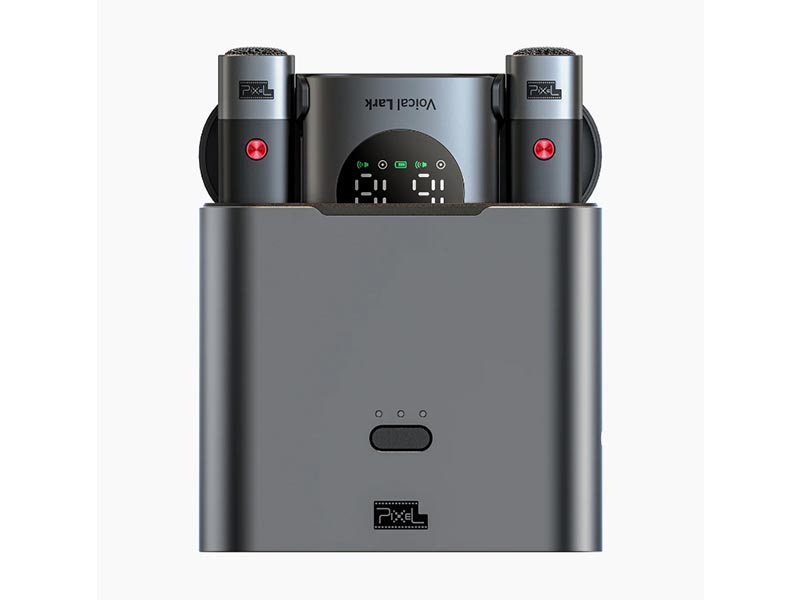
Pixel Voical Lark is a wireless system with two Lavalier mic transmitters, a receiver, and a portable charger box.
This wireless Lavalier microphone system uses UHF tech to transmit the signal clearly and stably without latency. It can also enhance vitality and preserve your original sound.
You can connect your computer or smartphone to play music as the background audio and insert your earphones into the receiver for monitoring and input functions. This feature makes your live streams or video conferences more convenient.
Pixel Voical Lark X wireless lavalier microphone is compatible with smartphones, iPads, DSLR cameras, laptops, and PA speakers. In addition, the mic can be used directly with YouTube, Facebook, Instagram, and TikTok for hassle-free video recording or live streaming.
Pricing: $199.00
6. EMW Omnidirectional Lavalier
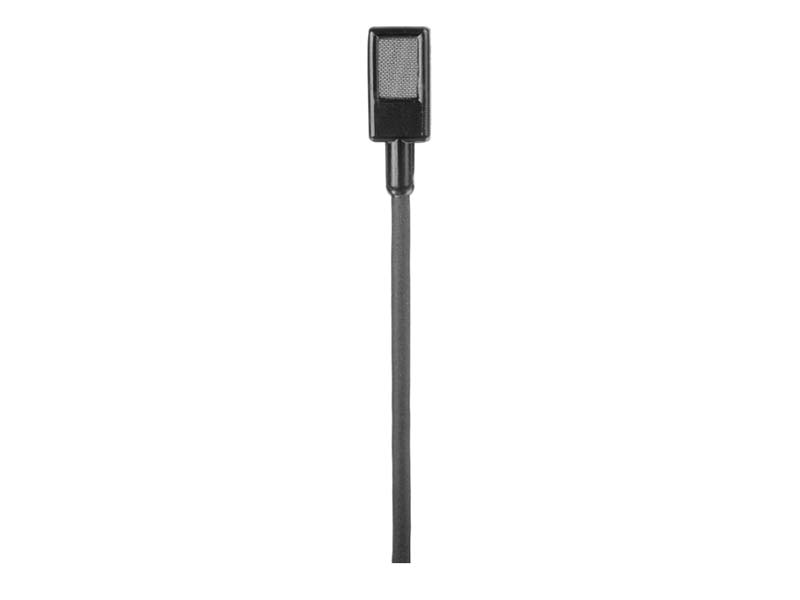
The EMW, a globally loved lavalier, provides top-notch sound while minimizing unwanted noise from clothing. Its design is both stylish and sturdy, almost waterproof.
The EMW Lavalier is consistently considered one of the best and most budget-friendly choices, essential for any audio setup. Whether you’re a news anchor, talk show guest, or involved in creating water sports documentaries and feature films, the Countryman EMW Lavaliers are always ready for action!
If you are looking for a lavalier that’s great for hiding beneath clothing in film, theater, and TV production, the EMW microphone is a great choice.
Pricing: $204.24
7. PowerDeWise Wireless Lavalier Microphone for iPhone iPad
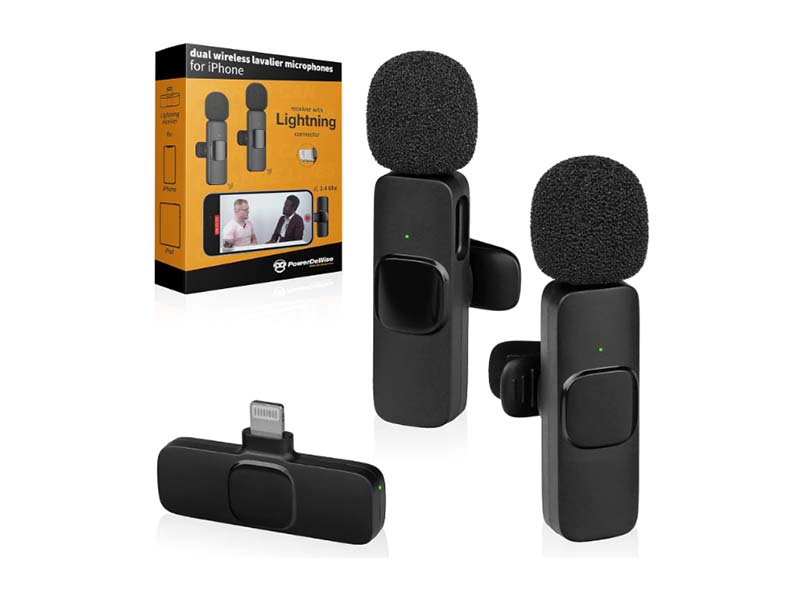
PowerDeWise wireless microphones for iPhone are excellent mini mics for video recording, vlogging, interviews, and more. In addition, the small wireless Lavalier microphones are easy to wear. Forget about getting tangled in cords again with this tiny microphone and seamless connectivity to your iOS device.
Pricing: $33.33
8. BOYALINK Wireless Lavalier Microphone for Smartphone Camera
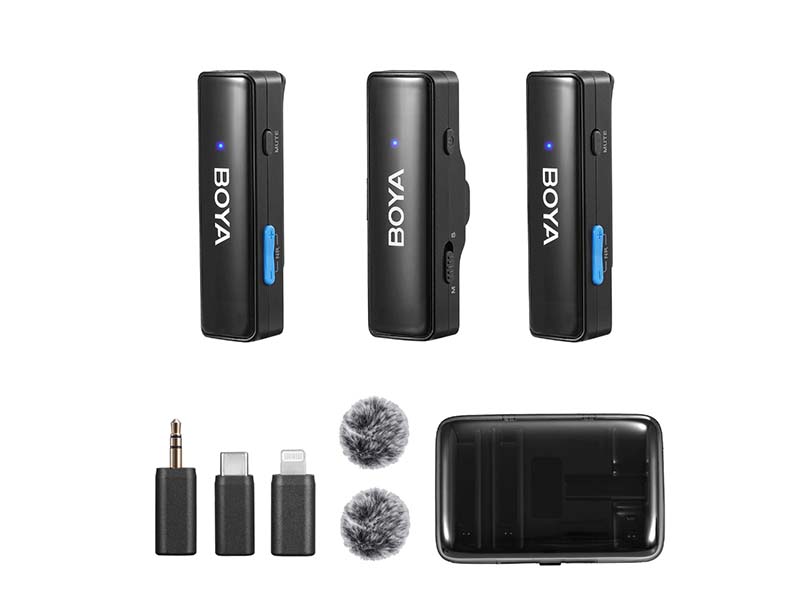
BOYALINK is a wireless microphone system for smartphones featuring dual 2.4G channels. With USB-C, Lightning, and 3.5mm TRS connectors, it’s the perfect solution for content creators seeking top-notch audio recording without the inconvenience of various connectors or adapters.
The all-in-one storage design, dual-channel wireless technology, and user-friendly setup make BOYALINK the go-to option for those wanting to elevate their audio recording experience.
Pricing: $99.99
9. Razer Seiren BT
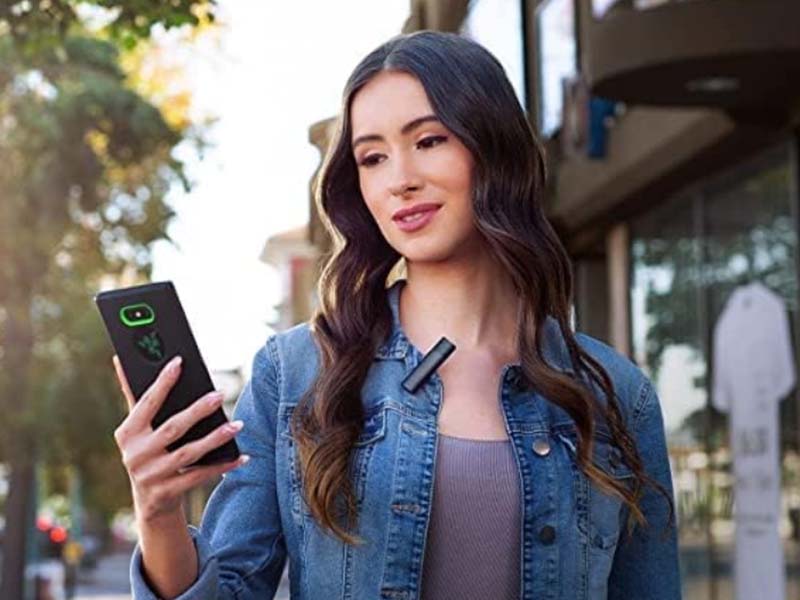
Razer Seiren BT is an excellent microphone and a perfect partner for streaming and vlogging.
The Omnidirectional Microphone captures voice clearly from any direction, offering flexibility without constantly holding the mic in one position. Likewise, it features enhanced indoor and outdoor noise noise suppression to block out noise like strong winds or noisy crowds.
Pricing: $95.99
10. Movo WMX-1
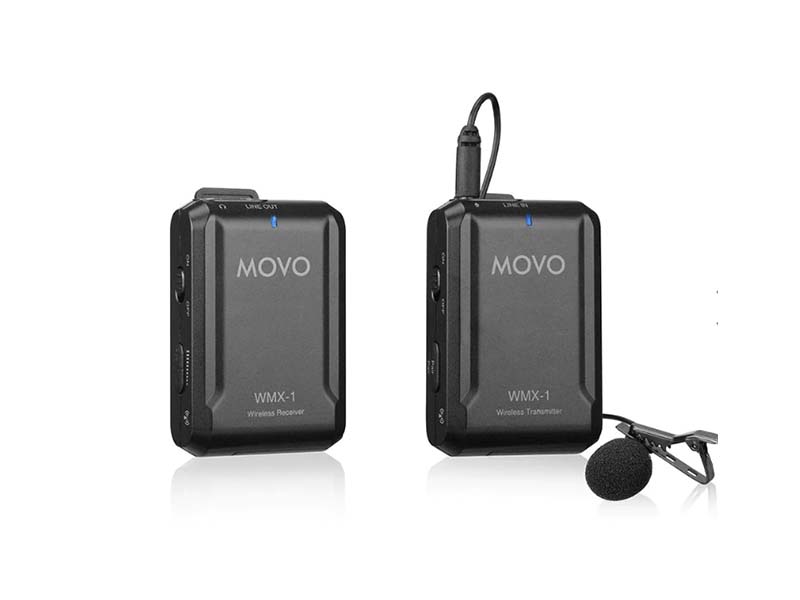
The Movo’s WMX-1 2.4GHz is a complete kit that can connect the wireless mic system to a DSLR, computer, or smartphone for less than $80. The kit includes cables compatible with the said devices and a quality lavalier microphone.
The range between the transmitter and receiver is 200 feet. Another convenient feature is that you can listen to your audio in real-time with the headphone input, ensuring the sound recording is accurate.
Movo MWX-1 suits independent filmmakers, vloggers, mobile journalists, and content creators.
Pricing: $79.95
Final Thoughts
In the era of content creation, wireless mic kits are becoming popular in the market. There are many options, so we narrowed your choices to quality wireless lavaliers. Rode is our Top 1 best overall pick with the Rode Wireless Go II. Its recording quality, range, and completeness allow content creators to record excellent audio across multiple platforms. It is indeed a value for your money!




Wireless internet and digital platforms have become the norm for managing businesses, driven by the widespread use of smartphones, laptops, and tablets. So, it comes as no surprise to see the demand for apps growing even more. If you want to create your own, here are the top 10 app development software that can help you create a stunning mobile app for your business.
1. Quixy
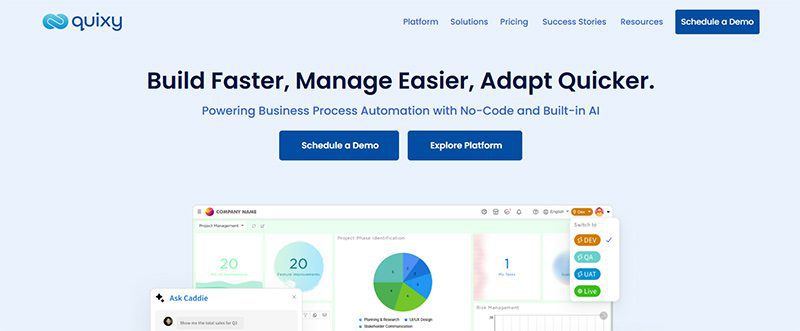
Businesses use Quixy’s cloud-based no-code environment to empower their consumers. The goal is to automate workflows by developing applications based on their needs. And everything is done without writing any code!
Quixy helps eliminate manual processes and translate ideas into applications. It assists business to become more transparent, innovative, and productive. Through the platform, users can either develop an app from scratch or customize the pre-made apps from the Quixy app store in minutes. Quixy has several drag-and-drop forms, including a rich text editor, e-signature, QR-Code scanner, and Facial Recognition widget.
Pricing:
- Contact the sales team to request a quote.
2. Zoho Creator
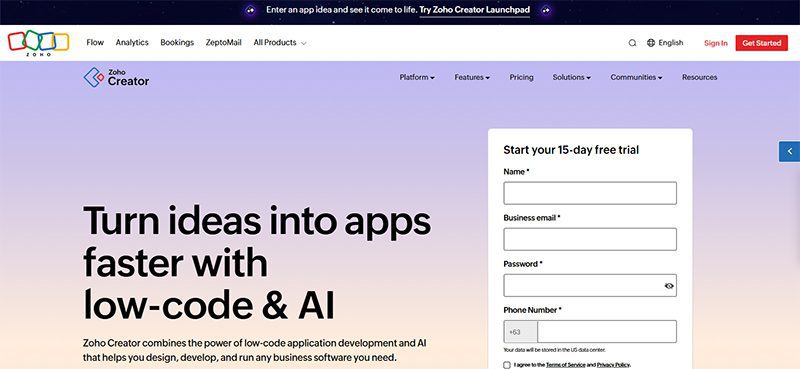
Zoho Creator is a low-code platform that fuels the fast development and delivery of web and mobile applications. Like Quixy, there’s no need to write endless lines of code to build an application. Some of the key features of Zoho Creator are AI, cloud functions, JavaScript, third-party integrations, multiple languages, offline mobile access, and payment gateway integration.
Zoho Creator promises to remove about 90% of the complexities in the application development lifecycle so that you can create the apps you need without too much trouble. From conceptualization to launch, Zoho helps you focus more on features, business value, and the customer—not code.
Pricing:
- Free 15-day trial
- Standard – $12/user/month
- Enterprise – $37/user/month
- Flex – contact them for pricing
3. AppyPie
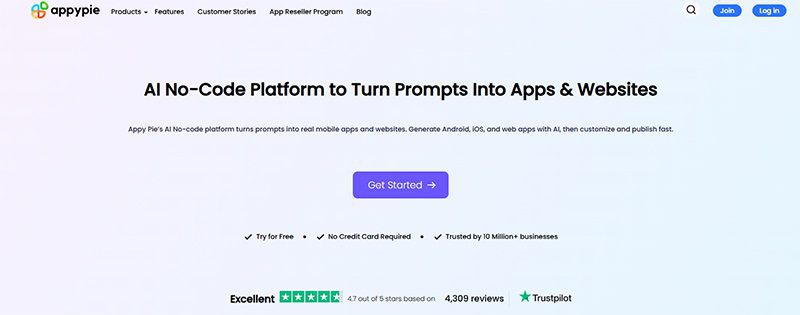
AppyPie allows you to build apps for multiple objectives. It has several app builders, covering payment app builders to worship app creators. Plus, you do not worry about resubmitting the app after making some modifications.
ApplePie can create apps for small businesses, restaurants, real estate radio, and much more. AppyPie’s no-code technology is precisely what it sounds like: programming without coding to build enterprise-grade applications.
Pricing:
- Free trial
- Basic – $16 /app/month
- Gold – $36 /app/month
- Platinum – $60 /app/month
- Enterprise – Price varies, contact the sales team
4. Google AppSheet
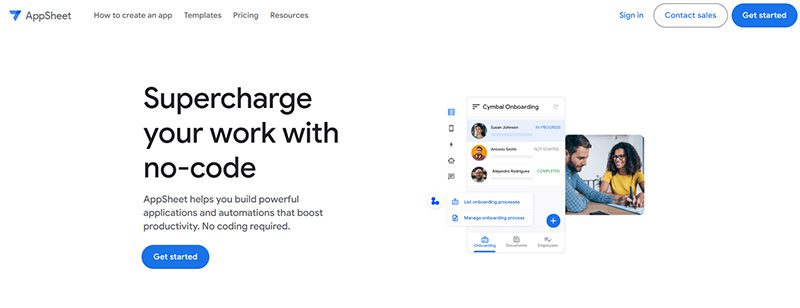
AppSheet is a trustworthy no-code platform, which means anyone can build powerful mobile and desktop apps minus the codes. With AppSheet, you can deliver an app that is rich in functionalities. It also provides shared innovation, team collaboration, security and governance, and lifecycle management for enterprise clients.
Pricing:
- Starter – $5/user/month
- Core – $10/user/month
- Enterprise Plus – contact the sales team to request a quote
5. Appery.io
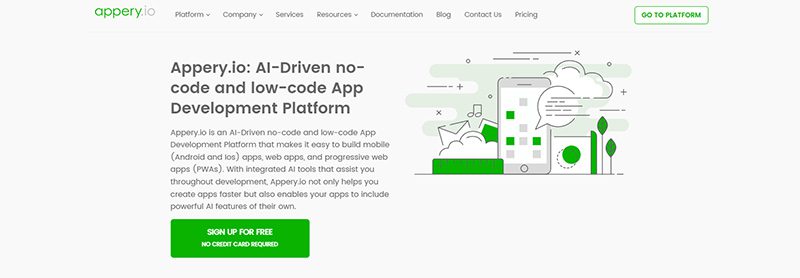
Our next app development software is called Appery.io. It is a low-code app development software for developing hybrid mobile apps, web apps, and progressive web apps (PWAs). Apps created through Appery.io work well with all devices and platforms. Aside from that, Appery.io helps you integrate your existing backend with your app. It also allows instant import and uses backend services in the app builder.
Pricing:
- Beginner – $25/month
- Pro – $70/user/month
- Team – $135/month
- Enterprise – contact them for pricing
6. Buildfire
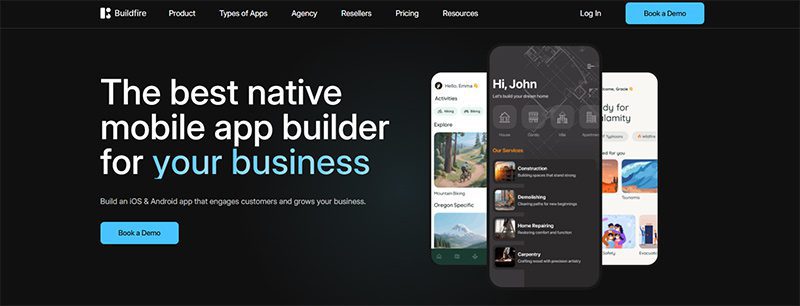
An excellent platform for small and medium-sized businesses, Buildfire helps you build native iOS and Android apps. You don’t need to have programming knowledge, thanks to its drag-and-drop builder. It has premium features, including a plugin marketplace, push notifications, analytics, media streaming, loyalty programs, and e-commerce integrations.
Pricing:
- Standard – $165/month
- Growth – $315/month
- Scale – $440/month
- Professional Services – Book a demo
7. UI Bakery
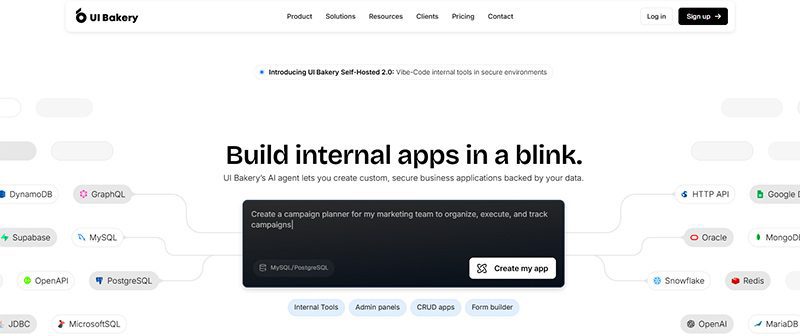
A modern low-code platform, UI Bakery can help you build stunning web and internal apps easily and quickly. It has an intuitive drag-and-drop interface, AI-assisted workflows, and seamless integration with popular databases and APIs. It also lets you design responsive applications without the heavy coding. If you want to create dashboards, admin panels, or full-fledged apps, this is the software for you.
Pricing:
- Free
- Builder – $25/per month/developer
- Team – $35/per month/developer
- Enterprise – contact them for pricing
8. Shoutem
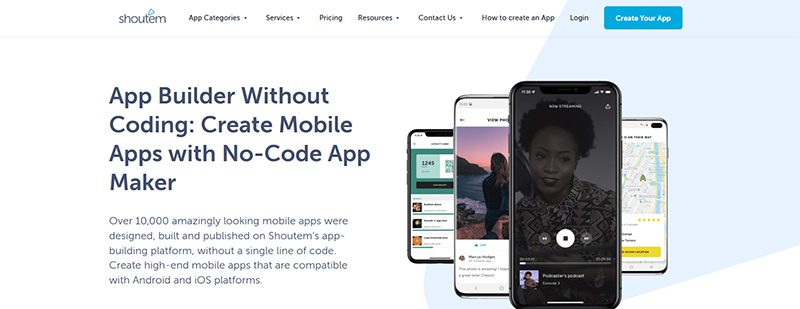
Shoutem is a Mobile App creator for small to large businesses. The app provides a drag-and-drop designer with a re-publish feature that is free of charge. Likewise, it can give you a preview in the native preview app.
Pricing:
- Android – $59/month
- Standard – $99/month
- Professional – $179/month
9. AppInstitute
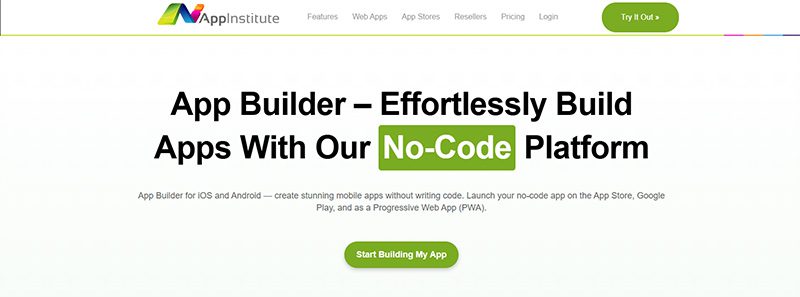
AppInstitute enables you to create apps for small businesses, including beauty salons, radio stations, sports and fitness, coffee shops, and more. It has a drag-and-drop app builder. It guides launching, promoting, and marketing your apps.
Pricing:
- Instant – $49/month
- App Stores – $99/month
- App Stores Premium – $149/month
10. Caspio
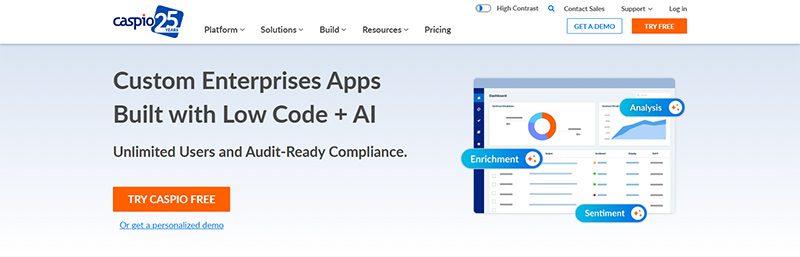
Caspio is a low-code app development platform designed for SMBs. It is an all-in-one platform for creating database applications with features of a visual application builder and a robust cloud database. Moreover, it is a powerful, secure, and compliant platform that provides interactive web-based reports. That said, it’s time to bid goodbye to obsolete systems and start building modern cloud-based applications for your business. With two decades of expertise, Caspio accelerates digital transformation for companies, industries, and organizations.
Pricing:
- Lite – $100/month
- Plus – $300/month
- Business – $600/month
- Enterprise – Contact the sales team
Conclusion
We hope you found the app development software that provides sufficient templates and features for building your app. However, creating a complicated app using a single builder is not always practical. You can develop several apps utilizing software that contains all the necessary features. And if you’re a startup company, consider getting the best startup software to build your online presence. This way, you’ll get the best value for your money.


Webinars are a powerful marketing tool you need to incorporate into your business. So, next time you’re hosting an event or demo for your clients, here are the top webinar platforms you can consider for 2026.
Before we list down the ten best webinar platforms of all time, here are some examples of webinars you can host:
- Customer onboarding
- Employee training
- Thought leadership
- Product demonstration
- Live classes
- Corporate communications
- New features
- Lead nurturing
1. GoTo
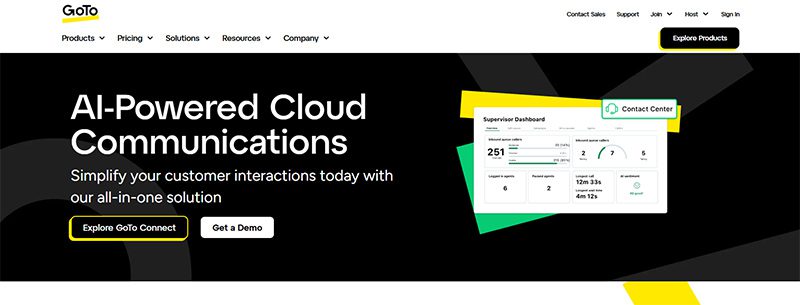
GoTo is an all-in-one video conferencing and webinar solution for many businesses and hosts. With GoTo, you can subscribe to one product at a time. That said, their webinar solution ensures security, enables personalization, and increases audience engagement rates. One reason webinar hosts love GoTo is its Stripe integration. That said, you can accept payments easily without subscribing to another invoicing app.
Pricing (billed annually):
- Reach (500 participants) – $69/mo
- Elevate (1,000 participants) – $299/mo
- Unlimited (Unlimited participants) Contact their sales team
2. WebinarNinja

WebinarNinja is the leading webinar platform for coaches and creators. This platform allows you to host a live, series, hybrid, and automated or evergreen webinar. Plus, you or your attendees won’t miss the webinar since they send automated emails for your upcoming events. In addition, you can engage audiences before or during the webinar with handouts, landing pages, chats, and audience presenters.
Pricing:
- Monthly billing – $0.60 per attendee/per month
3. My Own Conference
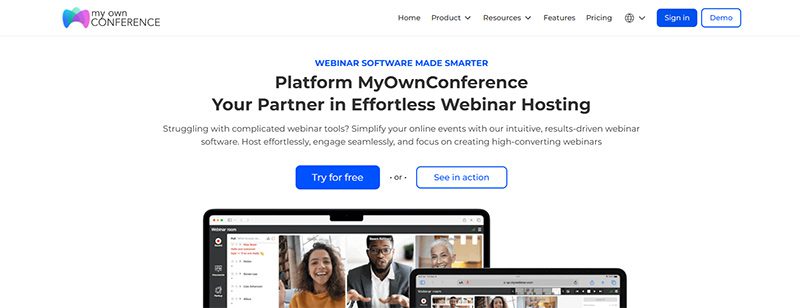
If you are hosting a webinar with fewer than 20 attendees and want to host it for free, My Own Conference is your best option. It’s a no-fuss choice because you won’t download any software and can schedule webinars anytime! Like other webinar platforms on this list, you can send an automated email about upcoming lessons or seminars anytime.
Pricing:
- Basic plan – Free
- Business plan – $28/month for 30 attendees
- Enterprise – Contact sales
4. Livestorm
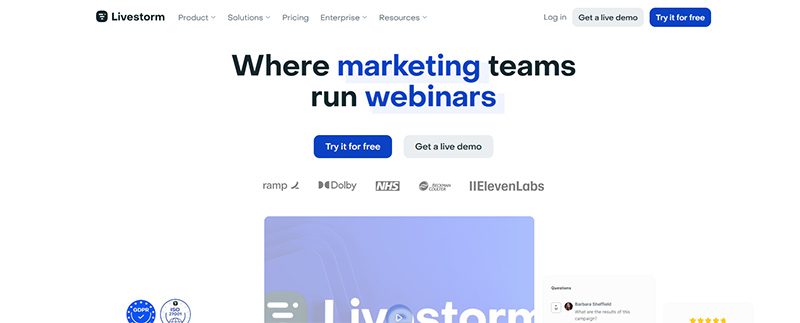
Livestorm is another webinar platform offering a free version. It’s limited, but it’s ideal for audiences of fewer than 30 people. Like other webinar platforms on this list, you can integrate Livestorm with apps, such as marketing automation and CRM software apps. Additionally, you can also customize your Livestorm webinars with branding and track your analytics.
Pricing:
- Pro – $105/mo
- Business – Contact sales
- Enterprise – Contact sales
5. Demio
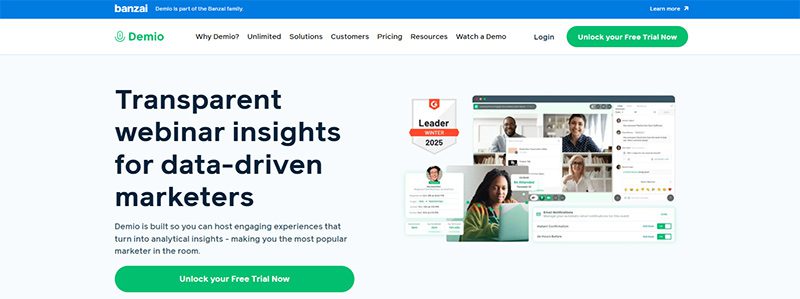
If you’re a marketer and are hosting a webinar, Demio is one of the best webinar platforms to use! With Demio, you can host a live, automated, or series webinar. You can customize Demio by adding your business logo and colors to maintain brand consistency anywhere. Plus, you can increase engagement rates with polls and handouts. Finally, you can monitor your webinar’s results with their tracking and analytics systems.
Pricing:
- Starter – $63/mo
- Growth – $117/mo
- Premium – $196/mo paid annually
6. Adobe Connect
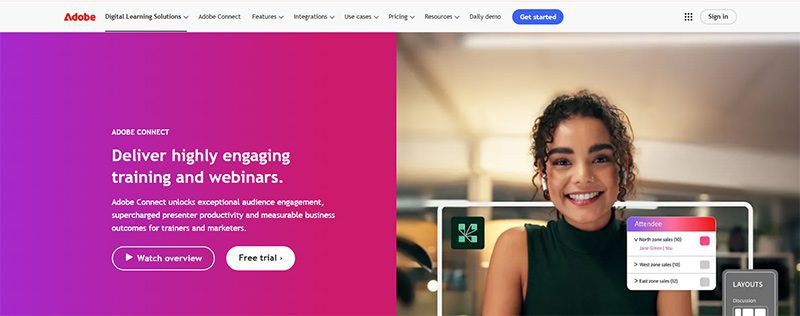
Adobe doesn’t just develop design and video editing software application. They also have a webinar platform, Adobe Connect, you can use to host events. In terms of features, they have the basics, such as polls, breakout rooms, chats, and integrations. However, Adobe Connect goes further with features such as drawing and annotations, templates, and asynchronous browsing. That said, Adobe Connect is steeper than most webinar platforms.
Pricing:
- Standard – $190 per year/per host
- Premium – $290 per year/per host
- Enterprise – $390 per year/per host
7. WebinarGeek

Here’s another webinar platform that doesn’t require a download when you use it. WebinarGeek lets you do everything on your browser, such as conducting live and hybrid webinars and co-presenting with other hosts. This platform is ideal for marketers since they have marketing integrations like Zapier, HubSpot, and MailChimp. However, creators, coaches, and teachers can benefit from the platform because of the engagement features.
Pricing:
- Basic – $81/month
- Premium – $116/month
- Enterprise – From $409/month
8. BigMarker
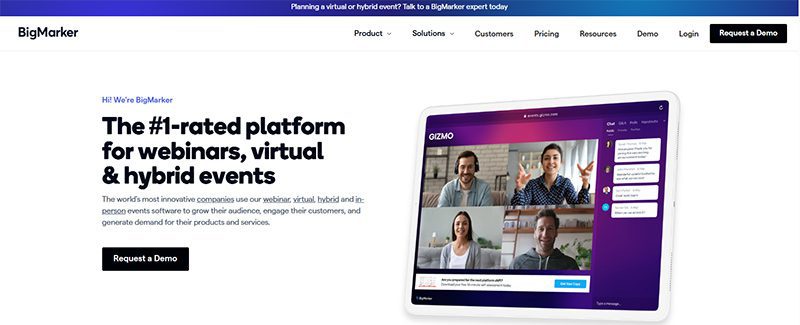
The final platform on our list is BigMarker. Once again, marketers and sales teams are the target audience for this webinar platform since it’s made to get more leads. Landing pages and registration forms make it possible. Plus, they can learn more about their potential customers through customer profiles and other marketing integrations. That said, creators can use BigMarker to host their events and invite attendees to their next event with their Call to Action feature.
Pricing:
- Basic (Up to 1000 attendees) – Request a quote
- Enterprise (Up to 10,000 attendees) – Request a quote
- Enterprise+ (Up to 500,000 attendees) – Request a quote
Final Thoughts
Webinars have increased in popularity because of accessibility and cost. For coaches and creators, they can engage with the audience even better through chats and downloads. Meanwhile, marketers can make the most out of webinars through tracking and analytics after talking to leads and customers. Luckily, for these creators, webinar platforms can help them achieve their goals and attract more audiences in different ways.

What’s the Best Design Agency in Pennsylvania?

What’s the Best Design Agency in California? Our 4 Top Picks

How To Do Business Marketing For Free

How to Determine Which Social Network Is Right For Your Business

Here’s How You Can Scale Your Business Beyond a 7-Figure Revenue

Know These Logo Statistics and Facts to Grow Your Business

What’s the Best Design Agency in Las Vegas?

170 Web Design Questions to Ask Your Clients
How to Determine Which Social Network Is Right For Your Business
Know These Logo Statistics and Facts to Grow Your Business
How To Do Business Marketing For Free

How You Can Effectively Beat the Fear of Starting a Business
Here’s How You Can Scale Your Business Beyond a 7-Figure Revenue