Business
Revamp Your Social Media Promotion Game: 10 Ideas to Supercharge Your Brand’s Online Presence


In today’s fast-paced digital world, social media has become essential for businesses to connect with their audience and increase brand visibility. However, with so much noise and competition, it can be challenging to stand out from the crowd. That’s why we’ve compiled a list of 10 fresh and creative social media promotion ideas to help boost your brand’s online presence and capture the attention of your target audience.
1. Interactive Content
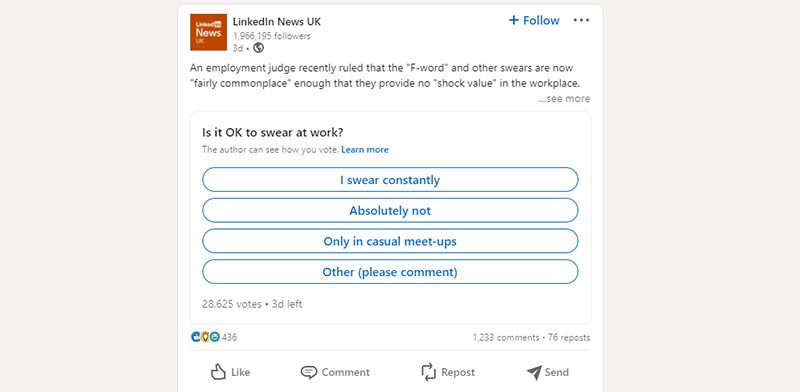
Instead of just presenting your audience with passive viewing experiences, create content that actively involves them in the content creation process. Interactive content often includes elements that encourage the audience to engage with the content in some way, such as through polls, quizzes, surveys, and interactive games.
This type of content can increase engagement and drive audience participation. This example from LinkedIn News UK is an excellent example of engaging, interactive content.
2. Influencer Collaborations

This social media promotion idea involves partnering with influential individuals to promote your brand to their audience. Influencer collaborations can help tap into a new and diverse audience, leverage the influencer’s trust and credibility, and increase brand awareness. To make your influencer collaboration a success, choosing an influencer who’s a good match for your brand is essential.
You also need to set clear goals and expectations for the campaign and compensate the influencer for their time and effort. A great example of this is Pantene’s collaboration with fashion influencer Chiara Ferragni.
3. User-Generated Content
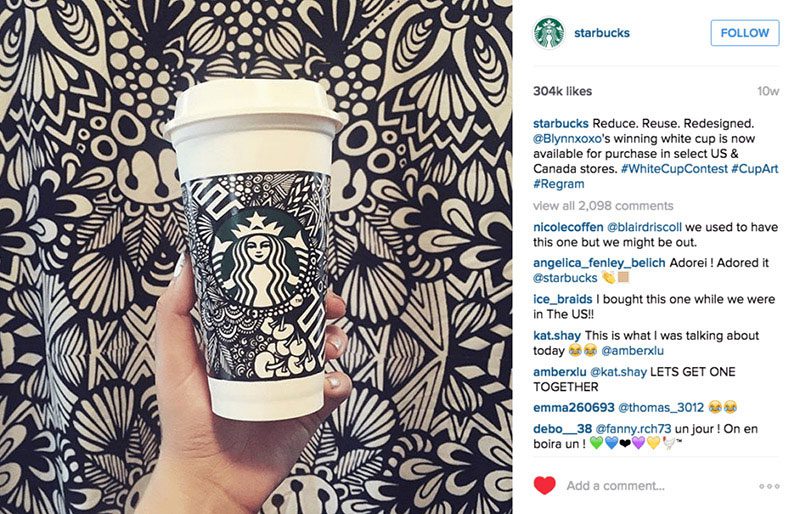
UGC, more popularly known as user-generated content, is content created by customers or fans of a brand rather than the brand itself. UGC can include reviews, photos, and videos in social media posts and comments. The benefits of UGC include increased social proof and brand awareness, as well as greater engagement and authenticity.
Brands can encourage UGC by hosting contests or using hashtags and actively soliciting customer feedback and content. Best practices for encouraging UGC include setting clear guidelines, showcasing the best content, and thanking users for their contributions.
4. Video Content
With platforms like Instagram and TikTok, video content has become increasingly popular on social media for many businesses. Examples of video content include short-form videos like Reels and Stories and longer-form live videos. To create compelling video content, it’s important to keep it short, engaging, and visually appealing.
Focus on storytelling, capturing the viewer’s attention within the first few seconds, and use captions and text overlays to make the content more accessible. Make sure the video is well-lit and has good sound quality, and consider using music or sound effects to enhance the experience. Finally, be authentic and stay true to your brand values and messaging.
5. Personalized Content
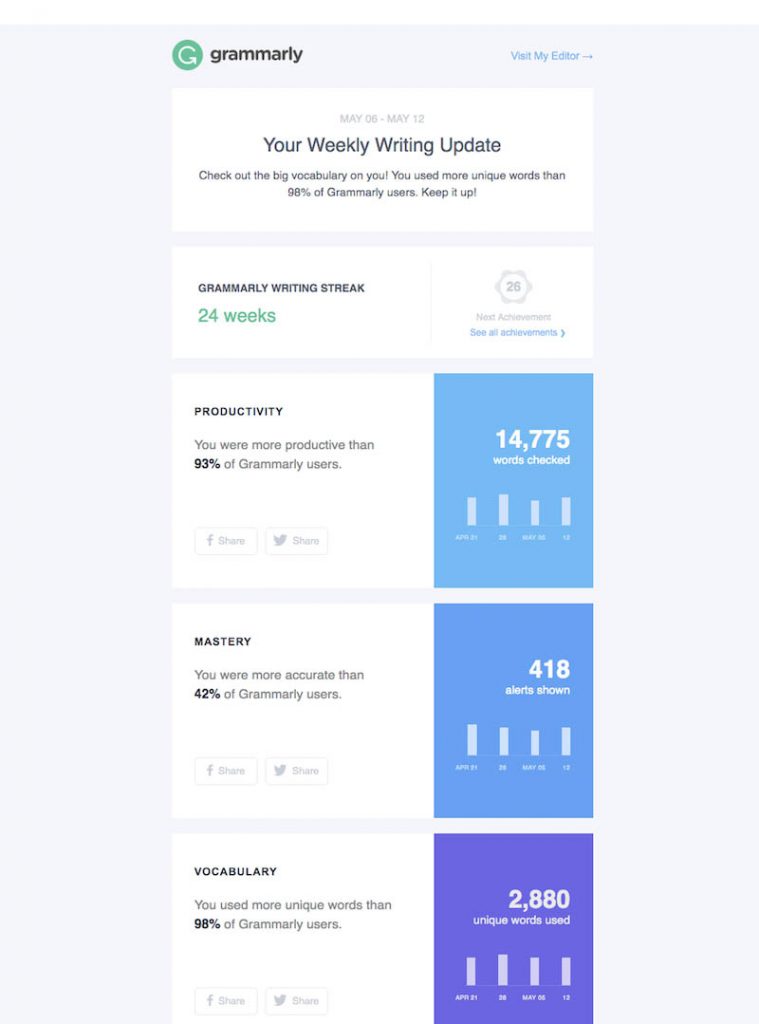
This is the type of content that is tailored to individual users based on their preferences, interests, and behaviors. Personalized content offers many advantages to your brand, such as increased audience engagement, loyalty, and conversions. You can do this via targeted ads, customized messages or emails, and user data.
Ensure that your content is relevant and valuable, and use personalization tools to create real-time dynamic content. Grammarly sends emails tailored to each recipient, giving a sense of personalization.
6. Hashtag Campaigns
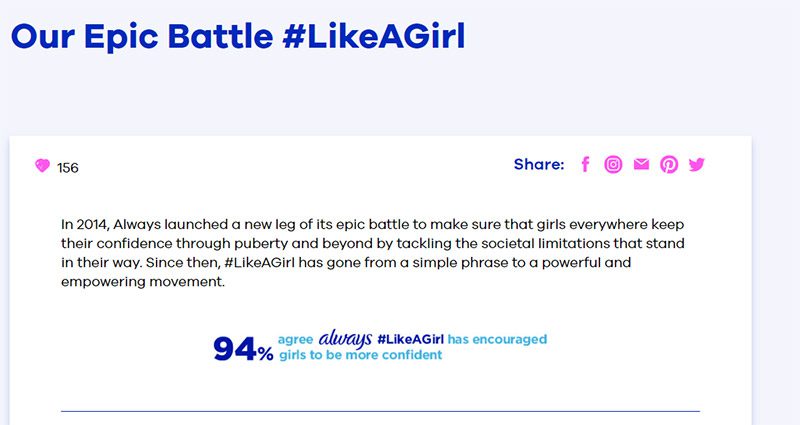
If you’re looking to build brand awareness and community on social media. A hashtag campaign is in order. By creating a unique hashtag, brands can encourage their followers to participate in conversations and share their content with a broader audience. Successful hashtag campaigns include examples like #ShareACoke by Coca-Cola and #LikeAGirl by Always.
To create a memorable and effective hashtag campaign, it’s important to keep it simple, relevant, and easy to remember. Make sure it aligns with your brand values and messaging, and encourage user-generated content by offering incentives or featuring user content.
7. Social Media Advertising
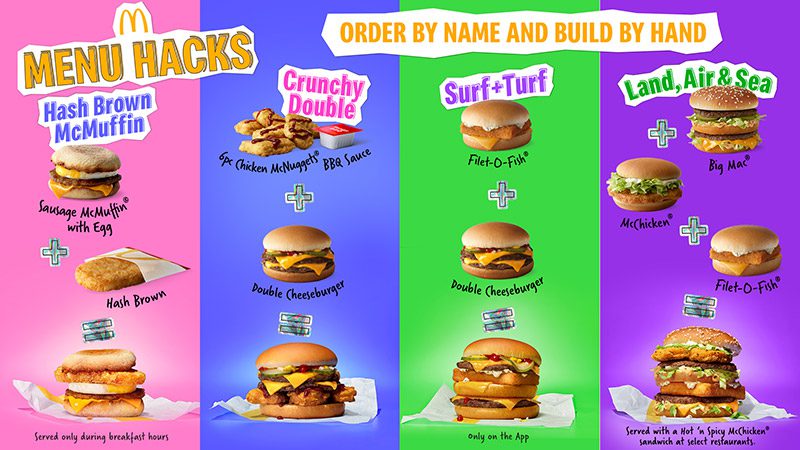
Another powerful way to reach new audiences and increase your brand’s visibility online is through advertising. Different types of social media ads include sponsored posts, paid search, and display ads. Use eye-catching visuals and concise messaging, and make sure your ads are relevant to your audience and platform. This McDonald’s social media ad is an excellent example.
Test different ad formats and targeting options to optimize your campaigns and measure their success using data analytics. Finally, stay up-to-date with the latest trends and best practices in social media advertising to ensure your campaigns deliver the best possible ROI.
8. Gamification

Give your audience a fun way to consume your content through gamification. KFC’s “shrimp attack” game on social media is a great example. This let users play and win prizes and allowed KFC to increase engagement and build brand loyalty. To create an effective gamification strategy, start by defining your objectives and understanding what motivates your target audience.
You can then develop a game or challenge that aligns with your brand values and messaging and make it easy to participate and share. Offer rewards or incentives to encourage participation and share user-generated content to build social proof and trust.
9. Virtual Events
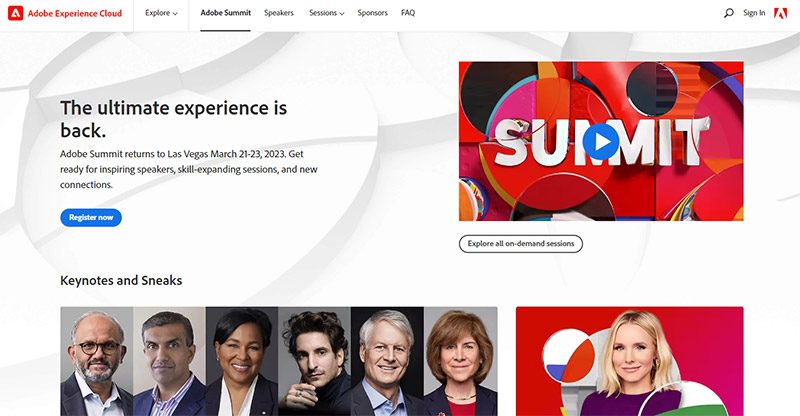
As more people spend time online, virtual events have become increasingly popular. They effectively bring together industry experts and business leaders to discuss the latest trends and innovations. Adobe Summit is an excellent example of a successful virtual event.
These events offer live and on-demand sessions, networking opportunities, and interactive experiences to engage attendees from anywhere in the world. To create a successful virtual event, provide a variety of content formats, use technology to create a seamless user experience, and offer opportunities for attendees to connect with each other and industry experts.
10. Social Listening
This is the practice of monitoring online conversations to gain insights about your audience and improve your brand reputation. With the help of tools such as Hootsuite, Sprout Social, and Brandwatch, you can track mentions of your brand, monitor sentiment, and identify trends in online conversations.
Using social listening to inform your content strategy, social media campaigns, and customer service can improve the customer experience and enhance your social media presence. Engaging with your audience, responding to their feedback, and using the insights you gain to refine your social listening strategy and ensure that it continues to deliver value to your brand.
Final Thoughts
To summarize, social media promotion is essential for a successful marketing strategy. By using innovative social media promotion ideas, you can boost your brand’s online presence. Continuously refining your approach and staying up-to-date with social media trends help you achieve your goals and build a robust online presence for your brand.



What was once old is new again: mid century modern is back in style. From architecture to furniture, the postwar look is in, and the hype extends all the way to office chairs.
Do you need a mid century modern office chair in your life? If so, there’s plenty to choose from. Your office chair should be tailored to your style, whether you like luxury, utility, or something in between.
That’s why we’ve put together our 10 favorite places to find your ideal mid century modern office chair.
What is mid century modern design?

After World War II, spirits were high in the US, and new technology was taking the country by storm. Mid century modern refers to the design concepts that came about during this time.
As opposed to the frilly, ornate designs of classical furnishings, mid century modern designs are angular, material, and functional. Wood is a common design element, especially teak. Mid century modern furniture may also have materials like glass, vinyl, and metal. Designs are simple and geometric, with bold accent colors to make them pop.
The mid century modern aesthetic never really went away, but it’s made a noted comeback in recent years. Some have chalked it up to Boomer and Gen X nostalgia, others point to mid-century-set shows like Mad Men and The Marvelous Mrs. Maisel.
Why should I buy a mid century modern office chair?

Mid century modern is the perfect fusion of style and utility. If you want to cultivate an office space that commands respect without being ostentatious, mid century modern is the style for you.
When it comes to office chairs, an MCM one is often made with sturdy wood and vinyl. They combine the ergonomics of a modern office chair with old-fashioned grace.
If you’re concerned with utility and utility only, a more bog-standard office chair may suit you. But a mid century modern office chair is great for someone who wants to wow colleagues with a mature, thoughtful business space.
Where can I get a mid century modern office chair?
1) Wayfair
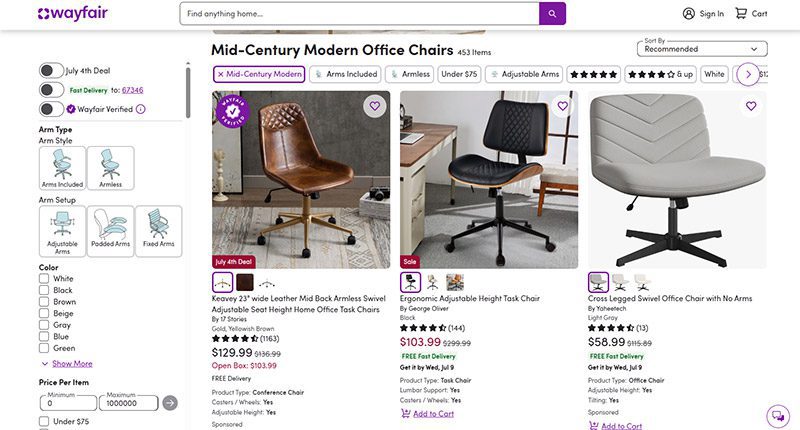
When it comes to furniture, Wayfair offers the best of both worlds. Their goods, including their mid century modern office chairs, are stylish and affordable. You can get a sturdy task chair for less than $100 or a more distinguished seat for less than $350.
MCM office chair examples: Dovray ($126), Bradford ($139), Lithonia ($133)
2) France & Son
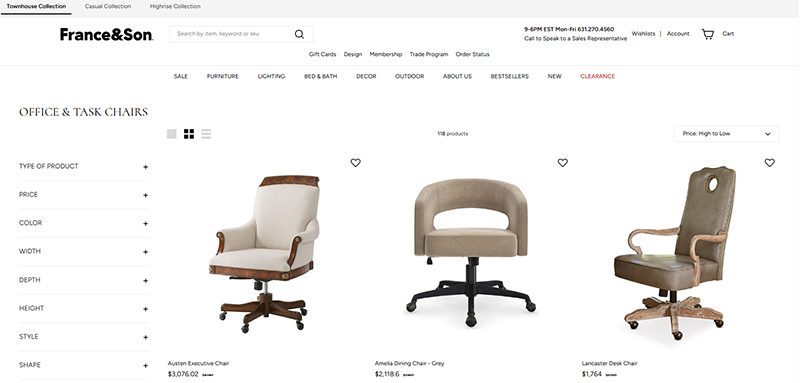
Wayfair’s chairs are affordable, but France & Son is the perfect option for luxury shoppers. Their mid century modern office chairs are robust and sleekly designed. If you dress to impress and enjoy the finer things in life, these are the chairs for you.
MCM office chair example: Brooks ($695)
3) Houzz
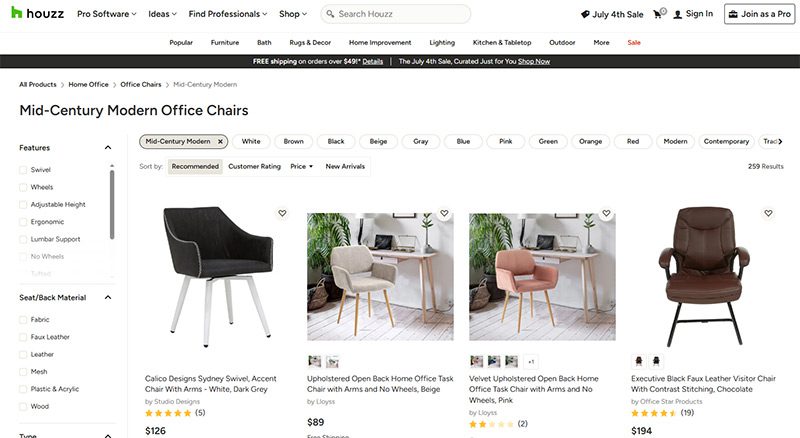
Started as a community for people to share home decor tips, Houzz has become a great ecommerce platform for finding stylish furniture. They’re more known for home decor than desk chairs, but they have plenty of great, affordable finds if you know where to look.
MCM office chair examples: Arvilla ($173), Rathburn ($259)
4) Laura Davidson
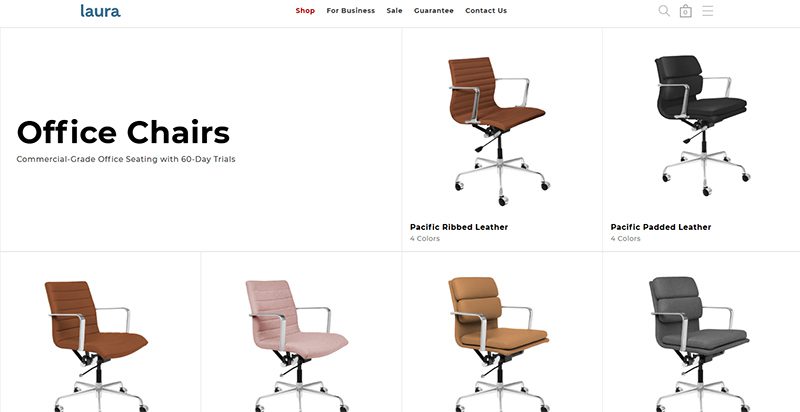
The Laura Davidson collection offers a fairly limited selection of classic office furniture. Still, there’s a reason they’re trusted by big-wigs like Apple, Disney, and Salesforce. Their chairs are sturdy and beautifully designed, reimagining classic Eames and Knoll designs.
MCM office chair examples: Rockefeller ($275), SOHO II Soft Pad ($450)
5) Icons of Manhattan
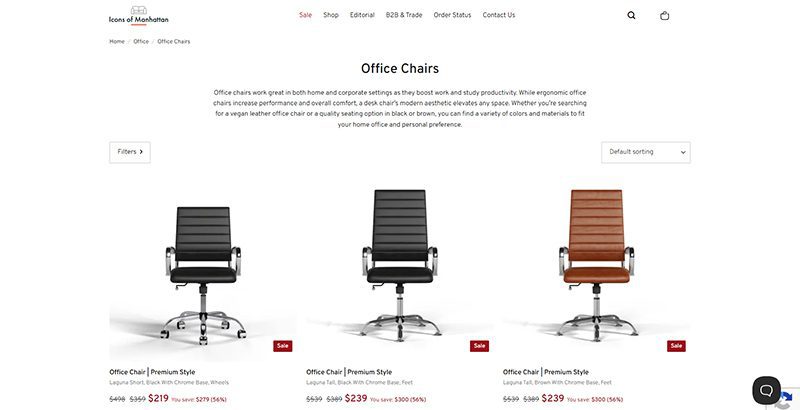
Icons of Manhattan has a simple philosophy: do one thing, and do it right. Their office chairs are handcrafted from premium materials and tailored to a mid-century modern style. If you want that Mad Men energy in your office (hopefully with a lot less angst), these are the chairs for you.
MCM office chair example: Ribbed Medium ($219)
6) Amazon
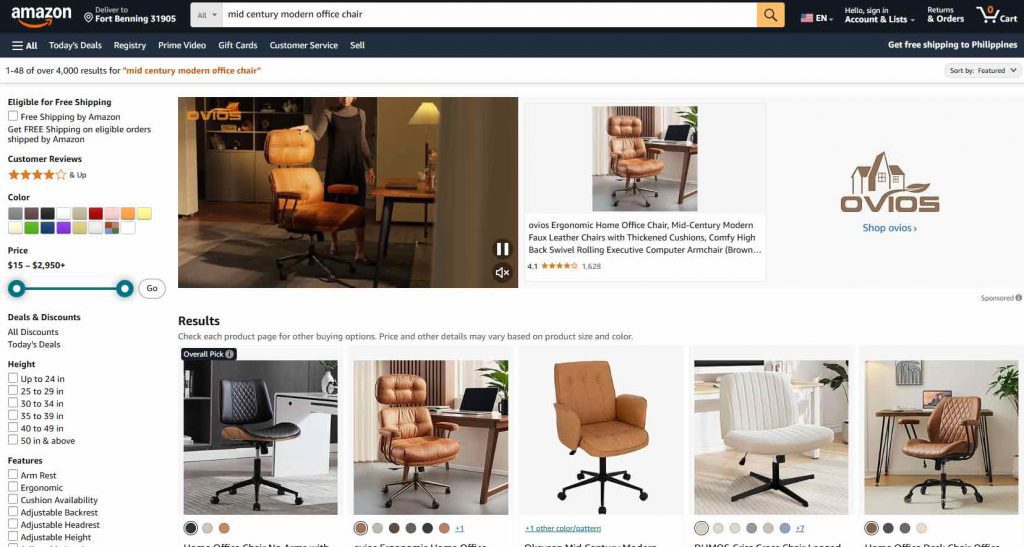
Yes, the internet’s premier shopping destination has a robust collection of mid century modern office chairs. Like with most products, their selection of seats is vast and can be hit or miss. Still, they’ve got stunning chairs available for any style, whether you care about comfort, class, or ergonomics.
MCM office chair examples: IDS Home Modern ($219), Art Leon MCM Swivel ($139)
7) AllModern
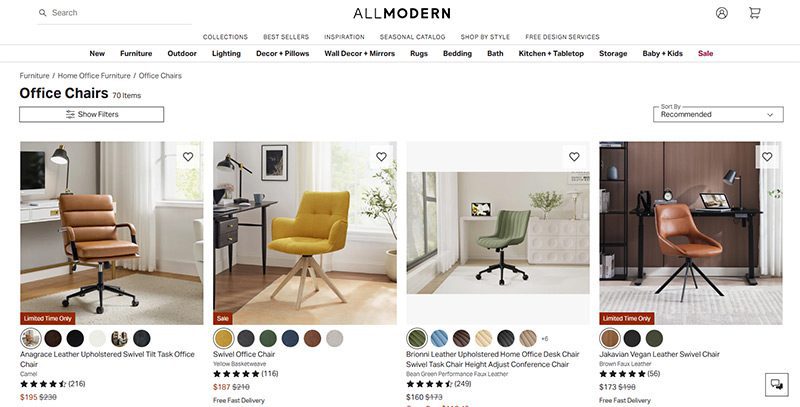
AllModern’s collection of desk chairs and other furniture truly embodies the mid century modern spirit. Their work is tight, angular, and functional above all. They’re part of the Wayfair family and they traffic in a number of modern styles, but their sleek chairs are perfect for any mid century modern space.
MCM office chair examples: Frederick ($229), Kealey ($349)
8) Overstock
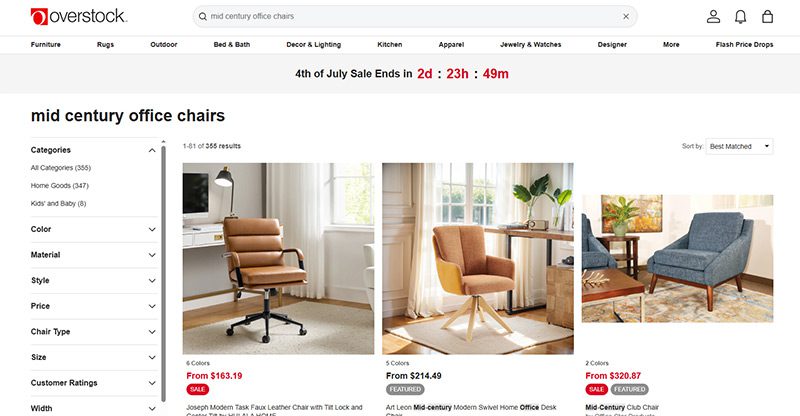
Overstock is known as a one-stop shop for quality home goods at sub-wholesale prices. If you want a spiffy mid century modern office chair that won’t break the bank, they’re the first place to look. While they’re somewhat less reliable than the more upscale platforms on this list, their selection is massive.
MCM office chair example: Joseph Modern ($163)
9) Walmart
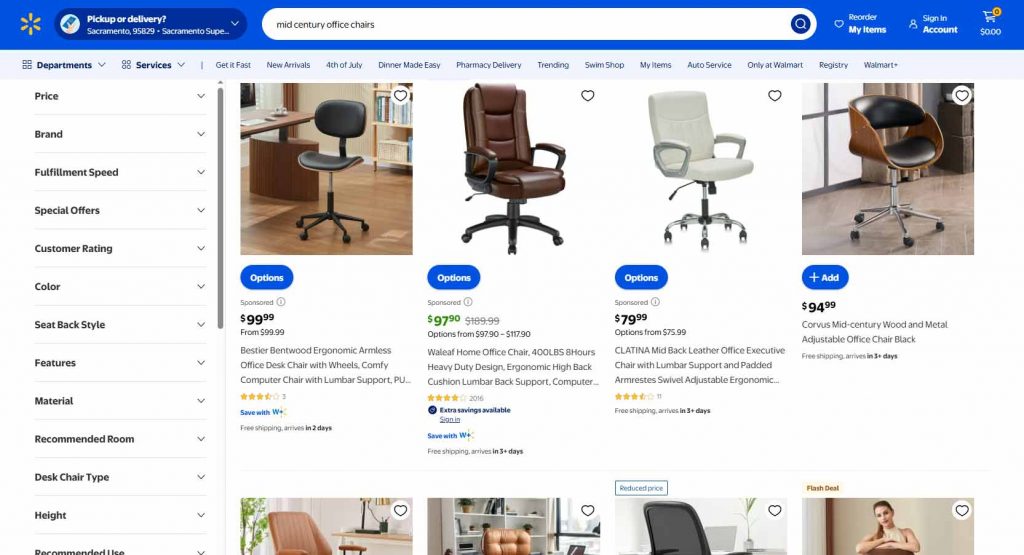
Hayneedle’s selection of mid-century modern office chairs falls somewhere between the minimal Laura Davidson and the endless Amazon catalog. Their array of mid-century designs is affordable and versatile, with chairs that match almost any style. While they may be part of the Walmart family, these chairs are anything but second-rate.
MCM office chair example: Waleaf ($97)
10) Target
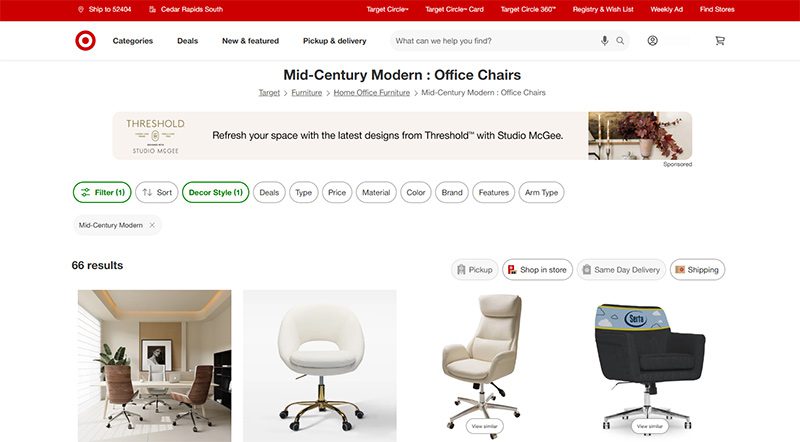
Why splurge when you can save? As usual, Target is a hidden gem, offering a sturdy selection of mid century modern office chairs for some of the cheapest prices out there. Many of the chairs they offer are from the same designers as these other stores—Christopher Knight, LumiSource, Armen Living, etc.—at reduced prices.
MCM office chair example: Lombardi ($136)


A quality payroll service is one of the most invaluable tools any entrepreneur can have. Whether you’re a small business owner or an HR manager, paying your employees on time is crucial. This makes choosing a service even more weighty, after all, it is a heavy administrative burden. The good thing is, you can outsource this duty to an online payroll processor.
According to statistics, 49% of workers begin a new job search after just two paycheck errors, and with 65% of workers living paycheck to paycheck, it’s more important than ever to ensure an efficient, effective payroll process.
These services can save you precious time and mitigate potential issues. To make it easy for you to choose, we listed the best online payroll services for 2025.
Top 5 Online Payroll Services
Gusto

Gusto is a great option for both new and experienced payroll administrators, boasting an incredibly clean user interface and a first-rate payroll setup. Gusto lets you manage your employee’s time off (vacation and sick pay), company health insurance, and worker’s comp. Gusto offers excellent mobile access, too. This allows employees to manage aspects of their Gusto profiles, view payday insights, and access Gusto Wallet financial tools.
Gusto offers four tiers of membership, the most affordable of which is the Contractor’s Only plan, which offers unlimited U.S.-based and global contractor payments, supporting more than 100 countries, plus 1099 creation and filing at a rate of $6 per person per month with no base price.
The other three are Simple, Plus, and Premium. Here’s a deeper look into each plan:
Simple
Price:
$40/mo + $6/mo per person
Plan details:
- Full-service single-state payroll including W-2s and 1099s
- Employee profiles and self-service
- Basic hiring and onboarding tools
- Gusto-brokered health insurance administration
- Employee financial benefits
- Payroll and time-off reports
- Custom admin permissions
- Integrations for accounting, time tracking, expense management, and more
Plus
Price:
$80/mo + $12/mo per person
Plan details:
(All Simple plan features +)
- Full-service multi-state payroll including W-2s and 1099s
- Next-day direct deposit
- Advanced hiring and onboarding tools
- PTO management and policies
- Time tracking and project tracking
- Workforce costing and custom reports
- Team management tools
- Full support
Premium
Price:
Bespoke pricing, reach out for a personalized quote
Plan details:
(All Plus plan features +)
- HR Resource Center
- Compliance alerts
- Access to certified HR experts
- Full-service payroll migration and account setup
- Health insurance broker integration
- R&D tax credit discount
- Waived fees and exclusive pricing
- Performance reviews
- Employee surveys and insights
- Dedicated support
QuickBooks Online Payroll
Founded in 1983, Intuit is a California-based financial software company. Since its inception, Intuit has developed into one of the best-known providers of accounting software. Their online payroll service, QuickBooks, includes the essential features you need to run payroll.
QuickBooks offers three tiers of membership. The least expensive membership covers basic accounting features, such as invoices. For more features, check out the Essentials and Plus memberships. Each plan’s features are as follows:
QuickBooks Simple Start (2025)
- Price: $38/month for 1 user
- Best for: Freelancers and small teams with basic payroll needs
Features:
- Automated bookkeeping
- 5 free ACH bank transfers/mo for bills
QuickBooks Essentials (2025)
- Price: $75/month for 3 users
- Best for: Small businesses needing deeper financial tracking
Features:
- Includes all Simple Start features, plus:
- Recurring invoices
QuickBooks Plus (2025)
- Price: $115/month for 5 users
- Best for: Growing businesses with HR and compliance needs
Features:
- Includes all Essentials features, plus:
- AI-powered profit & loss insights
- Anomaly detection and resolution
- Budgeting
QuickBooks Advanced (2025)
- Price: $275/month for 25 users
- Best for: Established businesses with HR and compliance needs
Features:
- Includes all Plus features, plus:
- Custom user management and permissions
- Custom report builder
- Data sync with Excel
- Revenue recognition
- Forecasting
OnPay
OnPay is a cloud-based full-service payroll processing system capable of running payroll according to a preset schedule, automatically disbursing wages, and calculating and withholding taxes.
OnPay can sync up with several other software your team is already using, making it easy to integrate the service into your team’s system. Another benefit of OnPays model is the simple, transparent pricing structure. No tiers; just one base rate.
Pricing:
$49/mo + $6/mo per employee
SurePayroll
SurePayroll’s award-winning service supports W-2 employees and 1099 contractors. Additionally, it handles 401(k) deductions and manages flexible spending accounts (FSA) and health savings accounts (HSA).
SurePayroll also offers a mobile app— available on both Apple and Android devices.
SurePayroll offers live support through its United States-based support team through chat, email, or phone.
Small Business Payroll
- Price: No Tax Filing: $20/month + $4 per employee, Full Service: $29/month + $7 per employee
- Best for: Small businesses and startups
Features:
- We file and deposit your federal and state taxes!
- Run payroll in 3 simple steps
- Schedule payroll to run automatically
- Unlimited payroll runs and free 2-day direct deposit
- Reports and pay stubs are available online 24/7
- Supports W-2 employees and 1099 contractors
Nanny & Household Payroll
- Price: Full-Service Household, $39/month, includes 1 employee, $10 per additional employee
Best for: Homeowners
Features:
- Signature-ready Schedule H
- We file & deposit your federal and state taxes!
- Run payroll in 3 simple steps
- Schedule payroll to run automatically
- Unlimited payroll runs and free 2-day direct deposit
- Reports & paystubs available online 24/7
- Supports W-2 employees & 1099 contractors
Be sure to choose a payroll service that works for your business, and provides you with the peace of mind that comes with a reliable bookkeeping system. Your employees will thank you.



Top 12 Uses for The Metaverse That Will Change Your Life

Top 10 Best Places to Buy a Mid Century Modern Office Chair

The Best Online Payroll Services [Updated for 2025]

Top 10 Small Business Organization Tools for 2025

8 Best Equipment for YouTube Every Content Creator Needs

Merck Seagen Buyout: What to Know About the Deal

The Rise and Fall of Juul: Once a Silicon Valley Darling, Now Banned by FDA

What’s the Deal With Elomir? Is Axis Klarity a Scam?

Why Having an Advisory Board Could Make or Break Your Startup
Top 10 Best Places to Buy a Mid Century Modern Office Chair

Loom Review: Features, Use Cases, and How It Stacks Up Against Zoom
8 Best Equipment for YouTube Every Content Creator Needs
The Rise and Fall of Juul: Once a Silicon Valley Darling, Now Banned by FDA

The Best Ways to Recession Proof Your Business
 Business2 days ago
Top 10 Best Places to Buy a Mid Century Modern Office Chair
- Technology4 days ago
8 Best Equipment for YouTube Every Content Creator Needs
- Technology4 days ago
Top 10 Small Business Organization Tools for 2025
- Technology1 day ago
Top 12 Uses for The Metaverse That Will Change Your Life
- Business2 days ago
The Best Online Payroll Services [Updated for 2025]