
Technology
What is a Gantt Chart Software for Project Management (with examples)


Whether you’re handling a small or big team, Gantt chart software is a tool that helps keep track of projects. Using one lets you keep an eye on a project’s status, start date, end date, and more. Read this ultimate guide on everything you need to know about Gantt chart tools.
History of Gantt Chart Software?

The Gantt chart was invented by American engineer and management consultant Henry Gantt in the early 20th century. Gantt pioneered scientific management, a philosophy that aimed to increase efficiency and productivity. He did this by applying scientific methods to the planning and control of work. He developed the Gantt chart to help managers visualize the tasks and schedules involved in a project.
The first Gantt charts were simple bar charts showing tasks’ start and end dates. However, the format has evolved to include more information and features. During World War I, Gantt charts were used to plan and control military production. After the war, they became widely used in industry for planning and overseeing construction, manufacturing, and other projects.
Today, this helpful tool is widely embraced within every workforce sector. Unfortunately, not a lot of employers and employees know what it is. We’ll break it down for you below.
What is a Gantt Chart Software?
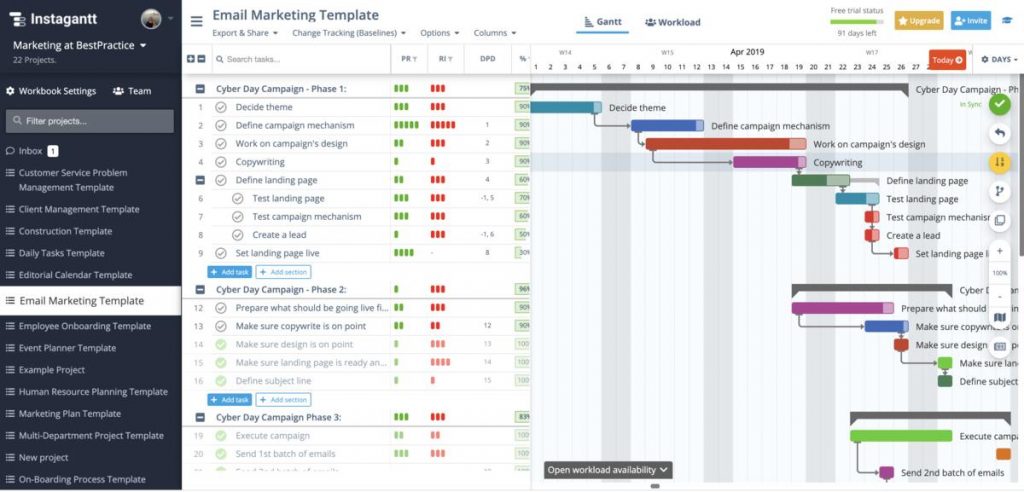
Image credit: Instagantt
A Gantt chart is a bar chart tool that displays the start and end dates of tasks, activities, or events within a project schedule. It’s a visual representation of a project plan that shows tasks and their durations as horizontal bars on a timeline. Each bar represents a different task. Each bar’s length corresponds to the task’s duration, and the bar’s position on the timeline shows the start and end dates.
Gantt charts are used in project management, providing a straightfoward overview of the project schedule. They are handy for showing the relationships between tasks and their dependencies. And these are represented by arrows connecting the bars.
For example, a task that must be completed before another task can start is shown as a predecessor. The chart can also display milestones, critical path analysis, and the status of tasks in real-time. Overall, this helps identify potential risks and delays.
Types of Information You Can See on a Gantt Chart Platform:
- Different types of projects
- Start and end dates
- The estimated timeframe from start to finish
- Current project costs
- Estimated project costs
- Completion percentage for every activity
- Task groupings and correlation to other activities
- Task dependencies
- Projects phases and milestones
7 Benefits of Using a Gantt Chart Tool in Project Management
Gantt chart software might just be your new best friend if you find it hard to keep track of tasks and projects. Here’s why:
- Schedule clarity: A Gantt chart provides a clear visual representation of project tasks and deadlines. This way, it’s easier for everyone involved in the project to understand the schedule.
- Resource allocation: The chart can help companies allocate resources efficiently and identify potential bottlenecks or overlaps in the schedule.
- Task tracking: A Gantt chart provides an easy way to track task progress and adjust the schedule if necessary.
- Improved collaboration: The chart can help team members see the interdependencies between tasks, facilitating collaboration and coordination.
- Better communication: The chart can be used to communicate project plans and schedules to stakeholders, ensuring everyone is on the same page.
- Effective resource planning: It enables managers to assess resource utilization and optimize allocation to increase efficiency and minimize waste.
- Project control: The chart provides a straightforward way to monitor progress and take corrective action as needed.
Which Industries Can Benefit from a Gantt Chart

These are just a few examples of how Gantt charts can be used in various industries and project types. The chart’s flexibility and ability to display task dependencies and schedules make it valuable in many different contexts.
Construction projects
Gantt charts are commonly used in construction projects to plan and track the progress of tasks such as site preparation, excavation, framing, electrical and plumbing work, and finishing.
Software development
In software development, Gantt charts can be used to plan and track the development process, including coding, testing, debugging, and release tasks.
Event planning
Gantt charts are helpful in event planning to manage tasks such as venue selection, vendor selection, guest list management, and logistics.
Marketing campaigns
Gantt charts can help plan and track marketing campaigns, including research, planning, execution, and analysis.
Film production
In film production, Gantt charts are used to plan and track tasks such as pre-production, filming, post-production, and distribution.
Manufacturing
Gantt charts can be used in manufacturing to plan and track production processes, including design, prototyping, mass production, and quality control.
Research projects
In research projects, Gantt charts can be used to plan and track tasks such as data collection, analysis, and report writing.
Website design and development
In website design and development, Gantt charts can be used to plan and track layout, coding, testing, and deployment tasks.
5 Top Gantt Chart Software Programs
Here are five Gantt Chart Programs that can help you with project management:
1. InstaGantt
Instagantt is a user-friendly Gantt chart tool that helps teams plan, track and visualize their projects. It’s easy to use, with features such as drag-and-drop task scheduling, real-time collaboration, and automatic rescheduling. Instagantt also offers integrations with other tools, such as Trello, Asana, and Google Drive, making it easy to use alongside other project management tools.
2. TeamGantt
TeamGantt is designed for small to medium-sized businesses, teams, and individuals who need a simple yet powerful way to manage their projects. With TeamGantt, teams can easily create, edit, and share project plans, improving collaboration, communication, and project success rates for free!
3. Wrike
Wrike differentiates itself from other Gantt chart tools by offering a comprehensive project management solution that includes multiple features and tools to help teams plan, execute, and deliver projects successfully.
4. GanttPRO
GanttPRO is a versatile and robust tool that offers a user-friendly interface, making it easy to create and manage projects. Plus, it provides reporting and export functionality, making it easy to share project plans and progress with stakeholders.
5. Smartsheet
Smartsheet provides automation capabilities, making it possible to automate repetitive tasks and improve efficiency. It also integrates with various other tools and platforms, such as Google Drive, Microsoft Teams, and Trello.



Nowadays, many of our tasks at work can be completed with a single click. However, there are still software solutions that offer more: they can automate everything and provide crucial data to help your business grow. Here are the ten best artificial intelligence solutions you should be exploring now.
1. IBM Watson Studio
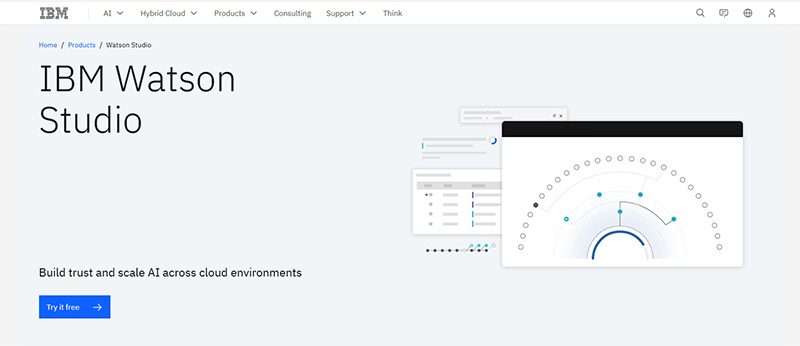
IBM Watson has been a trusted name in technology. It even garnered attention when it guest-starred on Jeopardy! But IBM Watson is now within reach for businesses with the IBM Watson Studio. This is one of the most utilized artificial intelligence solutions that financial and medical institutions could use.
Features:
- Build model pipelines
- Refine data with a graphical flow editor
- Visual tooling
- Open source framework
- Model embedding, monitoring, and management
- Data access through the cloud
- AI model drag-and-drop
- Transaction details
- Lifecycle automation
2. Salesforce Einstein
If you need to optimize your CRM tasks, using Salesforce Einstein is your best bet. If you want to get more leads and nurture them, Salesforce Einstein helps you understand them better through deep insights. Plus, you don’t have to do the guesswork anymore. Einstein will help you understand the next steps when nurturing leads and converting them into customers. Not to mention, Einstein can also help you with customer service.
3. Edgeverve ExtractEdge
Optimize your business process with Edgeverve ExtractEdge. Previously known as Infosys Nia, your business will have a much more efficient way in processing documents. One of its benefits is getting intelligence from documents. From there, they process the data and help enterprises and businesses with their productivity and decision-making processes. Two industries that can greatly benefit from this artificial intelligence solution are banking and insurance.
4. Azure Machine Learning
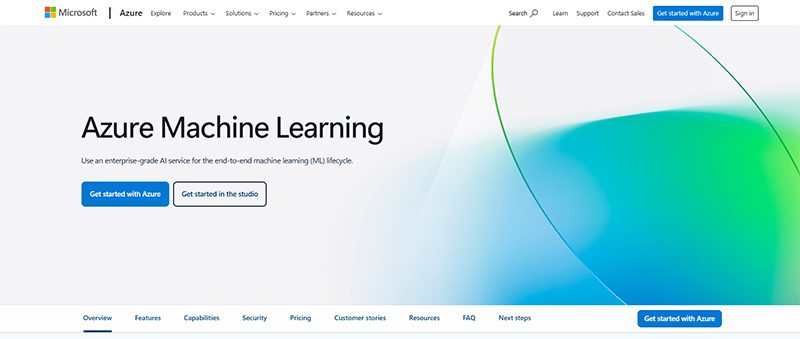
Get things done faster with your own frameworks and models through Azure Machine Learning. This artificial intelligence solution is ideal for data scientists and software engineers to automate and streamline several business processes using Machine Learning. Here are some of their notable features:
- Data labeling
- Collaborative notebooks
- Drag-and-drop machine learning
- Responsible machine learning
- Model registry and audit trail
- Managed endpoints
- Interoperability with other Azure services
- Data preparation
- Automated machine learning
- Reinforcement learning
5. H2O AI
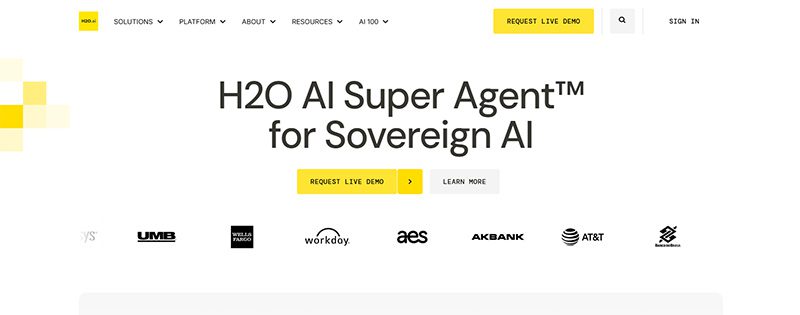
H2O AI is one of the most utilized artificial intelligence solutions because it is jam-packed with features. Not only that, H2O AI can be used by industries or institutions like financial services, governments, health, insurance, manufacturing, marketing, retail, and telecommunications.
With H2O AI, you can ensure that you can build accurate models quickly. Plus, they’re also transparent! You can also analyze business performance and know how to adapt to changes. Plus, you can become an innovator in your field!
Under their Make, Operate, and Innovate approaches, here are their platform’s capabilities:
- Feature Transformation
- Machine Learning
- Explainable AI
- Low Code App Development
- Machine Learning Operations
- AI AppStore
6. Coro
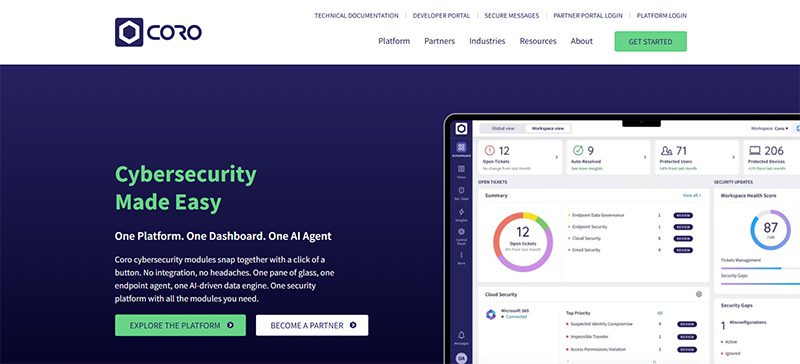
If your business is prone to cyberattacks or cannot afford to have a cyberattack, artificial intelligence solutions can protect you from that. One of them is Coro. Coro ensures that your company is protected from any hacking or malware infecting your emails, devices, and cloud apps! Aside from protecting you, Coro will alert you on your next steps to ensure you’re safe.
7. Vertex AI
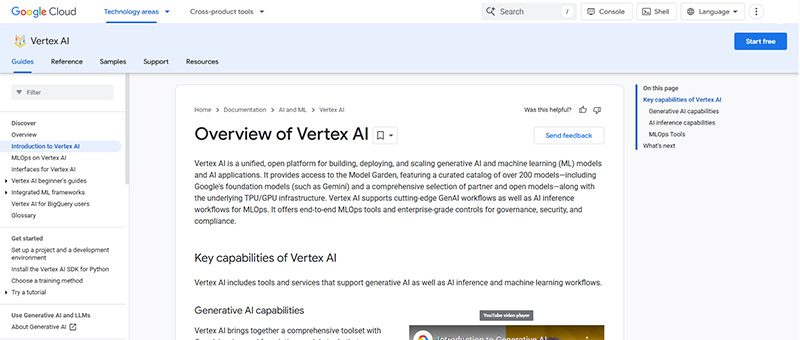
Vertex AI is Google’s own machine learning and AI platform. You can train and deploy your AI or machine learning models. Plus, you can also do the following:
- Data Labeling
- Feature Store
- Workbench
You can launch your models through the Google Cloud, and you can access or view data anytime through Cloud Logging and Monitoring.
8. Rendered.ai
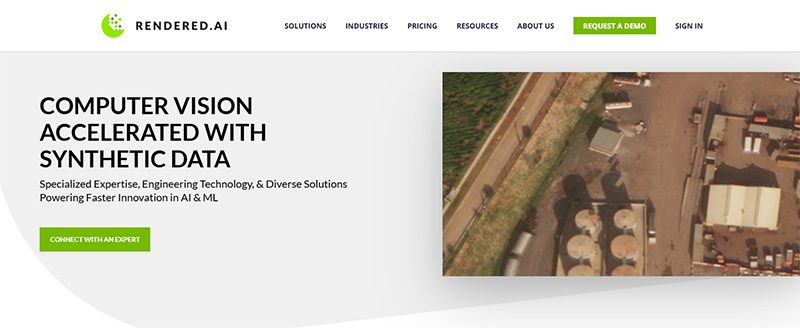
For your autonomous systems, defense applications, or advanced computer vision needs, there’s Rendered.ai. It specializes in generating physics-based synthetic datasets that make it easy for you to train AI models when real-world data is scarce, unavailable, or impractical.
- Autonomous Vehicles and Robotics – Simulate rare driving situations that are too costly or dangerous to see in real life.
- Defense and Aerospace – Can generate synthetic radar, infrared, and multispectral data for training AI models for mission-critical environments.
- Healthcare Imaging – Can create synthetic X-rays to improve diagnostic AI systems
9. Tealium
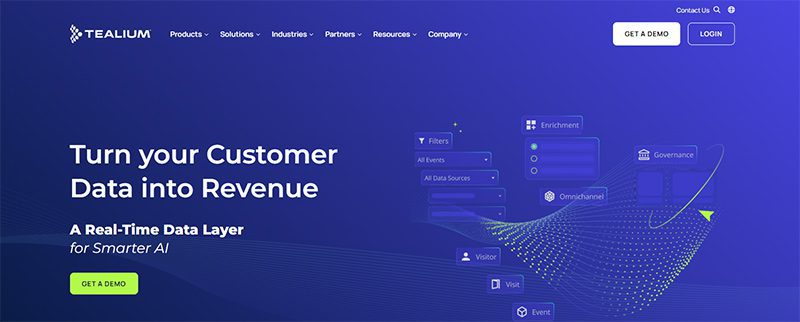
Marketers rejoice, Tealium is an artificial intelligence solution to optimize your marketing campaigns. Tealium ensures that you can grow and acquire your audience! They do it through segmentation and audience insights. But it doesn’t stop there. The AI solution also helps you with loyalty, retention, customer experience, and personalization. Other solutions are:
- Predictive insights and customer analytics
- Data collection and privacy
- Single view of the customer
- Operationalizing mobile data
The industries that can greatly benefit from Tealium are:
- Finance
- Healthcare
- Pharma
- Retail
- Sports & Entertainment
- Travel & Hospitality
10. Sisense
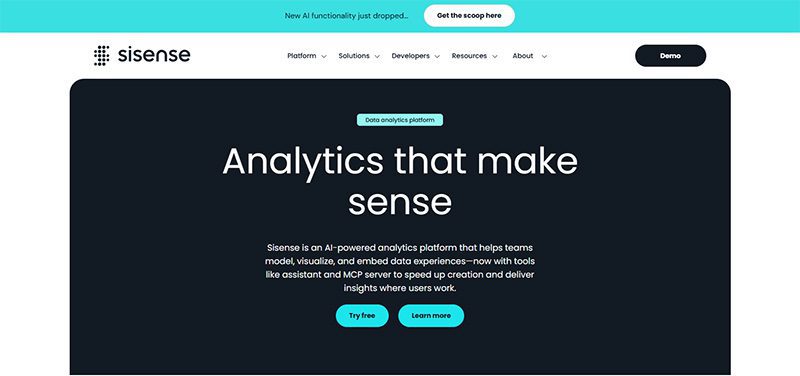
Here’s another business processing AI solution to help your business operate smoothly. Sisense will help you learn more about your company from every department. If you’re running marketing campaigns, Sisense can analyze them and improve your ROI. You can also get data to improve performance. Plus, you can mitigate risk through analytics.
Final Thoughts
Artificial intelligence solutions can streamline business processes, create models for data scientists and software engineers, and analyze data. With AI’s help, you can increase productivity and get more value for your business.




What’s the Best Design Agency in San Francisco?

5 Quiet Operational Leaks Costing Fortune 500s Millions

The Biggest Hidden Cost in Healthcare Isn’t Staff Time. It’s Operational Friction.

5 Things Even Fortune 500 Companies Quietly Waste Money On

The Biggest Hidden SaaS Cost Isn’t Ads—It’s Post-Click Execution

Top 10 Artificial Intelligence Solutions Your Business SHOULD Use

OpenStudio – Business Management All-In-One

How to Determine Which Social Network Is Right For Your Business

How To Do Business Marketing For Free
OpenStudio – Business Management All-In-One
Top 10 Artificial Intelligence Solutions Your Business SHOULD Use

Here’s How You Can Scale Your Business Beyond a 7-Figure Revenue

What’s the Best Design Agency in Arizona for Small Businesses?

What’s the Best Design Agency in California? Our 4 Top Picks
 People4 days ago
The Biggest Hidden Cost in Healthcare Isn’t Staff Time. It’s Operational Friction.
- Business4 days ago
5 Quiet Operational Leaks Costing Fortune 500s Millions
- Uncategorized4 days ago
The Biggest Hidden SaaS Cost Isn’t Ads—It’s Post-Click Execution
- Business4 days ago
5 Things Even Fortune 500 Companies Quietly Waste Money On
- Uncategorized2 days ago
What’s the Best Design Agency in San Francisco?


